The Impasse on Capitol Hill: Why America’s Next Farm Bill Remains Deadlocked Over SNAP Funding and Agricultural Reform


Washington — The future of American agricultural policy hangs in a precarious balance as Capitol Hill faces a fourth consecutive year of failed renewals for the nation’s cornerstone farm legislation. Following a brief procedural victory in the Senate Agriculture Committee last Tuesday—bolstered by the return of veteran lawmakers—legislators remain deeply divided along partisan lines. With the midterm elections looming in November and a high legislative threshold required to clear the Senate floor, the prospect of enacting a comprehensive farm bill this year grows increasingly dim.
The current legislative gridlock stems from a fundamental disagreement over social safety net provisions, conservation priorities, and the overarching financial pressures confronting modern American producers. While farm advocates and policy experts dissect the components of the stalled package, the debate has evolved into a broader referendum on how federal resources should be distributed between rural nutrition assistance, environmental conservation, and commercial agricultural support.
A Chronology of Legislative Delay
The roots of the current deadlock extend back several years, reflecting a systemic inability in Congress to pass a timely, five-year omnibus farm bill—a legislative vehicle historically renewed with broad bipartisan consensus.
- 2018: Congress successfully passes the previous comprehensive farm bill, establishing agricultural and nutritional guidelines meant to run through 2023.
- 2023–2025: Lawmakers miss successive deadlines to renew the legislation, relying instead on a series of short-term stopgap extensions to maintain basic federal agricultural operations.
- Summer 2025: President Donald Trump signs into law the One Big Beautiful Bill Act, a sweeping legislative package that drastically reshapes federal spending, notably slashing funding for the Supplemental Nutrition Assistance Program (SNAP) by $186 billion.
- August 2025: Senate Democrats on the Agriculture Committee successfully block the chamber’s draft of the new farm bill from advancing to a full floor vote, citing deep objections to the legislation’s failure to address the SNAP funding cuts.
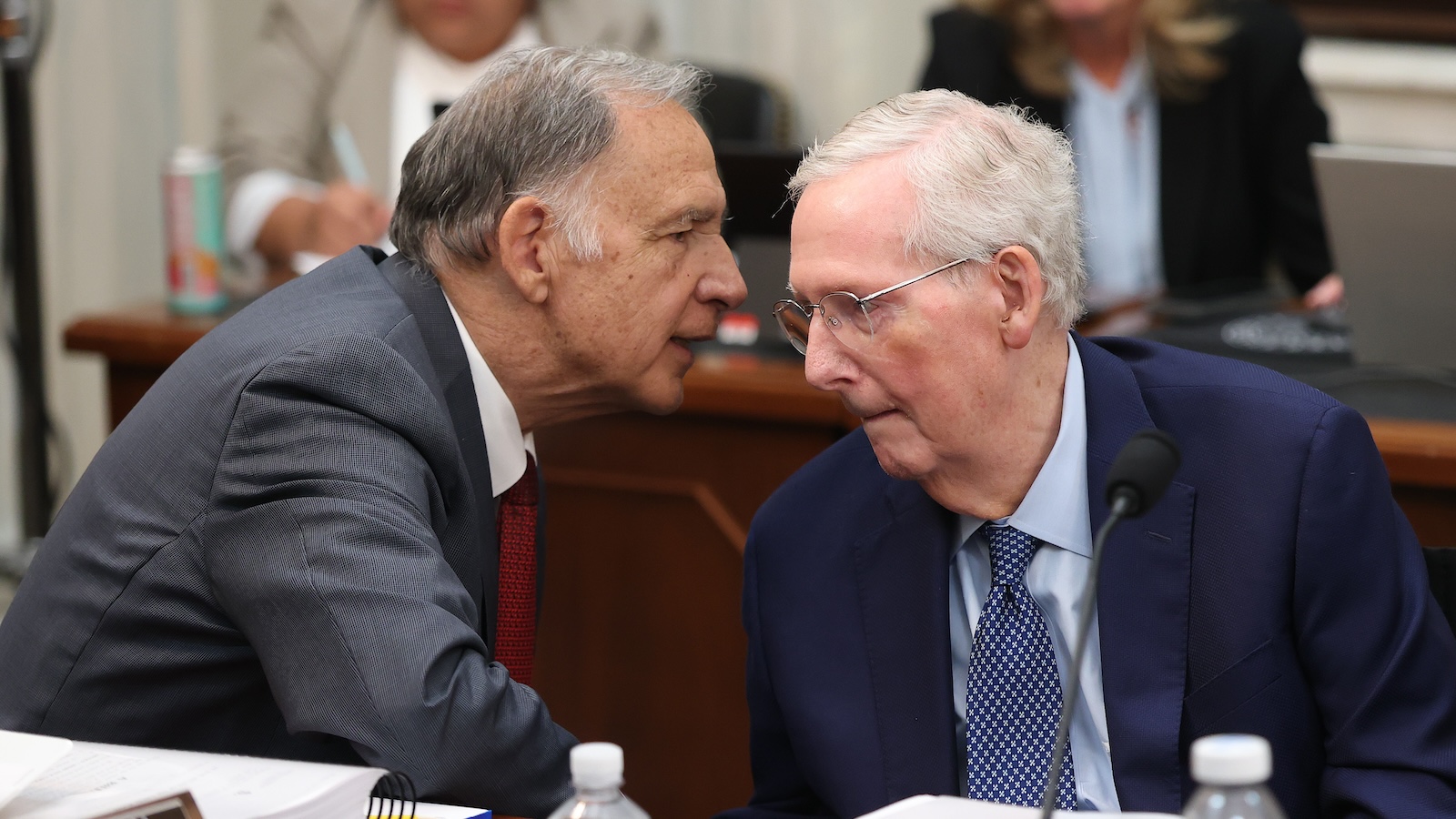
- Last Tuesday: Senator Mitch McConnell returns to Congress after a three-month absence, immediately casting a deciding vote in the Republican-led Agriculture Committee to push the stagnant farm bill text forward. Despite this procedural advance, the path to achieving the necessary 60-vote threshold on the Senate floor remains obstructed.
The Partisan Battleground: SNAP and Nutrition Funding
At the heart of the congressional stalemate is the Supplemental Nutrition Assistance Program. Historically housed within the farm bill—with nutrition spending regularly accounting for roughly three-quarters of the total legislative budget—SNAP serves millions of low-income Americans, providing essential purchasing power for grocery consumers.
The passage of the One Big Beautiful Bill Act significantly altered this landscape by stripping $186 billion from the program. Senate Democrats on the Agriculture Committee have maintained a rigid stance: they refuse to support any farm bill that fails to restore these vital nutrition funds. Furthermore, lawmakers are pushing to delay an impending structural shift that would increase administrative cost-sharing burdens for state governments operating the food assistance initiative.
Because the current Senate draft omits both the restoration of SNAP funding and the requested administrative delays, Democratic leadership asserts that securing the necessary cross-aisle support for a floor vote is virtually impossible. In a chamber where Republicans hold a narrow 53-seat majority, bypassing the 60-vote filibuster threshold requires convincing multiple Democrats to cross party lines—an unlikely prospect given the political pressures of the upcoming November midterms.
Ripple Effects Across Rural Economies and State Budgets
The debate over food assistance extends far beyond urban centers, directly implicating the economic vitality of rural America. Agricultural advocates point out that rural communities frequently register higher per capita SNAP participation rates than metropolitan areas, meaning that reductions in nutrition benefits translate immediately into diminished local grocery sales and a weakened customer base for regional farmers.
Jody Osmund, a founding member of the FACE Ag Network, a coalition of pasture-based livestock producers, emphasized the interconnected nature of food assistance and farming. "The farmers in our network live in rural areas," Osmund noted. "Rural areas have a higher uptake of SNAP participation than urban areas. So it’s hurting our community."
Beyond direct consumer impacts, the failure to address state-level administrative cost-sharing provisions threatens to destabilize state budgets. Mike Lavender, policy director for the National Sustainable Agriculture Coalition, warned that states may soon face impossible fiscal compromises.
"States are going to have to rethink their budgets," Lavender explained. "That could mean that states are looking at, ‘Hey, do we fund education at this level or do we fund SNAP? Or do we fund transportation or SNAP?’ So this is forcing really difficult decisions that could impact departments of agriculture at the state level."
These fiscal pressures arrive during a volatile economic climate for food producers. Small- and medium-sized farms, already squeezed by record-high input expenses such as diesel fuel and navigating unpredictable international trade markets, are uniquely vulnerable to budgetary contractions at the state and federal levels.
Conservation Controversies and Animal Agriculture Provisions
While the broader legislative package remains contentious, certain provisions within the Senate draft have drawn mixed reactions from agricultural coalitions. Notably absent from the committee-advanced bill is the controversial "Save Our Bacon" provision—a measure that would have shielded livestock producers from restrictions on intensive animal confinement practices.
The exclusion of this measure has brought a measure of relief to sustainable agriculture advocates. "It’s encouraging," Osmund said, describing lobbying efforts by coalition members who traveled to Washington, D.C., to urge lawmakers against incorporating the provision.
Conversely, the bill’s treatment of core conservation programs—including the Environmental Quality Incentives Program (EQIP) and the Conservation Stewardship Program (CSP)—remains a point of contention. Critics argue that these initiatives suffer not merely from insufficient funding allocations, but from structural inefficiencies. Sustainable farming advocates contend that conservation dollars are disproportionately directed toward managing animal waste on massive industrial livestock operations rather than supporting proactive climate adaptation and soil health initiatives on smaller farms.
The Outlook: Stopgap Measures vs. Comprehensive Reform
With the legislative calendar compressed by the impending midterm elections and partisan polarization deeply entrenched, political analysts suggest that passing a new farm bill before the end of the year is an increasingly improbable outcome.
For many agricultural producers, however, the collapse of the current legislative vehicle may represent a preferable alternative to a deeply flawed compromise. If Congress fails to pass a new bill, federal agricultural programming will continue to be sustained by temporary stopgap measures tied to the parameters of the 2018 legislation.
"A continuation of the 2018 farm bill may be better," Osmund argued, summarizing the calculus of many sustainable farming advocates. "It’s not good. It is not ideal, but no deal on the current versions of the farm bill, in our opinion, is much better than a very, very bad deal."
As lawmakers prepare to adjourn or pivot toward campaign trails, the expiration of legislative momentum ensures that comprehensive agricultural reform will once again be deferred, leaving policymakers to restart negotiations from the drawing board in 2027.