Severe Flooding Paralyzes Northern Vietnam as Authorities Brace for Continued Torrential Rain

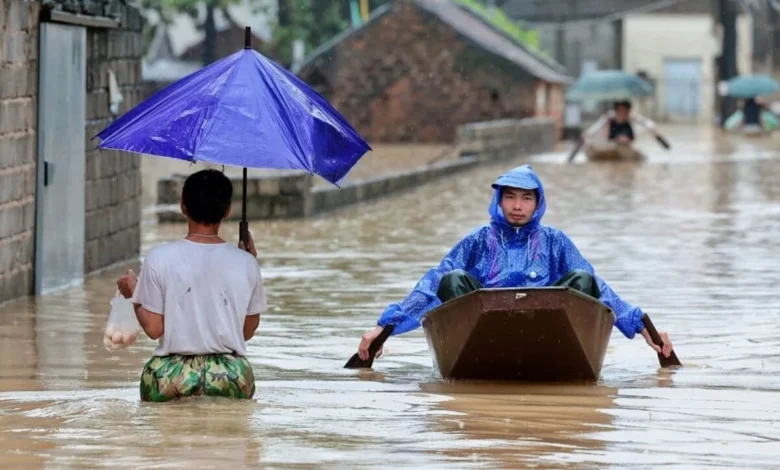
Heavy rain caused widespread flooding across northern and north-central Vietnam on Thursday, paralyzing transportation networks, submerging thousands of homes, and pushing major river systems to critical, dangerous levels. The deluge has forced authorities to enact emergency evacuation protocols while suspending educational activities as the nation grapples with yet another severe climate-related disaster. According to the national disaster prevention department, some regions have been battered by more than 50 centimeters (19.7 inches) of rainfall throughout the week, overwhelming drainage infrastructure and straining the resilience of local communities.
The human and physical toll of the flooding is mounting rapidly. More than 2,000 homes have been inundated, leaving over 1,000 households completely isolated from essential services. The provinces of Ninh Binh and Thanh Hoa, characterized by a mix of vulnerable lowlands and hilly terrain south of the capital, Hanoi, have emerged as the primary flashpoints of the crisis. In these areas, the disruption to daily life is profound, with students instructed to remain indoors as rising waters rendered transit routes impassable and hazardous.
A Capital Under Siege
Hanoi, a city of millions, found itself struggling to function on Thursday morning as streets transformed into waterways. In several urban districts, flood depths reached nearly a meter (3.2 feet), effectively bringing traffic to a standstill. The inability of the city’s drainage systems to manage the intense precipitation—which exceeded 15 centimeters (5.9 inches) in some districts between Wednesday night and Thursday morning—forced a widespread closure of academic institutions. Many high schools and universities transitioned to remote learning platforms, while commuters faced severe delays or were unable to leave their homes entirely.
On the city’s southwestern outskirts, the situation reached a point of urgency as the Bui River began to breach its banks. The encroaching waters threatened to overwhelm residential settlements, triggering a coordinated response from the military. Hundreds of soldiers were deployed to assist residents in the arduous task of relocating personal belongings, livestock, and essential supplies to higher ground.
Agricultural Destruction and Economic Loss
The environmental and economic consequences of this week’s rainfall extend far beyond the urban centers. Approximately 10,014 hectares (24,745 acres) of rice paddies and various other crops have been severely damaged or completely submerged. This destruction of agricultural land poses a significant threat to local food security and rural livelihoods, particularly in the hardest-hit provinces of Ninh Binh, Thanh Hoa, and Nghe An.
The livestock sector has also suffered catastrophic losses. Thousands of poultry and larger livestock have perished in the rising waters, creating an immediate sanitary and economic crisis for farmers. While residents like Tran Ngoc Tai, speaking to national broadcaster VTV, noted that local populations have developed a survival-oriented "flood culture"—stockpiling fresh water and food in anticipation of annual inundations—the scale of this year’s destruction is testing the limits of these community-based coping mechanisms.
Chronology of a Climate Crisis
Vietnam’s vulnerability to hydrometeorological events is well-documented, yet the frequency and intensity of these events appear to be accelerating. The current flooding follows a pattern established throughout 2025, a year marked by a relentless series of climate-induced catastrophes.

- July 2025: Tropical Storm Wipha brought heavy rains and initial flooding, setting the stage for a saturated landscape.
- August 2025: Tropical Storm Kajiki made landfall, exacerbating the existing saturation with severe flooding and widespread landslides.
- September 2025: Typhoon Bualoi struck the region, resulting in at least 26 fatalities and further infrastructure degradation.
- October 2025: Historic cities including Hue and Hoi An, along with vast stretches of northern Vietnam, faced record-breaking rainfall and subsequent urban flooding.
The current situation is not expected to abate immediately. The Southern Regional Hydro-Meteorological Center has identified a cold air mass currently migrating southward, which is projected to bring five consecutive days of heavy rain to the southern regions, including Ho Chi Minh City, the nation’s financial engine. Forecasters have issued warnings for the period between September 17 and September 21, anticipating rainfall totals between 10 and 20 centimeters (4 to 8 inches), with localized areas likely to see even higher accumulation.
Official Response and Disaster Preparedness
In the wake of recent years’ disasters, the Vietnamese government has prioritized the development of new strategies to manage and mitigate flood risks. The disaster prevention department has transitioned from a purely reactive stance to a more integrated, proactive approach. This involves enhanced early-warning systems, the reinforcement of dikes and dams, and the strategic deployment of military and civil defense units before peak storm surges.
However, the rapid nature of the current flooding has highlighted the persistent gaps in infrastructure. While state media has emphasized the preparedness of citizens, the sheer volume of water currently affecting the country suggests that traditional defense methods are increasingly insufficient against the backdrop of changing climate patterns. Experts point out that the geographical layout of Vietnam—with its extensive coastline, dense river networks, and rapid urbanization—makes it one of the most climate-vulnerable nations in the world.
Implications and Future Outlook
The implications of this recurring cycle of flooding are profound. Beyond the immediate loss of life and property, the repeated destruction of crops threatens to disrupt national export quotas for rice and other agricultural products, which are vital components of the Vietnamese economy. Furthermore, the constant need for emergency infrastructure repair diverts significant capital away from long-term development projects.
The psychological impact on communities in the northern and central regions cannot be overlooked. For many, the "annual flood" has become a source of profound instability, disrupting education, healthcare access, and the stability of the labor market. As the country braces for the next wave of rain moving toward Ho Chi Minh City, the government faces mounting pressure to accelerate investments in resilient infrastructure.
The strategy currently being tested involves a combination of engineering solutions, such as modernized drainage and improved flood-gate technology, and socio-economic support systems aimed at bolstering the resilience of rural farmers. Whether these measures will be sufficient to withstand the increasing volatility of weather patterns remains the central question for the nation’s disaster management authorities.
As of late Thursday, recovery efforts are ongoing in the north, while authorities in the south are moving to clear storm drains and reinforce low-lying areas. The international community, while not yet formally requested for aid, remains watchful as the death toll and property damage tallies continue to rise across the affected provinces. For now, the priority remains the immediate safety of citizens, the mitigation of water-borne disease risks, and the urgent task of ensuring that food and clean water supplies reach the thousands of households currently cut off from the main supply chains.
The coming week will serve as a critical test for Vietnam’s emergency response apparatus. If the rainfall totals in the south align with the upper range of the current forecasts, the nation may be looking at a multi-regional disaster scenario that could necessitate a significant mobilization of national resources, further straining the already challenged emergency relief budget for the remainder of the fiscal year.
Related posts: