The global conservation sector is currently undergoing a fundamental shift in how capital flows from the Global North to the most ecologically sensitive regions on Earth. Leading this transformation is the Home Planet Fund, an independent, Indigenous-led nonprofit that is challenging the long-standing norms of traditional philanthropy. Founded five years ago, the organization has pioneered a model of trust-based giving, bypassing the traditional grant-proposal bureaucracy to provide direct, flexible funding to local and Indigenous communities. Under the leadership of its founding executive director, Dilafruz Khonikboyeva, the fund is proving that financial support, when decoupled from rigid, short-term metrics, yields more durable and sustainable environmental outcomes.
The Origins and Philosophy of a New Philanthropic Model
Dilafruz Khonikboyeva brings a unique perspective to the philanthropic landscape, shaped by her upbringing in the Pamir Mountains of Tajikistan during the final years of the Soviet Union and the subsequent civil war. Growing up in a region where community resilience was a matter of survival, Khonikboyeva observed a profound truth: in the most dire circumstances, human beings often act out of a sense of shared responsibility and gratitude, rather than the expectation of monetary compensation.
This formative experience led to the creation of the Home Planet Fund, which officially launched its public-facing operations in 2024 after years of quiet, relationship-based groundwork. The organization’s fundamental critique of traditional conservation funding is that it often imposes Western-centric timelines and reporting structures on communities that operate under vastly different ecological and social realities. By the time funding from large international NGOs reaches local groups, it is frequently eroded by administrative costs and, more critically, dictated by top-down priorities that ignore local wisdom.
The Four Critical Ecologies
The Home Planet Fund focuses its efforts on four specific regions identified by international scientific consensus as critical for global climate stability and biodiversity. These areas, often referred to as “hotspots,” include:
- The Tongass Rainforest (Alaska): The world’s largest intact temperate rainforest, acting as a massive carbon sink.
- The Third Pole (Kyrgyzstan, Tajikistan, Afghanistan, Pakistan, and India): Home to the largest glaciers outside the Earth’s polar regions, these mountains regulate global weather patterns and monsoon cycles.
- The Grasslands of East Africa (Kenya, Tanzania, Uganda): Vital for carbon sequestration and essential corridors for large-scale wildlife migrations.
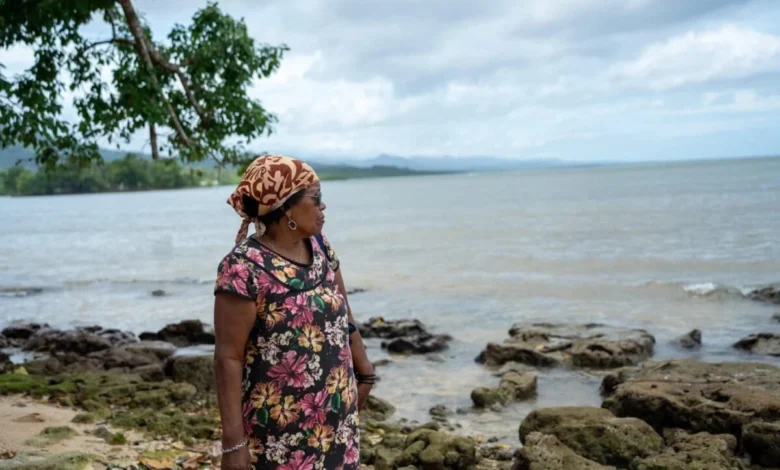
- The South Pacific: A region encompassing critical coral reef systems and deep-ocean biodiversity, currently on the front lines of climate-induced sea-level rise.
By focusing on these specific ecologies, the fund ensures that its resources are directed toward areas where the climate impact is most acute. However, unlike traditional donors, the fund does not arrive with a pre-packaged intervention. Instead, it embeds itself within existing community structures—whether they are tribal councils in the Himalayas or matrilineal women’s collectives in the South Pacific—to support the work that is already underway.
The Mechanics of Unrestricted Funding
In a field often paralyzed by the need for guarantees, Khonikboyeva argues that the demand for "satisfying" answers from project recipients is often a red flag. "If you’re getting a satisfying answer in this space, something isn’t right," she explains. "If someone guarantees you specific results by a specific date, they are likely ignoring the nuance of real-world variables."
Unrestricted funding, in the context of the Home Planet Fund, is not synonymous with a lack of oversight. Rather, it is a mechanism for building trust. When a community faces an unexpected disaster—such as an earthquake or a sudden shift in political stability—unrestricted, flexible capital allows them to pivot resources immediately to meet the crisis. This agility is the antithesis of the "Excel-sheet" approach to philanthropy, where a project is deemed a failure if it deviates from a pre-determined, multi-year budget.
The fund maintains accountability through deep, multi-year relationships. By co-building impact metrics with local leaders, the organization ensures that success is measured by the health of the land and the community, rather than the volume of bureaucratic reports.
The Human Dimension: Healing the Land and the Self
Perhaps the most distinctive aspect of the Home Planet Fund’s philosophy is its emphasis on the intersection of ecological and psychological health. Khonikboyeva posits that the climate crisis cannot be solved by a purely extractive or technical approach. "In healing that land, there is something in people that we can also heal," she states.
This perspective recognizes that many of the communities most critical to global conservation have also been the most traumatized by historical conflict, displacement, and resource scarcity. By investing in these communities, the fund seeks to create a pathway for long-term recovery. The goal is to shift the global climate movement away from a narrative of "fear-based" action—motivated by the dread of a collapsing world—toward a narrative of "hope-based" action, where the preservation of the planet is an act of self-care and cultural reclamation.
Analysis: Implications for the Conservation Sector
The success of the Home Planet Fund represents a potential pivot point for global environmental finance. For decades, the conservation sector has been dominated by large, centralized institutions. While these entities have the capacity to raise significant capital, their impact is often diluted by the "middle-man" effect.
Current trends in philanthropic research suggest that funding directly at the source—to Indigenous groups and local community organizations—yields a higher return on investment for both biodiversity and climate mitigation. Indigenous peoples, who constitute less than 5% of the world’s population, currently manage or hold tenure over roughly 25% of the world’s land surface, which in turn holds 80% of the planet’s remaining biodiversity. Despite this, they receive less than 1% of total global climate finance.
The Home Planet Fund’s decision to reject formal grant proposals is a deliberate strategy to address this disparity. Traditional proposal processes inherently favor organizations with professional grant-writing teams, English proficiency, and existing knowledge of Western philanthropic language. By removing these barriers, the fund opens doors for grassroots groups that possess deep, traditional knowledge but lack the resources to navigate the typical donor maze.
Challenges and Future Outlook
The primary challenge facing the Home Planet Fund is the inherent tension between its model and the expectations of the wider donor community. Most large-scale donors are legally and operationally tethered to strict compliance and reporting requirements. Convincing these entities to adopt a trust-based approach is an ongoing effort.
Khonikboyeva acknowledges this challenge daily. She must balance the immediate, desperate needs of communities on the ground with the slow, deliberate process of educating donors. The organization continues to navigate the complex landscape of international law, financial auditing, and regional political volatility, ensuring that its funds are delivered securely and ethically.
As the organization enters its fifth year, its trajectory offers a blueprint for how philanthropy can evolve. It is a model that prioritizes humility over expertise, and trust over control. For the conservation sector, the message is clear: if we are to successfully address the global climate crisis, we must look beyond the mechanisms of the past and toward the wisdom of those who have been the stewards of the Earth for generations.
Conclusion
The work of the Home Planet Fund is a testament to the idea that the hardest issues—whether they are climate degradation or social trauma—are best solved through the strengthening of community bonds. By fostering a model where power is shared, where local knowledge is respected, and where flexibility is built into every agreement, the fund is not just protecting ecologies; it is redefining the role of philanthropy in the 21st century. As Khonikboyeva concludes, the objective is not merely to avoid a global collapse, but to invest in a future that is worth inheriting—one where the health of the planet and the healing of humanity are understood as inextricably linked.