Methane: The Invisible Accelerant of Global Heating and the Strategic Path to Climate Stabilization

While carbon dioxide remains the primary focus of international climate policy, methane (CH4) has emerged as the most critical "short-lived" lever for preventing the planet from crossing irreversible tipping points. An odorless, colorless hydrocarbon, methane is the primary component of natural gas and the second-largest contributor to the human-driven climate crisis. Despite its relatively short atmospheric lifespan of approximately 12 years, methane possesses a warming potential far exceeding that of CO2. Over a 20-year horizon, methane is more than 80 times more potent at trapping heat than carbon dioxide, making it a uniquely dangerous, yet strategically vital, target for rapid atmospheric cooling.
The Dual Nature of Methane: Biological and Geological Origins
Methane is a simple molecule—one carbon atom bonded to four hydrogen atoms—but its origins are complex and varied. It is generated through two primary pathways: geological and biological. Geologically, methane is formed deep within the Earth’s crust where heat and pressure act upon organic matter over millions of years. This process creates the fossil fuel deposits that currently generate approximately 25 percent of the world’s electricity.
Biologically, methane is a byproduct of methanogenesis, a form of anaerobic respiration performed by microorganisms known as archaea. These microbes thrive in oxygen-poor environments, such as the waterlogged soils of wetlands, the digestive tracts of termites, and the stomachs of ruminant livestock like cows and sheep. This biological process accounts for a significant portion of both natural and anthropogenic (human-caused) emissions.

A History of Atmospheric Surges: From Pre-Industrial Levels to the Present
The trajectory of atmospheric methane concentrations provides a stark illustration of the industrial era’s impact on the Earth’s systems. Before the Industrial Revolution, methane concentrations hovered around 700 parts per billion (ppb). By 2023, the World Meteorological Organization (WMO) reported that levels had soared to 1,934 ppb— a staggering 265 percent increase.
This rise has not been linear. While methane levels stabilized briefly in the early 2000s, they began a rapid and poorly understood acceleration around 2007. Scientists have identified a combination of factors for this surge, including the expansion of hydraulic fracturing (fracking) in North America, increased livestock production globally, and the triggering of natural feedback loops in tropical wetlands. Currently, human activities are responsible for roughly 60 percent of annual methane emissions, with the remainder coming from natural sources that are increasingly being destabilized by rising temperatures.
The Measurement Revolution: Satellites and the Super-Emitter Problem
Accurately quantifying methane emissions has historically been a challenge for climate scientists. Traditional "bottom-up" methods rely on localized measurements and statistical averages—for example, multiplying the estimated methane output of a single cow by the total number of cattle in a region. However, these estimates often fail to account for "super-emitters"—specific facilities or incidents responsible for disproportionately large volumes of gas.
The advent of "top-down" measurement, utilizing high-altitude aircraft and advanced satellite constellations like MethaneSAT and GHGSat, has revealed a significant "implementation gap" in reported data. Recent satellite imagery has detected massive plumes of methane leaking from oil and gas fields in Turkmenistan, the United States, and Russia. In 2022, researchers identified over 1,000 super-emitter events. One incident in Turkmenistan released methane at a rate equivalent to the entire hourly emissions of France.

A 2018 study published in the journal Science found that direct measurements of U.S. oil and gas methane emissions were 60 percent higher than Environmental Protection Agency (EPA) inventory estimates. This discrepancy underscores the necessity of satellite monitoring in holding corporations and governments accountable to their climate pledges.
Major Anthropogenic Sources: Agriculture, Fossil Fuels, and Waste
The global effort to mitigate methane must address three primary sectors that account for over 90 percent of human-caused emissions.
1. Agriculture: The Largest Contributor
Agriculture is responsible for approximately 40 percent of anthropogenic methane. The majority of this stems from "enteric fermentation" in ruminant livestock. As meat and dairy consumption increases globally, these emissions are projected to rise significantly by 2030. Rice cultivation is the second-largest agricultural source, as flooded paddies create the anaerobic conditions ideal for methane-producing archaea.
2. Fossil Fuels: The Strategic Target
The extraction and transport of oil, gas, and coal contribute roughly 35 percent of human-caused methane. This sector is often viewed as the "low-hanging fruit" of climate policy because many leaks can be fixed with existing technology at little to no net cost. Methane is frequently released through "venting" (intentional release), "flaring" (burning off gas), and accidental leaks in aging pipeline infrastructure.

3. Waste Management: A Growing Challenge
Landfills and wastewater treatment systems contribute approximately 20 percent of emissions. As organic waste decomposes in oxygen-starved landfills, it releases "landfill gas," which is roughly 50 percent methane. Due to rapid urbanization and population growth, emissions from the waste sector are expected to grow faster than any other source by 2030.
The ‘Bridge Fuel’ Myth and the Risks of LNG Expansion
For over a decade, natural gas was marketed as a "bridge fuel" that would facilitate the transition from coal to renewables. The logic was simple: burning natural gas for electricity produces about half the CO2 of coal. However, this narrative has been increasingly debunked by climate scientists who point to the "methane leakage" factor.
Research indicates that if as little as 0.2 percent of the methane in the natural gas supply chain leaks into the atmosphere, the climate benefits of switching from coal are entirely erased. Recent data suggests leak rates in many basins are far higher. Furthermore, the expansion of Liquefied Natural Gas (LNG) exports requires energy-intensive liquefaction and long-distance shipping, which increases the carbon footprint. A 2023 study concluded that, when total lifecycle emissions are considered, LNG can have a 33 percent greater global warming potential over 20 years than coal.
Environmental advocates, including Bill McKibben, have warned that the massive build-out of LNG terminals in the U.S. Gulf Coast and Australia threatens to lock in decades of high-methane emissions, potentially neutralizing progress made in the renewable energy sector.

Positive Feedback Loops and the Threat of Tipping Points
One of the most alarming aspects of methane is its role in "positive feedback loops," where initial warming triggers natural processes that cause even more warming.
- Wetland Feedback: Rising temperatures and changing rainfall patterns are causing tropical wetlands to expand and produce methane more rapidly.
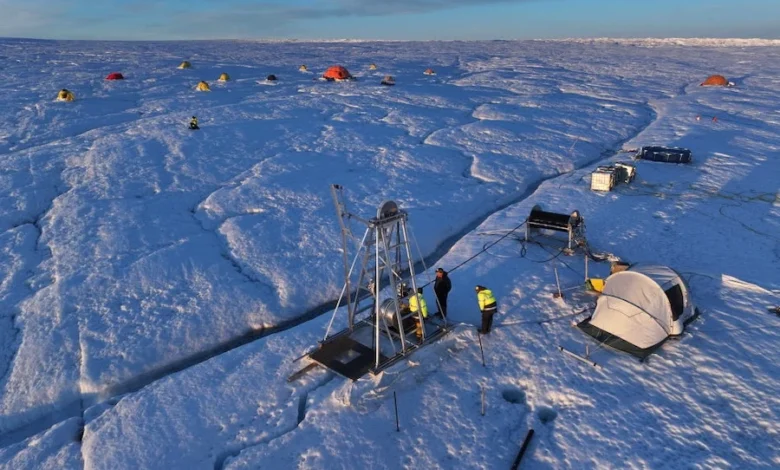
- Permafrost Thaw: The Arctic permafrost contains twice as much carbon as the current atmosphere. As it thaws, microbes begin to decompose organic matter that has been frozen for millennia, releasing both CO2 and methane.
- Wildfires: Increased wildfire activity not only releases stored carbon but also generates significant methane during the combustion process. A 2020 study found that California’s record-breaking wildfire season contributed nearly 14 percent of the state’s total methane emissions for that year.
Public Health Implications: The Ozone Connection
Methane’s impact extends beyond global heating; it is a primary precursor to ground-level ozone (smog). Unlike the protective ozone layer in the stratosphere, ground-level ozone is a potent air pollutant that damages lung tissue and exacerbates respiratory conditions like asthma.
The United Nations Environment Programme (UNEP) estimates that methane-generated ozone is responsible for approximately 500,000 premature deaths annually. Furthermore, ozone reduces crop yields by interfering with photosynthesis. Reducing methane emissions by 45 percent by 2030 could prevent 250,000 deaths from respiratory and cardiovascular diseases and save 26 million tons of staple crops annually.
Mitigation Strategies: From Seaweed to Satellite Monitoring
The Intergovernmental Panel on Climate Change (IPCC) has stated that methane emissions must be reduced by 34 percent by 2030 to keep the 1.5°C goal within reach. Achieving this requires a multi-pronged approach:

- Agricultural Innovation: Adding seaweed (specifically Asparagopsis taxiformis) to cattle feed has been shown to reduce enteric methane emissions by up to 82 percent. In rice farming, "Alternative Wetting and Drying" techniques can cut emissions by 45 percent without reducing yields.
- Oil and Gas Reform: Implementing mandatory leak detection and repair (LDAR) programs and phasing out non-emergency flaring could reduce fossil fuel methane emissions by 70 percent by 2030.
- Circular Economy: Diverting organic waste from landfills toward composting or anaerobic digesters can significantly reduce waste-sector emissions while producing renewable biogas.
International Policy and the Global Methane Pledge
The political landscape changed significantly at COP26 in 2021 with the launch of the Global Methane Pledge. Led by the U.S. and the EU, the pledge now includes over 150 countries committed to a collective goal of reducing global methane emissions by 30 percent from 2020 levels by 2030.
However, progress remains slow. Despite these commitments, methane levels reached record highs in 2023. Critics argue that the pledge lacks enforcement mechanisms and that many major emitters, including China and India, have yet to sign on to the specific 30 percent target. The International Energy Agency (IEA) has emphasized that while the technology to reduce emissions exists, the "implementation gap" between policy and action remains the greatest hurdle.
The Broader Impact: A Strategic Opportunity
Methane represents both the greatest threat to near-term climate stability and the greatest opportunity for rapid progress. Because methane is short-lived, cutting emissions today will result in a measurable reduction in the rate of global warming within our lifetimes. This "cooling effect" could provide the necessary time for the world to tackle the much more difficult, long-term challenge of decarbonizing the global economy.
As the world approaches critical climate tipping points, the focus on methane is no longer optional. It is a strategic necessity. The combination of satellite transparency, technical innovation in agriculture, and a shift away from the "bridge fuel" narrative offers a viable pathway to stabilizing the climate, provided that global leaders move from pledges to verifiable action.
Related posts: