Liberia Faces Escalating Deforestation Crisis as Illegal Cocoa Production Threatens West Africas Last Intact Rainforests

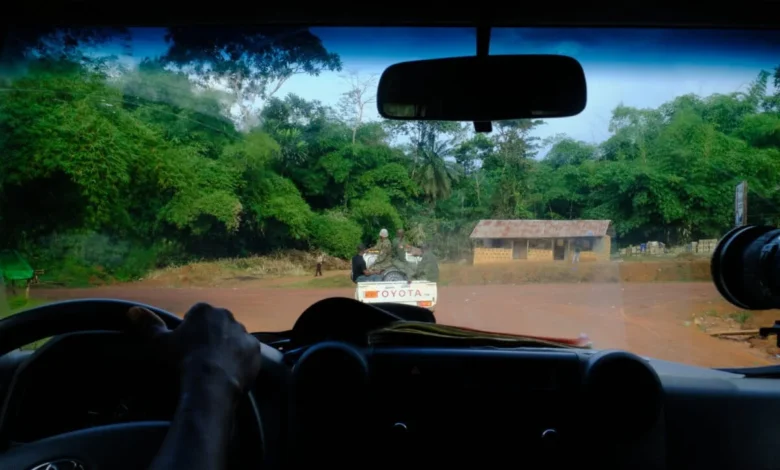
The primary remaining tract of the Upper Guinean rainforest, a critical biodiversity hotspot located in Liberia, is currently experiencing a period of rapid and systemic degradation. Recent satellite monitoring data and on-the-ground investigations have confirmed that vast swaths of pristine forest are being cleared to make way for illegal cocoa plantations. This environmental transformation is driven by a complex intersection of global commodity demand, regional migration patterns, and domestic economic pressures, raising urgent concerns that Liberia may be retracing the ecologically devastating path taken by its neighbor, Côte d’Ivoire.
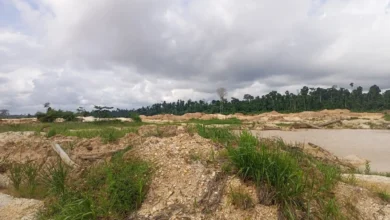
Satellite imagery provided by monitoring agencies such as Global Forest Watch indicates a sharp increase in "pitting" and clear-cutting within protected areas and community forests. These clearings are not the result of traditional subsistence farming but are instead organized efforts to establish cocoa monocultures. As the global chocolate industry continues to expand, the search for fertile, "virgin" soil has pushed deep into the Liberian interior, threatening the last significant sanctuary for numerous endangered species, including the Western Chimpanzee.
Historical Context: The Precedent of the Ivorian Cocoa Boom
To understand the current crisis in Liberia, one must examine the history of the cocoa industry in Côte d’Ivoire. During the latter half of the 20th century, Côte d’Ivoire transformed into the world’s leading cocoa producer. While this brought significant export revenue, the environmental cost was catastrophic. The country has lost more than 80% of its forest cover since 1960, with much of that loss attributed directly to cocoa expansion.
As the soil in Côte d’Ivoire became exhausted and the remaining forest fragments were placed under stricter protection, the "cocoa frontier" began to shift westward. Liberia, which contains roughly 40% of the remaining Upper Guinean forest, became the natural destination for this expansion. The migration of farmers across the border is not a new phenomenon, but the scale and speed of the current encroachment are unprecedented. Many of the migrant workers currently clearing Liberian forests are seasoned cocoa farmers from Côte d’Ivoire and Burkina Faso who possess the technical knowledge of cocoa cultivation but lack legal land tenure in Liberia.
The Mechanics of Illegal Encroachment
The expansion of illegal cocoa in Liberia follows a predictable but clandestine pattern. It often begins with small-scale clearings deep within the forest, away from major roads and government checkpoints. These sites are frequently located within "protected" zones or community-managed forests where enforcement is minimal.
Local landowners and community leaders are often complicit in this process, driven by extreme poverty and a lack of alternative economic opportunities. In many instances, migrant farmers enter into informal agreements with local communities, offering a share of future harvests or upfront payments in exchange for the right to clear forest land. Because the Liberian government’s presence in remote forest regions is sparse, these illegal plantations can operate for years before being detected by authorities.
Forest rangers tasked with protecting these areas report significant challenges. The Forestry Development Authority (FDA) of Liberia suffers from chronic underfunding, a lack of vehicles, and insufficient personnel to patrol millions of hectares of dense jungle. Rangers often find themselves outnumbered and outgunned by organized groups involved in illegal logging and farming, leading to a breakdown in the rule of law within the forest interior.
Biodiversity and the Impact on Endangered Species
The environmental stakes of this deforestation are global. The Liberian rainforest is home to the Western Chimpanzee, an endangered subspecies whose population has declined by more than 80% over the last 25 years. The fragmentation of their habitat due to cocoa farming isolates chimpanzee groups, making them more vulnerable to poaching and disease.
Beyond the chimpanzees, the forest supports a vast array of endemic flora and fauna, including the pygmy hippopotamus and the forest elephant. The conversion of these multi-layered ecosystems into cocoa monocultures results in a total loss of biodiversity. Cocoa trees, while providing a canopy of sorts, do not support the complex web of life found in an intact rainforest. Furthermore, the use of pesticides and fertilizers on these illegal farms often contaminates local water sources, affecting both wildlife and the downstream human populations that rely on the forest for clean water.
A Chronology of Forest Loss and Regulatory Shifts
The timeline of Liberia’s forest crisis is marked by several key periods of transition:

- 2003: The end of the Second Liberian Civil War. The return of stability led to a renewed focus on natural resource extraction as a means of national rebuilding.
- 2006: The Liberian government passed the National Forestry Reform Law, aimed at balancing conservation, community rights, and commercial logging.
- 2014: Liberia and Norway signed a $150 million agreement to protect Liberia’s forests, with Liberia pledging to place 30% of its forest estate under protected status by 2020.
- 2018–Present: Despite international funding, satellite data began to show an uptick in primary forest loss. The "cocoa frontier" became clearly visible in the southeastern counties of River Gee, Grand Gedeh, and Sinoe.
- 2023: The European Union introduced the EU Deforestation Regulation (EUDR), which mandates that companies selling cocoa, coffee, and other commodities in the EU must prove their products did not originate from land deforested after December 31, 2020.
Global Supply Chains and the Role of the European Union
The illegal cocoa grown in the heart of Liberia’s forests does not remain there. It is integrated into global supply chains through a process known as "leakage." Harvested beans from illegal Liberian farms are often smuggled across the border into Côte d’Ivoire, where they are mixed with legally produced Ivorian cocoa. Once the beans are blended, it becomes nearly impossible for international buyers to trace their exact origin.
The European Parliament has taken a leading role in attempting to curb this practice. The EUDR represents the most significant attempt to date to decouple global consumption from tropical deforestation. However, experts warn that without robust enforcement mechanisms on the ground in countries like Liberia, the regulation may simply push illegal production into "shadow markets" or less regulated regions.
Industry analysts suggest that the burden of compliance often falls on the most vulnerable actors—the farmers—rather than the multi-billion-dollar chocolate corporations. If Liberian cocoa is banned from the EU market due to deforestation concerns, it may be sold to markets with lower environmental standards, doing little to stop the actual clearing of the forest.
Perspectives from the Ground: Economic Survival vs. Conservation
Interviews with those living on the forest frontier reveal a complex moral and economic landscape. For many migrant cocoa workers, the move to Liberia is a matter of survival. "There is no more land in my country," one worker stated, referring to the soil depletion in Côte d’Ivoire. "Here, the trees are big and the soil is black. If I don’t plant cocoa, my family does not eat."
Conversely, forest rangers express a sense of futility. "We see the smoke from the clearings, but by the time we get there, the forest is gone," a ranger explained. "We tell the communities that the forest is their future, but they see the cocoa money as their present. It is hard to argue with a man who has nothing."
Government officials in Monrovia acknowledge the crisis but point to a lack of resources. The FDA has repeatedly called for increased international support, not just for monitoring, but for providing "sustainable livelihoods" to forest-dependent communities. The argument is that unless the economic incentive to clear the forest is removed, no amount of policing will be successful.
Fact-Based Analysis of Future Implications
The trajectory of Liberia’s forests over the next decade will have profound implications for regional climate stability. The Upper Guinean forest acts as a massive carbon sink and a regulator of the regional hydrological cycle. Continued deforestation will likely lead to altered rainfall patterns, which paradoxically will make cocoa farming more difficult in the long run.
If the current rate of clearing continues, Liberia risks losing its "green lung" within the next two decades. This would not only be a loss for biodiversity but would also undermine the country’s commitments under the Paris Agreement. Furthermore, the potential for social conflict increases as migrant populations and indigenous communities compete for dwindling land and resources.
The international community faces a critical juncture. The $150 million agreement with Norway was a start, but critics argue that the funds have not trickled down to the forest floor where the actual protection is needed. There is a growing consensus among environmentalists that a new model of "pro-poor" conservation is required—one that recognizes the rights of local communities while providing them with the financial means to protect, rather than exploit, the forest.
In conclusion, the situation in Liberia is a microcosm of the global struggle between commodity-driven economic growth and environmental preservation. As illegal cocoa plantations continue to expand into the country’s last remaining wilderness, the window of opportunity to prevent an ecological collapse similar to that of Côte d’Ivoire is rapidly closing. The success or failure of Liberia’s forest protection efforts will serve as a definitive test of whether global trade regulations and international conservation funding can truly protect the world’s most vulnerable and vital ecosystems.
Related posts: