Retiring Republican Representative Mark Amodei Breaks With Party Tradition in Nevada Congressional Race

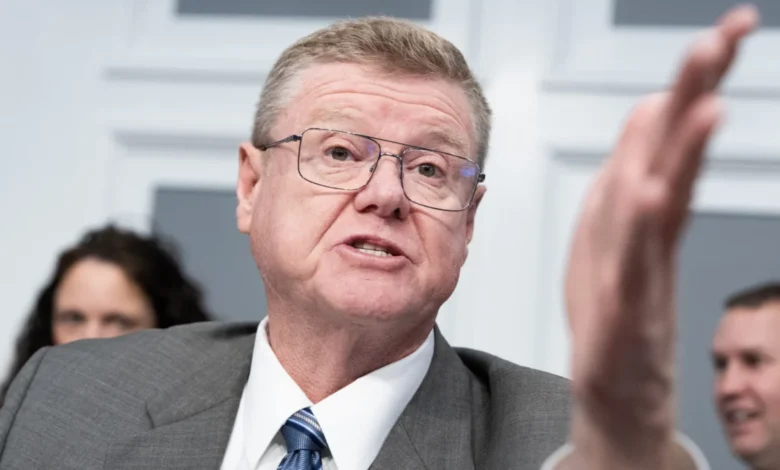
The political landscape of Nevada’s second congressional district, a stronghold that has remained firmly in Republican hands since its inception in the 1980s, is undergoing an unprecedented shift as incumbent Representative Mark Amodei has publicly broken with his own party’s nominee. Amodei, who has served the district for over a decade and has maintained a lifelong record of voting for Republican candidates since age 18, announced that he did not vote for his party’s successor, David Flippo, in the current midterm election cycle. Instead, Amodei cast his ballot for independent candidate Lynn Chapman, citing grave concerns regarding the character, financial transparency, and personal history of the Trump-backed nominee.
This historic rupture between a long-serving GOP lawmaker and his party’s nominee signals a deepening fracture within the Republican Party in Nevada. The decision by Amodei to defect from party lines is not merely a personal disagreement but a reflection of growing alarm regarding the vetting processes and ethical standards applied to candidates seeking federal office in the current climate.
A Career of Loyalty Tested by Ethical Concerns
Mark Amodei’s tenure in the House of Representatives has been marked by a consistent adherence to conservative principles and party loyalty. However, the emergence of David Flippo as the frontrunner to replace him—following an contentious primary—has forced a departure from that pattern. The core of Amodei’s opposition stems from a series of controversies that have plagued the Flippo campaign since its inception.
Chief among these concerns are the allegations that Flippo misrepresented his military service record. The controversy centers on the unauthorized use of military insignia, specifically the "V" device denoting valor, which was affixed to a hat worn by the candidate. Reports indicate that the Bronze Star with "V" device is a prestigious award for acts of heroism, one that Flippo does not possess. When confronted with these discrepancies, Flippo attributed the error to his grandchildren, a claim that Amodei and other observers have dismissed as implausible and indicative of a deeper disregard for the gravity of military service.
Beyond the military record, the scrutiny surrounding Flippo’s professional background as a financial adviser has provided further cause for concern. Records obtained by investigative outlets indicate that Flippo was terminated from his position as a financial adviser in 2024. The stated grounds for his firing involved accusations of "willful misrepresentations and/or omissions of material fact." Such a professional history, critics argue, is fundamentally incompatible with the duties of a member of Congress, which requires absolute transparency in public service and financial stewardship.
Chronology of a Controversial Candidacy
The ascent of David Flippo has been marked by a series of timeline events that have left observers questioning the vetting mechanisms of local and national party organizations:
- 2023: Flippo enters the race for Nevada’s second district, backed by prominent national figures, despite his status as a relatively recent arrival to the Reno area.
- Early 2024: Questions arise regarding the source of funding for the campaign. Flippo is noted for his repeated failure to file required financial disclosure reports, hindering public oversight of his financial standing.
- Mid-2024: Information surfaces regarding Flippo’s termination from his financial firm. The nature of his departure—centered on allegations of misrepresentation—begins to circulate among local political circles.
- September 2026: Media reports highlight the discrepancies regarding the Bronze Star with valor. Amodei publicly labels his potential successor a "fraud," marking the beginning of an open public conflict.
- October 2026: The Democratic Congressional Campaign Committee (DCCC) officially adds the district to its "Red to Blue" program, signaling that the national party views the district as a legitimate opportunity to flip a seat previously considered safe for the GOP.
- November 2026: On the eve of the election, Amodei confirms his departure from party support, casting a vote for independent candidate Lynn Chapman.
The Financial Discrepancies and "Dark Money" Ties
One of the most persistent issues surrounding the Flippo campaign is its connection to "Arizona Land Reserve," an entity involved in litigation regarding alleged business misconduct. Investigations have linked the candidate to hundreds of thousands of dollars in donations originating from this company and its associates.
The lack of clarity regarding these financial ties has created a "dark money" narrative that has haunted the campaign. For a district that has historically valued stability and clear-cut representation, the influence of opaque financial interests has provided a clear opening for Democratic opponent Teresa Benitez-Thompson. The DCCC’s decision to elevate the race to a "Red to Blue" status reflects internal polling suggesting that the district’s electorate, particularly in the Reno area, is increasingly alienated by the controversies surrounding the Republican nominee.
Official Responses and Internal Party Dynamics
The national Republican apparatus has remained largely silent on the specifics of the allegations, focusing instead on the strategic importance of holding the seat to maintain a majority in the House. However, the silence from the top has been deafening to local leaders like Amodei, who believe that the party’s failure to act on these red flags is a dereliction of duty.
Amodei’s perspective is grounded in the belief that the oath of office requires a commitment to integrity that transcends partisan affiliation. "Nowhere in those oaths does it say ignore the candidate who appears to have some material defects and just, you know, be a good Republican," Amodei stated during an interview at his home. His frustration is directed not just at the candidate, but at a political system that he feels has become increasingly tolerant of dishonesty.
On the other side of the aisle, the campaign of Teresa Benitez-Thompson has capitalized on the division. By positioning herself as a stable alternative to a campaign mired in scandal, the Democrat has successfully expanded her appeal to moderate Republicans and independents who might otherwise have stayed home or voted along party lines.
Broader Implications for the Nevada GOP
The fallout from the second district race is expected to have long-term consequences for the Republican Party in Nevada. The state has long been a swing state, but the second district has been a reliable anchor for the GOP. Should the seat be lost, it would represent a catastrophic failure of the party’s primary vetting process.
Furthermore, the "fraud" label attached to the nominee by a respected incumbent provides significant ammunition for opposition research and future electoral challenges. It also raises questions about the "Trump-backed" brand of politics, which has prioritized loyalty to a specific ideology or figurehead over the vetting of individual candidate character.
Political analysts note that the trend of "carpetbagging"—where candidates move to districts where they have few, if any, deep roots—is increasingly being met with skepticism by local voters. When such candidates arrive with baggage, such as employment terminations or exaggerated military records, the electoral consequences can be severe.
Analysis of Electoral Stability
The situation in Nevada highlights a fundamental tension in modern American politics: the conflict between party unity and individual integrity. For decades, the primary system served as a mechanism to vet candidates, but in the current cycle, the power of national endorsements has often bypassed local community consensus.
The fact that a sitting Republican member of Congress would actively campaign against his own party’s successor is an extreme measure, typically reserved for instances of profound moral or legal disagreement. Amodei’s decision to vote for an independent candidate serves as a protest vote that carries significant symbolic weight. It validates the concerns of voters who feel that the political system is no longer prioritizing the qualities of honesty and accountability.
As the votes are tallied, the second district will serve as a bellwether for the future of the Republican party. If the party loses a seat that has been held by them for forty years, the autopsy of the campaign will undoubtedly focus on the vetting failures of the primary season. Regardless of the outcome, the actions of Representative Amodei have ensured that the issues of financial transparency, military record accuracy, and candidate character will remain at the forefront of the discussion regarding the health of the American democratic process.
In the final assessment, the events surrounding the race to succeed Mark Amodei demonstrate that while political parties provide the structure for government, they are ultimately composed of individuals. When those individuals—whether voters or elected officials—decide that the cost of partisan loyalty outweighs the value of integrity, the resulting shifts can fundamentally reshape the political map. The second district, once a quiet bastion of Republican dominance, has become the center of a national conversation about what is owed to the electorate by those who ask for their vote.