Senator Ted Cruz faces intense public backlash during ESPN College GameDay appearance in Austin

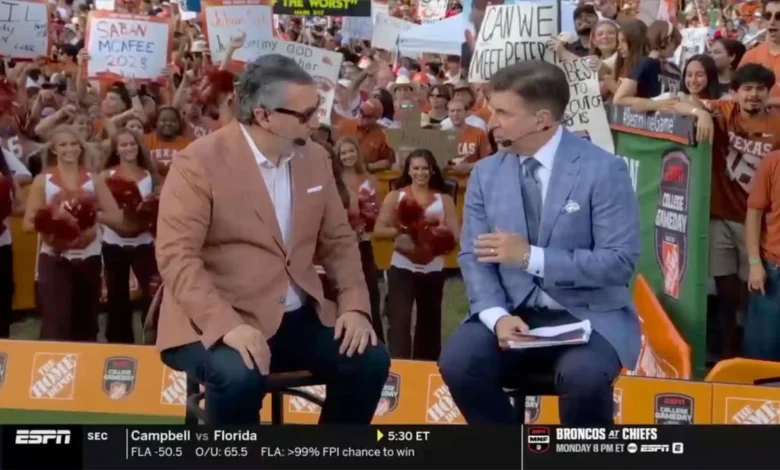
The atmosphere at the University of Texas at Austin was electric on Saturday morning, but for Senator Ted Cruz, the reception was decidedly frigid. As the Republican senator took the stage during ESPN’s flagship program, College GameDay, he was met with a sustained, nearly ten-minute chorus of boos from a crowd gathered for the high-profile showdown between the Texas Longhorns and the Ohio State Buckeyes. The spectacle occurred during a segment in which the senator was invited to discuss the Protect College Sports Act, a piece of federal legislation he is currently championing. The public display of discontent served as a striking visual contrast to the polished television segment, highlighting the growing friction between political interests and the rapidly evolving landscape of collegiate athletics.
Legislative Intent and the Protect College Sports Act
The Protect College Sports Act, introduced as S. 4668, represents a significant legislative attempt to codify the NCAA’s regulatory authority in an era defined by Name, Image, and Likeness (NIL) deals and unprecedented athlete mobility. Proponents of the bill, including Senator Cruz, argue that the current fragmented system of state-by-state regulations creates an unsustainable environment for universities and governing bodies.
The primary objectives of the bill include:
- Establishing a federal framework to allow the NCAA to enforce rules regarding revenue sharing and athlete compensation.
- Standardizing the protocols for student-athlete transfers between institutions.
- Providing the NCAA with a measure of legal immunity from antitrust litigation, which has been a primary driver of the deregulation currently seen across the sport.
Senator Cruz has framed the bill as a necessary stabilization measure. He contends that without federal intervention, the "Wild West" of collegiate recruiting and compensation will inevitably degrade the integrity of the game. However, the bill has drawn sharp criticism from a broad coalition of stakeholders, including the NAACP and the AFL-CIO. These organizations argue that the legislation is designed to consolidate power within the NCAA bureaucracy, effectively stripping student-athletes of their newly gained collective bargaining leverage and limiting their ability to treat their NIL rights as protected labor assets.
A Pattern of Public Discontent
The reception in Austin was not an isolated incident for the Texas senator. Senator Cruz has developed a reputation for encountering vocal disapproval at major public and sporting events. Political analysts often point to the "Cancún incident" of February 2021 as a pivotal moment in his public image. During a catastrophic winter storm that resulted in widespread power grid failures, frozen infrastructure, and at least 246 deaths across Texas, Senator Cruz traveled to Mexico for a family vacation. The optics of the trip, which he later characterized as a mistake, solidified a perception among his critics that he is disconnected from the day-to-day crises affecting his constituents.
This history of public friction followed him to Houston in 2022 during the American League Championship Series. Despite being a vocal supporter of the Houston Astros, Cruz was subjected to jeers and chants of "Go back to Cancún" and "Loser" by fans at Yankee Stadium. Even at the Astros’ subsequent World Series victory parade, where a politician might expect a warmer welcome from the hometown crowd, Cruz was again met with a significant degree of hostility. The Saturday morning event at College GameDay suggests that these sentiments remain prevalent, particularly among younger demographics who make up the core of the college football fan base.
Media Ethics and the Role of ESPN
The decision by ESPN to provide a platform for Senator Cruz to advocate for his bill has ignited a broader debate regarding media impartiality. Critics, such as journalist Jemele Hill, have questioned the journalistic balance of the segment. By airing the senator’s views without providing an immediate rebuttal from a lawmaker who opposes the bill—such as Senator Chris Murphy, a known proponent of athlete advocacy—ESPN has been accused of serving as a promotional vehicle for a specific legislative agenda.
This controversy is compounded by the current climate regarding political discourse on Disney-owned networks. Observers have noted an apparent inconsistency in how political content is handled across the company’s platforms. For instance, the recent decision by ABC to cancel a scheduled interview with Democratic Senate candidate James Talarico—reportedly citing concerns over FCC regulations—has drawn comparisons to the unfiltered access granted to Senator Cruz. While legal experts note that the FCC has limited jurisdiction over cable television content compared to broadcast networks, the discrepancy in coverage has fueled accusations of political favoritism.
The Broader Implications for Collegiate Athletics
The intersection of federal politics and college sports is increasingly unavoidable. The transition from the amateurism model to a professionalized marketplace has created a legal vacuum that Congress seems eager to fill. However, the implications of the Protect College Sports Act extend far beyond the game itself.
- Antitrust Liability: By shielding the NCAA from antitrust litigation, the bill would effectively end the legal challenges that have successfully paved the way for athlete compensation over the last decade.
- Labor Rights: The opposition from labor organizations like the AFL-CIO underscores the fear that student-athletes will be classified as perpetual "students" rather than workers, thereby denying them the right to organize or bargain for better working conditions, insurance, and medical support.
- The Role of Federal Intervention: The push for federal legislation reflects a desperation within the university system to stop the rapid shift in power toward the athletes. Whether this intervention will survive the scrutiny of the courts—or the disapproval of the public—remains a critical point of contention.
Chronology of Recent Legislative and Public Events
- February 2021: The Texas winter storm leads to a state-wide power crisis; Senator Cruz’s trip to Cancún draws national condemnation.
- October 2022: Senator Cruz is heckled at Yankee Stadium during the MLB postseason, highlighting the persistence of public anger.
- November 2022: Despite the team’s success, Senator Cruz faces boos at the Astros’ victory parade.
- 2024–2025: The NCAA faces a barrage of legal challenges regarding athlete compensation and employment status, leading to a push for federal intervention.
- September 2026: Senator Cruz introduces the Protect College Sports Act, prompting industry-wide debate.
- September 12, 2026: During a live ESPN College GameDay broadcast in Austin, the senator faces nearly 10 minutes of uninterrupted booing from the crowd.
Concluding Analysis
The events at the University of Texas serve as a microcosm of the current state of American politics and the changing nature of the media landscape. When political figures step into the world of entertainment and sports, they are forced to confront an audience that may not be aligned with their legislative goals. For Senator Cruz, the Saturday morning broadcast was intended to demonstrate support for a policy that impacts millions of fans and athletes. Instead, it highlighted the deep-seated polarization surrounding his political brand.
As the Protect College Sports Act continues to move through the legislative process, the debate will likely shift from the sidelines of football stadiums to the halls of Congress. Whether the NCAA receives the legislative shield it seeks, or whether the rights of the athletes are further solidified through legal channels, remains to be seen. What is clear, however, is that the era of "sticking to sports" has effectively ended, as the business of collegiate athletics has become inextricably linked to the highest levels of national political debate. ESPN, in its attempt to cover the intersection of these two worlds, finds itself in the crosshairs of a public that is increasingly sensitive to the way political influence is wielded on the airwaves. As the debate over the future of the NCAA continues, the voices heard in Austin—boos and all—suggest that the public is paying close attention to the intersection of influence, policy, and play.