Sony Unveils Massive Price Drops on Bravia 6 OLED TVs with Discounts Reaching Up to 40 Percent

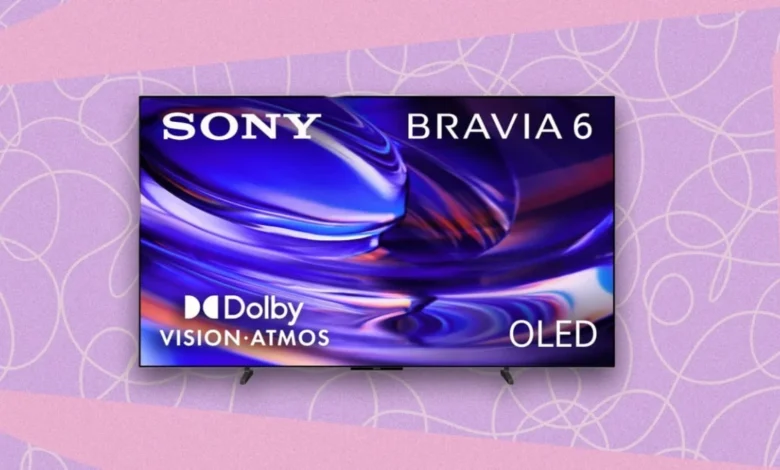
Sony has implemented a sweeping series of price reductions on one of its most widely acclaimed television lineups, dropping the cost of its Bravia 6 OLED TV models by up to 40 percent. The promotional pricing, which rolled out across major electronics retailers, brings the entry-level 55-inch configuration down to $998 from its standard manufacturer’s suggested retail price of $1,499. Furthermore, larger configurations spanning the 65-inch, 77-inch, and 83-inch variants have received identical percentage-based cuts, making premium organic light-emitting diode technology more accessible to consumers navigating the mid-tier home entertainment market.
The aggressive discounting places Sony in direct competition with rival consumer electronics giants such as LG and Samsung, both of which have heavily saturated the market with their own value-oriented OLED and QD-OLED displays. Industry analysts note that this aggressive pricing strategy is designed to capture market share ahead of the critical late-year shopping season, signaling an ongoing industry-wide trend of narrowing price gaps between premium display technologies and traditional LED-backlit LCD panels.
Evolution and Positioning of the Bravia Lineup
Launched in the summer of 2026, the Sony Bravia 6 was engineered to bridge the gap between high-end cinematic performance and consumer affordability. Sony positioned the display as a spiritual successor to its older, highly regarded mid-tier panels, refining both hardware architecture and image processing algorithms. While flagship models like the Bravia 8 continue to target cinephiles and enthusiasts demanding peak luminance and advanced processing suites, the Bravia 6 was strategically developed to deliver core OLED benefits—such as infinite contrast ratios, pitch-black levels, and pixel-level dimming—at a more palatable price point.
The timeline of Sony’s OLED television development over the past half-decade reflects a deliberate shift toward democratizing high-end features. In previous generations, consumers seeking HDMI 2.1 connectivity, high refresh rates, and advanced gaming features were frequently forced to purchase the brand’s most expensive flagship televisions. With the introduction of the Bravia 6 series, Sony sought to address consumer feedback regarding connectivity limitations by incorporating more robust hardware frameworks without escalating the retail price.
Technical Specifications and Hardware Architecture
At the heart of the Sony Bravia 6 is MediaTek’s advanced Pentonic 800 chipset. This silicon integration represents a significant upgrade over previous generations of mid-range processors, providing robust support for four dedicated HDMI 2.1 ports. Historically, a frequent point of criticism directed at Sony’s OLED displays—even among its premier offerings—has been the inclusion of only two full-bandwidth HDMI 2.1 ports, forcing users with multiple next-generation consoles and soundbars to swap cables or rely on external audio receivers. The inclusion of four fully enabled HDMI 2.1 inputs on the Bravia 6 removes this hardware bottleneck, substantially increasing its appeal to multi-console gamers and home theater enthusiasts alike.
The television natively supports 4K resolution at a 120Hz refresh rate, accommodating the peak performance envelopes of contemporary gaming consoles such as the PlayStation 5 and Xbox Series X. Additional gaming-centric features include Variable Refresh Rate (VRR), Auto Low Latency Mode (ALLM), and Enhanced Audio Return Channel (eARC) functionality. For audio reproduction, the display incorporates DTS:X surround sound processing, complementing its visual fidelity with spatial audio capabilities that reduce the immediate necessity for an external soundbar.
In terms of visual performance, the Bravia 6 leverages Sony’s proprietary Cognitive Processor XR, which analyzes content similarly to how the human eye focuses and processes imagery. This results in superior texture rendering, noise reduction, and upscaling of lower-resolution content. However, achieving a lower price point required calculated hardware trade-offs. Most notably, the Bravia 6 exhibits lower peak brightness levels compared to higher-end models like the Bravia 8 or QD-OLED panels produced by competitors. While this reduction in luminance makes the TV slightly less optimal for exceptionally bright, sun-drenched living spaces, it remains highly capable in controlled lighting environments where its exceptional black levels and contrast can shine.

Furthermore, the display features comprehensive support for Dolby Vision, HDR10, and HLG, ensuring compatibility with virtually all major high-dynamic-range streaming formats. Operating on the Google TV platform, the user interface provides seamless access to a vast ecosystem of streaming applications, personalized content recommendations, and integrated Google Assistant voice control.
Market Implications and Competitive Analysis
The decision to discount the Bravia 6 series by up to 40 percent carries broader implications for the global television market. As manufacturing yields for OLED panels continue to stabilize, brands are finding increased flexibility to pass savings on to consumers. However, timing price drops ahead of the traditional holiday retail surge indicates a concerted effort by Sony to maintain competitive parity against aggressive pricing models from LG’s C-series and Samsung’s OLED offerings.
Display market analysts suggest that these steep discounts may accelerate the migration of consumers away from standard LED-LCD televisions. For years, the primary barrier to entry for OLED technology was the substantial price premium associated with organic panels. By reducing the cost of a 55-inch OLED television to under $1,000, manufacturers are effectively closing the price gap that once separated entry-level displays from premium home theater equipment.
At the same time, the hardware choices embedded within the Bravia 6 highlight a shifting philosophy in product segmentation. Historically, manufacturers deliberately crippled mid-range models by omitting essential features, such as full-bandwidth HDMI ports or advanced motion handling, to protect sales of flagship units. By equipping the Bravia 6 with the Pentonic 800 chipset and four HDMI 2.1 ports, Sony has acknowledged that modern consumers—particularly gamers—view comprehensive connectivity as a non-negotiable requirement rather than a luxury reserved exclusively for top-tier buyers.
Consumer Reception and Purchasing Considerations
Initial consumer and critic reception of the Bravia 6 has been largely positive, with particular praise directed at its color accuracy, out-of-the-box calibration, and fluid operating system. Reviewers have consistently emphasized that while the panel cannot match the blinding peak highlights of specialized bright-room displays, the subjective perception of contrast delivered by true blacks more than compensates for the reduction in maximum luminance.
Prospective buyers evaluating the current promotional pricing should consider their specific viewing environments and hardware requirements. Households with heavily sunlit rooms featuring unshielded windows may still find higher-nit LED or Mini-LED displays to be a more practical alternative. Conversely, film enthusiasts who view movies in darkened or moderately lit rooms, as well as gamers seeking a future-proof display with extensive connectivity options, stand to benefit significantly from the current price adjustments.
As retail inventories fluctuate in response to the active discounts, industry observers expect demand for the 55-inch and 65-inch configurations to remain high. Whether these promotional prices will transition into permanent baseline pricing or remain a temporary incentive remains to be seen, but for consumers currently in the market for an OLED upgrade, the window offers a rare convergence of premium processing technology and substantial cost savings.