Life at Sea as the Kennel Master of the Queen Mary 2: Inside the World’s Only Floating Pet Sanctuary

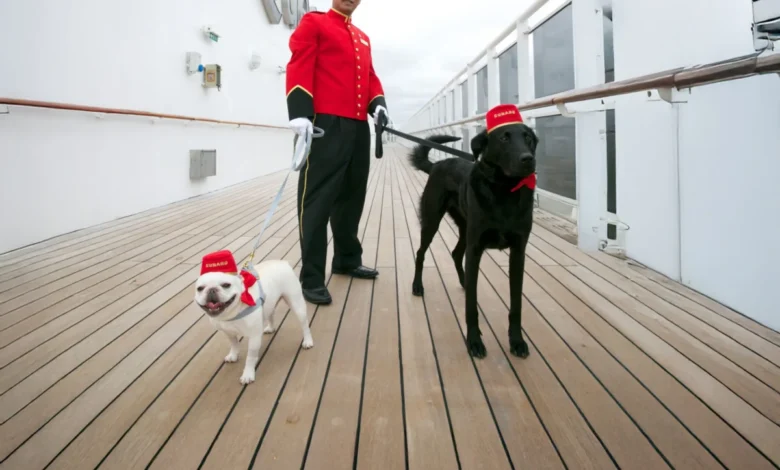
Operating as the sole floating luxury ocean liner offering dedicated animal accommodations, the Cunard Line’s Queen Mary 2 maintains a unique logistical operation on its transatlantic voyages between Southampton and New York. At the heart of this maritime anomaly is Oliver Cruz, the ship’s veteran kennel master. Cruz oversees a specialized 24-space animal shelter situated high on the vessel’s upper decks—a feature that has distinguished the historic liner since its maiden voyage in 2004.
While passengers indulge in white-glove service, grand ballrooms, and lectures from world-class speakers across the Atlantic, Cruz manages an entirely different demographic of traveler: VIP dogs and cats. His daily responsibilities require navigating strict international biosecurity laws, bespoke culinary demands, and the unpredictable temperaments of multi-species passengers.
The Evolution of a Maritime Animal Handler
Cruz’s journey to the high seas was unconventional. He initially boarded the Queen Mary 2 in 2011 to work as a spa attendant. However, when the ship’s housekeeping management discovered his extensive background—eight years working as a professional zoo guide and animal handler in the Philippines, managing species ranging from venomous snakes to crocodiles—they recognized his potential for a more demanding role.
Transferred to the ship’s dedicated kennel department, Cruz quickly found his calling. A lifelong animal advocate and member of the Philippine Animal Welfare Society who cares for 15 dogs at his home in Southeast Asia, Cruz approaches his work with a philosophy rooted in both professional rigor and deep empathy.
"Dogs are angels," Cruz observes. "Not all angels have wings. Some of them have fur."
Over more than a decade at sea, Cruz has managed an eclectic menagerie of passengers. His charges have ranged from diminutive teacup Yorkshire Terriers to massive Bernese Mountain Dogs. One such giant required a specialized daily meal plan consisting of approximately three pounds of freshly minced meat and upwards of 10 distinct nutritional components. Repeat guests are common; Cruz has maintained records for specific dogs completing upwards of 32 transatlantic crossings, meticulously tracking their individual personalities, behavioral quirks, and preferred sleeping quarters across successive voyages.
Life Aboard the Queen Mary 2 Kennel
The onboard kennel operations begin long before the ship departs port. On embarkation day at the passenger terminal, Cruz and his staff conduct rigorous cross-checks of international pet travel documentation. Navigating the complex regulatory requirements of entering foreign ports—particularly the stringent health and rabies antibody titration standards mandated by the United Kingdom—requires meticulous attention to detail. Timestamps, veterinary stamps, and microchip verifications must be flawless to prevent quarantine delays.
Once cleared, the animals are escorted to the kennel deck, where owners are briefed on visiting protocols. The facility is meticulously designed to mimic terrestrial creature comforts. It features an outdoor exercise area colloquially known among the crew as the "poop deck," complete with culturally tailored amenities: an American fire hydrant for domestic canine travelers and a traditional British lamppost for those hailing from the UK.
To mitigate the stress of displacement, owners are encouraged to provide familiar items such as unwashed socks, worn pajamas, and favorite toys, allowing the animals to orient themselves through scent. For bonded pairs traveling together, kennel partitions are routinely removed to allow animals to cuddle overnight.
Culinary operations rival those of the ship’s main dining rooms. Meals are prepared in the vessel’s primary kitchens, adhering strictly to individual dietary specifications. The menu features boiled chicken breast, grilled steak, steamed salmon, Cumberland sausage, scrambled eggs, fresh fruits, and vegetables. To ensure animal safety, Cruz enforces a strict protocol: all meals are prepared completely devoid of salt, pepper, and other seasonings harmful to canine and feline digestive systems.
To maintain a tranquil environment for the animals, public access is heavily restricted. Despite the natural curiosity of passengers eager to view the visiting pets, Cruz limits daily foot traffic to protect the animals from the sensory overload of an unfamiliar maritime environment.
Occupational Hazards and Managing Pet Parents
Working with high-stress animals in a confined, moving environment presents inherent risks. Over his tenure, Cruz estimates he has sustained more than 50 minor dog bites, nearly all incurred while intervening to break up sudden territorial disputes among unfamiliar dogs.
"Nobody bites me intentionally," Cruz notes, emphasizing that decades of handling experience have taught him that behavioral management must be tailored to the individual breed. "The way you treat a husky is not the same way you treat a Shih Tzu."
However, Cruz notes that managing the animals is often secondary in difficulty to managing their human owners. Known affectionately by the staff as "pet parents," owners frequently test the boundaries of onboard rules. Despite explicit warnings against unauthorized treats, Cruz frequently intercepts owners attempting to feed their dogs high-fat, oily foods smuggled from the ship’s galley.
Protocol breaches can occasionally escalate into operational crises. Cruz recalls a harrowing evening during a severe North Atlantic storm when he completed his nightly headcount and discovered a dog missing from the kennels. Panic ensued as he searched the vessel in the driving rain, deploying housekeeping staff across multiple decks to locate the animal before discovering that an owner had quietly retrieved their pet to their private stateroom without notifying the kennel master.
Rehabilitation and Success Stories
Despite the logistical and emotional hurdles, transformative success stories define Cruz’s career at sea. Among the most notable was a rescue dog named Paisley, whose history of mistreatment left her intensely defensive, aggressive, and prone to biting upon arrival.
Recognizing Paisley’s profound distress, Cruz instituted a rehabilitation routine, carving out dedicated one-on-one time after the other dogs were secured for the evening. Through patient boundary-setting and positive reinforcement, Cruz established trust. The breakthrough occurred when Paisley’s owner entered the kennel to find the once-aggressive rescue dog calmly resting in Cruz’s lap and licking his face—a moment that bridged a lasting relationship between owner, animal, and caretaker.
Broader Industry Implications and Pet Travel Trends
The unique positioning of the Queen Mary 2 highlights a broader socioeconomic shift in the global travel and hospitality sectors. As pet ownership surged globally over the past decade, consumer expectations have evolved. Domestic animals are increasingly integrated into lifestyle choices, driving demand for high-end pet-friendly infrastructure in aviation, hospitality, and maritime cruising.
While contemporary luxury cruise lines have steadily expanded accommodations for service animals to comply with international accessibility legislation, Cunard remains the sole commercial enterprise offering non-service pet facilities on a scheduled, transoceanic itinerary. The demand for these 24 kennel spaces remains exceptionally high, often booking out months in advance for peak summer transatlantic crossings.
For prospective travelers considering a voyage with their pets, Cruz offers a foundational piece of advice rooted in behavioral science: animals act as mirrors for human emotion.
"You and your dog are reflections of each other," Cruz advises. "You need to be calm and happy. If you are really nervous, the dog will feel that nervousness too."
For feline passengers, whose neurological responses to travel differ significantly from canines, patience remains paramount. "Cats are the boss," Cruz concludes. "They don’t trust places and people easily, so do not force them. One day, the cat will come to you. Once they become talkative and start asking me for attention, I know: That’s it. We are friends."