Inside the Third Act Suzanne McFaydens Austin Residence Blends Prolific Art with Architectural Intimacy

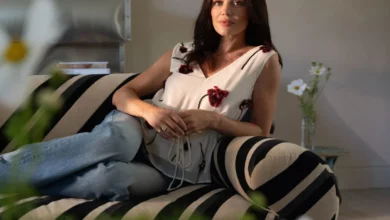
The transition into a new phase of life is often marked by a change in environment, but for Suzanne McFayden, her latest residential project in Austin, Texas, represents more than a simple relocation. It is a curated manifestation of what she calls her "third act." A Jamaican-born writer, philanthropist, and one of the most significant collectors of contemporary art in the United States, McFayden has spent years navigating roles as a student, daughter, wife, and mother. With her youngest child graduating from college, she has turned her focus toward a living space that prioritizes personal nourishment, reflection, and the profound storytelling power of her art collection.

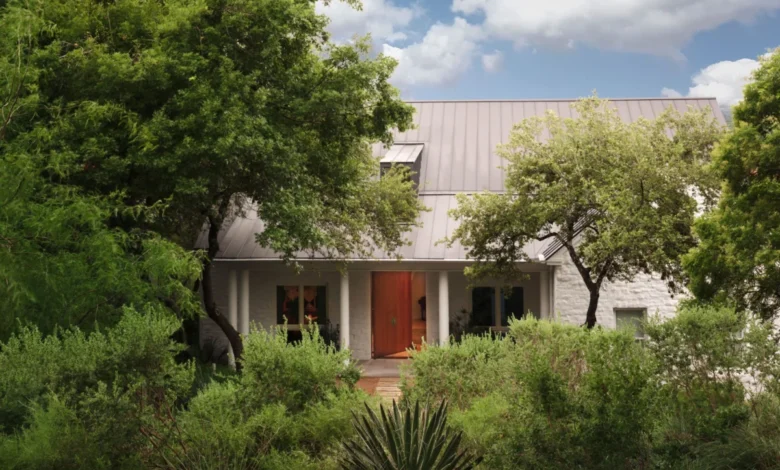
The project reunites the creative team responsible for her previous residence: local architect Paul Lamb and New York-based interior designer Jennifer Vaughn Miller. While their first collaboration resulted in a 7,000-square-foot Brutalist concrete monolith that garnered international acclaim, this new home—nestled within a dense thicket of Red Oak and Live Oak trees in Austin’s Hill Country—pursues a different objective. It moves away from the industrial austerity of concrete toward a "sleeping beauty" aesthetic that emphasizes warmth, texture, and a "society of rooms" designed to house a soul-driven collection of contemporary masterpieces.
Architectural Philosophy and the Society of Rooms
The design of the residence was guided by the philosophy of the legendary 20th-century architect Louis Kahn, who famously stated that "the room is the beginning of architecture." For Paul Lamb, this meant moving away from the open-concept trends of modern luxury real estate and instead focusing on a series of harmonious, individual spaces. This approach allows each room to possess a distinct character while contributing to a cohesive narrative.

McFayden’s previous home was an exercise in minimalism and structural power. In contrast, this new dwelling was conceived to be "cozy and nourishing." Lamb encouraged McFayden to layer the spaces, moving beyond her natural proclivity for minimalism to embrace pieces that reflected her multi-layered identity as a Black woman, an immigrant, and a survivor. The architecture serves as a quiet but sophisticated backdrop for a collection that includes works by some of the most influential artists of the 21st century, including Simone Leigh, Ruth Asawa, and Jean-Michel Basquiat.
The Hall of Ancestors: A Threshold of Identity
The entrance to the home sets a tone of hospitality and cultural heritage. The front door, standing five feet wide and ten feet tall, features a custom pineapple doorknob by local artisan Hawkeye Glenn—a nod to the Jamaican symbol of welcome. Upon entering, guests are greeted by the foyer, which Lamb has dubbed the "Hall of Ancestors."

The space is finished in Domingue limewash paint, providing a soft, ethereal texture that interacts with the natural light. Centered in the room is a vintage Isamu Noguchi Akari light sculpture, hanging above a custom wool rug by Pierre Augustin Rose. The furniture selection—a 2014 Senegalese tribal chair by Babacar Niang and a Haas Brothers "Monkey" bench—bridges the gap between traditional craftsmanship and whimsical contemporary design.
The artwork in this space is intentionally provocative and celebratory. Frida Orupabo’s pinned paper collage, Woman Flying II / Birdy, appears to levitate against the wall, flanked by Sanford Biggers’s Quilt 8 (The Cartographer’s Conundrum). These works, layered over an 1850s antique textile, speak to the themes of resilience and historical reclamation that define much of McFayden’s collection.

Color, Texture, and the Moody Library
Interior designer Jennifer Vaughn Miller was tasked with creating a "calming canvas" that did not compete with the high-impact artwork. Her palette draws heavily from the surrounding landscape, utilizing a spectrum of greens from emerald to olive. However, in the library, the design takes a dramatic, "Dionysian" turn.
Painted in Farrow & Ball’s Radicchio, the library is a saturated, crimson sanctuary. It features a low-slung Mario Bellini sofa for B&B Italia and a custom towering ebony bookcase. The room is illuminated by a Crepuscule floor lamp from Material Lust and a floating pendant by Hervé Van der Straeten. The intensity of the color provides a powerful setting for artworks by Tschabalala Self and Didier William.

The use of tactile materials is a recurring theme throughout the home. In the media room, Lamb designed a black-on-black structure using black-glazed terra-cotta wall tiles by Elgin Butler, sealed with brown mortar. This installation reflects light and creates a sense of momentum, serving as a backdrop for Derrick Adams’s Style Variation 12 and a stoneware sculpture by Simone Leigh.
Art as a Self-Portrait: The Evolution of a Collection
McFayden’s journey as a collector is inextricably linked to her personal growth. She notes that her education in art history at Cornell University often felt external to her own experience. It was not until she attended Art Basel in Switzerland in 2010 that she began to see herself represented in contemporary art. Since then, her acquisitions have become an extension of her internal landscape.

In the powder room, which evokes the atmosphere of a "sultry underground disco," McFayden has placed Carrie Mae Weems’s Portrait of a Woman Fallen from Grace (1987). She views this piece as a form of self-portrait, reflecting her upbringing in a religious household and her eventual embrace of personal agency. Similarly, in the guest bedroom, Lorraine O’Grady’s The Fir-Palm—a surreal photomontage of a woman’s torso merging with a tree—serves as a metaphor for McFayden’s fluid, inclusive identity.
The upstairs study is anchored by a colossal diptych by Ebony G. Patterson. The room, which features a vintage 1950s Gio Ponti Executive desk and a "Beast" chair by the Haas Brothers named Wooly Nelson, is a space for deep work and reflection. The inclusion of Paul Anthony Smith’s A Sense of Familiar further emphasizes the home’s role as a repository of memory and recognition.

Chronology of the "Third Act" Project
The development of this residence follows a clear timeline of McFayden’s personal and philanthropic evolution:
- 2010: McFayden attends Art Basel, marking the beginning of her shift toward art that reflects her identity as a Black woman and immigrant.
- 2020: Her previous Austin home, a Brutalist concrete structure, is featured in Architectural Digest, establishing her as a major figure in the intersection of architecture and art.
- 2020-2023: McFayden serves significant roles in the art community, including as board chair of the Blanton Museum of Art and a trustee of the Studio Museum in Harlem.
- Spring 2024: Her youngest child graduates from college, prompting the finalization of the "Third Act" home as an empty-nester sanctuary.
- Present: The completion of the Hill Country residence, a project that emphasizes "feeling over syntax" and serves as a living museum of contemporary Black excellence.
Supporting Data: The Impact of the Collection
The artists represented in McFayden’s home are not merely decorative choices; they represent a significant segment of the contemporary art market that has seen a meteoric rise in valuation and institutional recognition over the last decade.

For instance, Simone Leigh, whose work is featured prominently in the media and dining rooms, represented the United States at the 2022 Venice Biennale, where she won the Golden Lion for Best Participant. Ruth Asawa, whose wire sculptures hang in the staircase, has seen a posthumous explosion in market demand, with works now regularly exceeding $1 million at auction. By integrating these "soul-driven" acquisitions into her daily life, McFayden is participating in a broader cultural movement that centers Black female perspectives in the domestic and institutional spheres.
Broader Implications and Cultural Significance
The completion of Suzanne McFayden’s latest home is a significant event for the Austin cultural landscape. As the city continues to grow as a tech and business hub, McFayden’s presence provides a vital link to the global contemporary art world. Her residence demonstrates that a home can function as both a high-level private gallery and a "nourishing" personal retreat.

Architect Paul Lamb’s insistence that "feeling is first" and that "there are no rules" in the design of this home suggests a move toward more emotive, personalized architecture in the luxury sector. By eschewing the rigid "syntax" of traditional design, the team has created a space that is both strong and feminine, echoing the character of its owner.
As McFayden enters her "third act," her home stands as a testament to the idea that life’s evolution is not just a chronological progression, but a visual and spatial one. The walls of her residence do not just display art; they tell the story of a life that has been reclaimed, refined, and ultimately celebrated through the lens of beauty and resilience.