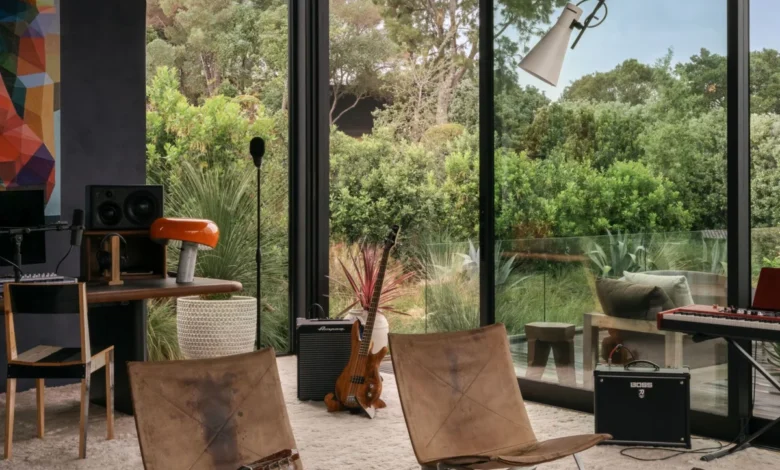
The project, spearheaded by Los Angeles-based designer Luke Foss in collaboration with the homeowner’s creative director, Jenni Witt, required a unique, phased strategy. Unlike traditional design projects that demand a total overhaul before move-in, this residence was a living space for the owner and his two children—a teenager and a preteen—during the entire transformation. This required a logistical commitment to summer-centric renovations, allowing the family to remain in residence while specific zones were elevated to meet their functional and aesthetic needs.

A Phased Approach to Architectural Evolution
The design philosophy behind the Hillsborough residence was rooted in the concept of iteration. The homeowner, who is accustomed to the iterative nature of creative professional work, insisted that the house evolve alongside his own life. This decision transformed the project into a three-year cycle of improvement. During the first summer, the focus was placed on the primary living spaces and the owner’s suite. The subsequent summer addressed the upper-level living areas, the kitchen, and the home office. The final phase concentrated on the granular details, including bathroom fixtures and bespoke accessories.

This approach yielded more than just aesthetic improvements; it allowed the design team to observe how the family interacted with the space. By living in the “work-in-progress,” the client was able to verify the functionality of the flow and the comfort of the furniture. The result is a home that feels lived-in rather than curated, eschewing the stiff formality often associated with large, high-end estates in favor of a “loose, comfortable, and casual” Northern California atmosphere.

Curating the Interior: Materiality and Craftsmanship
One of the most striking aspects of the home is the deliberate departure from the “slick” finishes—such as high-gloss lacquers and stark black metals—that characterized the home’s original architecture. Instead, Foss introduced a palette of earthy tones, walnut and rosewood accents, and tactile textiles. This shift is most evident in the entry, where rough-edge bluestone tile flooring sets a grounded, organic tone.

The entry serves as a crucial threshold for the home’s mood, featuring a George Nakashima table in walnut and rosewood, which acts as a centerpiece for a curated collection of objects, including a polka-dot ceramic vessel by Addison Woolsey. The transition from the lower level to the upper floor further illustrates this commitment to material storytelling. The original glass railing, which Foss likened to a commercial mall aesthetic, was replaced by a custom aluminum rail with glass inserts by artist John Hogan. These inserts were composed through a day-long exercise of tracking the sun’s path, ensuring that the light filtering through the stairwell mimics the progression from a forest floor to the canopy of a tree.

The Role of Art in Defining Space
Art consultancy, led by Nicolás Colón of the San Francisco-based gallery Climate Control, played a pivotal role in the home’s narrative. Rather than forcing art to match the furniture, Colón was granted the freedom to source pieces that possessed longevity and intellectual weight. The collection ranges from international blue-chip names, such as Robert Rauschenberg, to emerging contemporary talents.

In the living room, a giant vintage Noguchi lamp serves as the primary lighting element, modified with color-changing bulbs that allow the room to transition from a daytime family space to an evening entertainment venue without requiring a change in decor. This adaptability is echoed in the primary bedroom, where a custom cork bed by Doug McCollough features integrated aluminum speakers and manual toggles—a nostalgic nod to 1970s audio equipment that avoids the need for smartphone interaction.

Impact of Strategic Design on Family Life
The home was specifically designed to accommodate the needs of a single parent and two active children. The inclusion of a pool table for the kids, alongside a custom DJ booth and a dedicated library for the owner, highlights the multi-generational nature of the home. The kitchen, featuring deep-stained plywood cabinets and white oak floors, serves as the heart of the residence, anchored by custom stools with saddle leather seating.

The use of color and texture in the children’s rooms demonstrates a collaborative design process. The children were given agency in choosing their color schemes, which resulted in rooms that feel both sophisticated and personal. The incorporation of whimsical elements, such as a panda sculpture by Jasmin Anoschkin, provides a playful counterpoint to the more serious design elements found elsewhere in the house.

The Broader Implications of Iterative Design
The Hillsborough project serves as a compelling case study for high-end residential design. It challenges the industry standard of “turnkey” renovations, suggesting that a home’s soul is often found in the time taken to refine it. By engaging with local artisans and millworkers—many of whom Foss knew from his time living in San Francisco—the project also supported the local craft economy, reinforcing the idea that high-quality design is inseparable from regional expertise.

The economic implications of such a project are significant. By spreading the renovation across three years, the client was able to distribute capital expenditures while ensuring that every piece of furniture, from the Sergio Rodrigues vintage armchair to the Cassina sofa, was chosen with intent rather than convenience. This method of “slow design” reduces waste and increases the likelihood of long-term satisfaction, as the residents have the time to understand the house’s light, flow, and personality before finalizing major aesthetic decisions.

Professional Reflections on the Project
Designers and consultants involved in the project emphasize that the success of the Hillsborough home lies in its ability to reconcile the “unexpected” with the “grounded.” Witt notes that the goal was never to chase trends but to foster an environment where history, beauty, and soul could coexist. This sentiment is echoed by Colón, who views the home as a testament to a “life well lived.”

For Foss, the highlight remains the marriage of provenance and craftsmanship. Whether it is the Flos Snoopy table lamp or the Ettore Sottsass lounge chair, every object acts as a bridge between the home’s modern architecture and a more human, historical sensibility. These pieces, while potentially overlooked by an untrained eye, provide a layer of meaning that defines the home’s atmosphere.

Summary of Key Design Elements
- Architectural Modification: Transitioned from a "white box" to a warm, layered environment using wood, stone, and metal.
- Logistics: A three-year, phased renovation strategy allowed the family to remain in residence throughout the process.
- Artistic Integration: A mix of blue-chip and emerging art, curated for longevity rather than trend-chasing.
- Technological Integration: Analog-focused, manual control systems (e.g., custom bed toggles, color-changing lighting) that prioritize tactile interaction over digital interfaces.
- Materiality: Emphasis on natural, tactile materials such as washed canvas, velvet, cork, and bluestone, moving away from high-gloss, synthetic finishes.
As the Hillsborough residence stands today, it is no longer just a high-end property in Northern California; it is a manifestation of how professional design, when applied with patience and personal investment, can create a space that is as functional as it is evocative. The project serves as a reminder that the most successful homes are not those that are perfectly finished on the day of move-in, but those that are allowed to evolve, grow, and reflect the changing chapters of the lives of those who dwell within them. By eschewing the immediate gratification of a total, one-time renovation, the homeowner has secured a residence that is truly, and uniquely, his own.