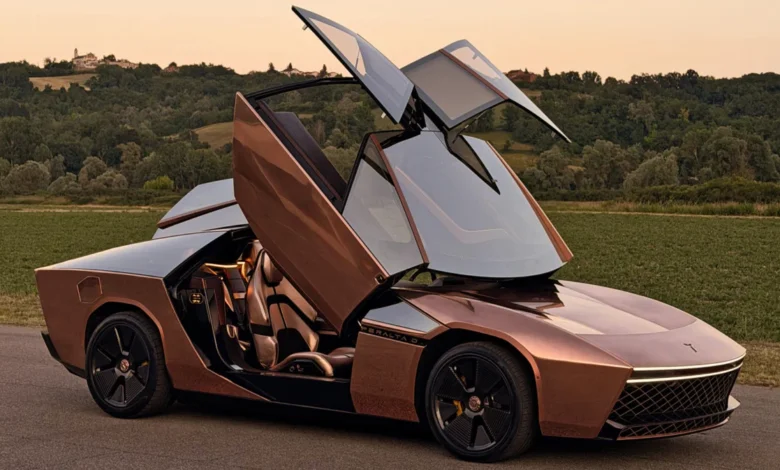
Turin-based design powerhouse GFG Style has once again captured the attention of the global automotive community with the debut of its latest coachbuilt masterpiece. Founded in 2015 by legendary automotive designer Giorgetto Giugiaro and his son Fabrizio following their departure from Italdesign, the studio has forged a reputation for avant-garde, bespoke creations that push the boundaries of traditional automotive form and function. Their newest creation, unveiled at the prestigious 2026 Pastejée Automotive Invitational, is a striking, one-off grand tourer known as the Peralta D. Hand-crafted from hammered copper and draped over the robust mechanical architecture of a Maserati GranTurismo, the Peralta D represents a masterclass in artisanal manufacturing, geometric design philosophy, and deeply personalized automotive engineering.
The genesis of this remarkable project traces back to a collaborative relationship between GFG Style and Carlos Peralta, a prominent Mexican businessman and a longtime friend of the Giugiaro family. The commission is part of a familial pairing that highlights both the technical capabilities of the Turin studio and a deeply personal narrative. Last year, GFG Style delivered the Peralta S, a mid-engined supercar based upon the Maserati MC20 platform and constructed with a lightweight aluminum body. Commissioned by Peralta as a dedicated tribute to his sons, the Peralta S drew widespread critical acclaim for its retro-futuristic styling cues, which many automotive historians likened to a modern reinterpretation of the iconic Maserati Boomerang.
Following the successful realization and delivery of the Peralta S, the creative synergy between the client and the designers naturally evolved. This led to the commissioning of a sibling vehicle—the Peralta D—specifically dedicated to Peralta’s daughters. While the Peralta S utilized the athletic, mid-engine proportions of the MC20 to channel aggressive supercar energy, the Peralta D takes a decidedly more classical approach. It adopts the front-engined, 2+2 grand tourer layout of the Maserati GranTurismo, wrapping the donor vehicle’s sophisticated mechanical components in a completely bespoke, hand-beaten copper exterior. Unveiled to collectors, designers, and enthusiasts on October 24, 2026, the Peralta D has officially taken its place within Carlos Peralta’s exclusive private collection. While financial figures remain strictly confidential between the studio and the client, industry analysts note that bespoke, one-off commissions executed by high-profile design houses of this caliber invariably command multi-million-dollar valuations, reflecting the thousands of hours of specialized craftsmanship required to bring them to fruition.
The Philosophy of Geometric Harmony
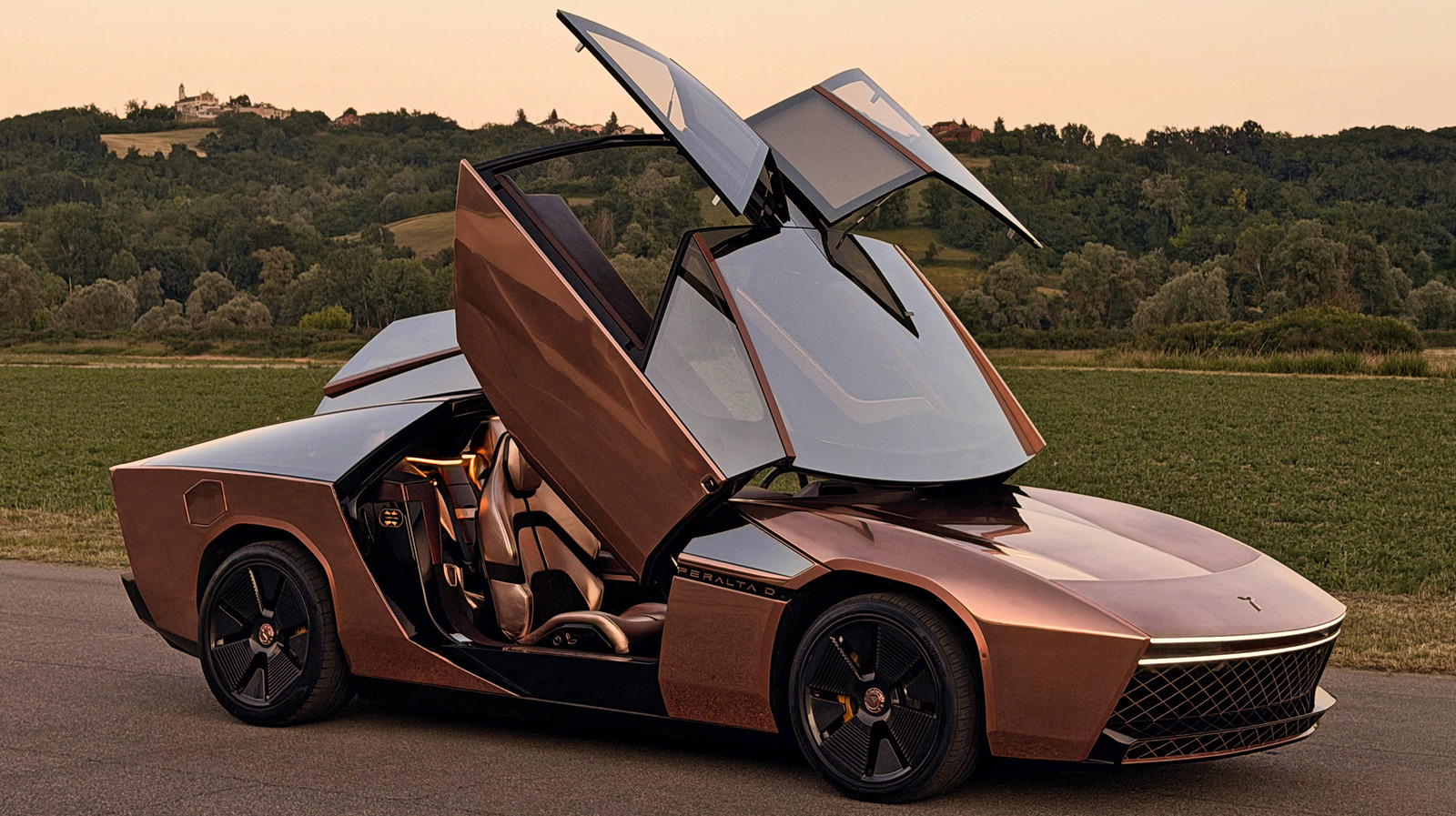
At the heart of the Peralta D’s aesthetic appeal is a design language that GFG Style terms "geometric harmony." This philosophy relies on the interplay of sharp, unbroken character lines, vast expanses of glass, and immaculate surface tension to create a silhouette that feels simultaneously timeless and futuristic. The exterior styling builds directly upon the foundational design principles established by the Peralta S, translating those wedge-shaped cues into a larger, more commanding grand touring footprint.
The front fascia is defined by a full-width LED light bar that seamlessly integrates into the razor-sharp nose, underscored by an intricate honeycomb pattern integrated into the front bumper. Viewed from the side, the vehicle’s greenhouse forms a continuous visual arc that stretches uninterrupted from the front wheel arches all the way to the aggressively tapered, angular tail. This wedge-shaped roofline is complemented by minimalist, fender-mounted side mirrors and a bespoke hexagonal fuel cap that subtly nods to classic racing heritage. At the rear, a discreetly integrated carbon-fiber diffuser frames a set of quad tailpipes, hinting at the potent internal combustion engine ticking away beneath the expansive clamshell hood.
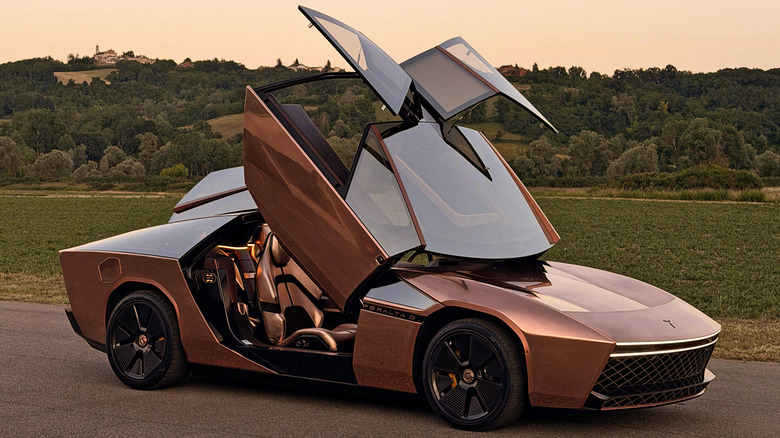
Perhaps the most striking visual and architectural feature of the Peralta D is its fenestration and entry system. The expansive glasshouse is tinted in a warm copper hue that matches the metallic sheen of the body panels, filtering light into the cabin in a dramatic fashion. To facilitate entry into the 2+2 interior, GFG Style engineered a unique dual-access system: the front canopy tilts forward in fighter-jet fashion, while a set of four gullwing doors opens upward to provide effortless access to both front and rear seating areas. The exterior aesthetic is grounded by a set of retro-futuristic, aerodynamically optimized alloy wheels finished in a deep anthracite black, creating a deliberate contrast against the gleaming, organic warmth of the hand-hammered copper bodywork.
Bespoke Interior Craftsmanship and Luxury Appointments
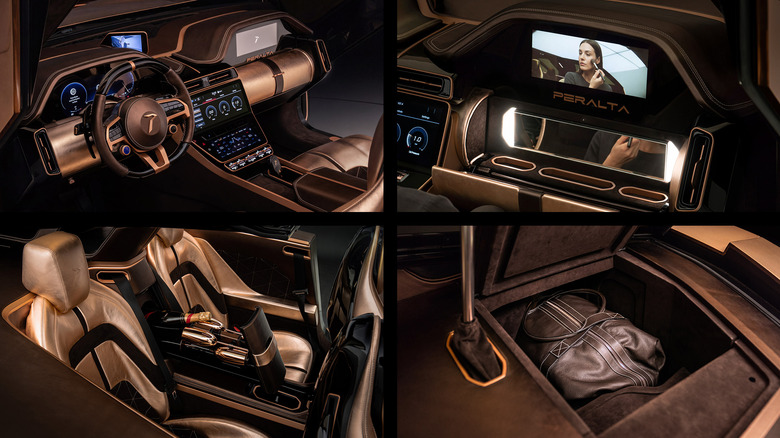
Stepping inside the cabin of the Peralta D reveals an interior space that bridges the gap between modern digital technology and old-world coachbuilding opulence. While the vehicle retains the core digital instrument cluster and central infotainment architecture sourced directly from the donor Maserati GranTurismo, GFG Style has heavily customized the environment to reflect the tastes of its commissioning owner.
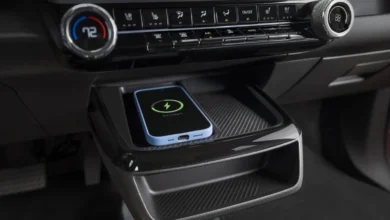
The dashboard layout has been expanded to include an additional, dedicated passenger-side digital display, ensuring that co-drivers are fully immersed in the driving experience. Attention to detail is evident in minor yet luxurious touches, such as a large, illuminated vanity mirror integrated into the glovebox door and a custom-engineered champagne holder nestled securely between the rear passenger seats. The material palette inside the cabin is equally lavish, pairing shiny gold and copper upholstery accents with rich brown leather hide. This combination is further elevated by intricate, contrasting stitching that traces the contours of the seats, door cards, and dash panels, creating a warm, inviting, and thoroughly exclusive sanctuary for four occupants.
Maserati Underpinnings and Engineering Challenges
Beneath the artisanal copper skin and the lightweight carbon-fiber and aluminum structural framework lies the tried-and-tested engineering of modern Maserati performance. Although GFG Style has kept specific technical performance figures under wraps, the donor vehicle—the Maserati GranTurismo—provides a formidable mechanical foundation.
Standard production variants of the modern GranTurismo are propelled by Maserati’s acclaimed twin-turbocharged 3.0-liter "Nettuno" V6 engine. Depending on the specific tune, this power plant generates between 483 horsepower (360 kW) and 543 horsepower (405 kW). While Maserati also produces a fully electric iteration of the GranTurismo known as the Folgore, the presence of physical quad tailpipes protruding from the Peralta D’s rear diffuser definitively confirms the presence of a roaring internal combustion engine beneath its long hood. The integration of a hand-hammered copper body over a modern high-performance chassis required meticulous engineering to ensure that the added weight of the noble metal did not compromise the vehicle’s driving dynamics, weight distribution, or structural rigidity.
Reflecting on the completion and public reveal of the project, Fabrizio Giugiaro emphasized the collaborative spirit and technical ambition that drove the design team forward.
"The Peralta D was born from the positive energy and creative synergy established with Carlos Peralta during the development of the Peralta S," said Fabrizio Giugiaro. "We wanted to build on that stylistic journey by exploring the expressiveness of a fascinating and complex material like copper. The challenge was to combine a minimalist aesthetic—characterized by clean lines and elegant details—with cutting-edge functional solutions to create a true 2+2 Gran Turismo coupe."
Broader Industry Implications of Modern Coachbuilding
The unveiling of the Peralta D at the 2026 Pastejée Automotive Invitational underscores a broader, ongoing renaissance within the upper echelons of the automotive industry: the resurgence of bespoke coachbuilding. In an era dominated by automated mass production, stringent regulatory compliance, and shared platform architectures among mass-market automotive conglomerates, ultra-wealthy collectors are increasingly turning to heritage design houses like GFG Style to create rolling works of art that are entirely unique.
Projects like the Peralta S and Peralta D demonstrate that traditional craftsmanship—such as hand-hammering copper and aluminum panels—remains a viable and highly sought-after art form. Furthermore, this trend highlights how independent Italian design studios continue to leverage the mechanical reliability and high-performance engineering of established manufacturers like Maserati to bring imaginative, one-off automotive fantasies into physical reality. As long as discerning patrons with a passion for design and engineering continue to commission such visionary projects, coachbuilding will remain a vital testbed for automotive artistry, cementing the legacy of legendary names like Giugiaro for generations to come.