The Jensen Interceptor GTX prototype is currently a track-only beast that previews a future road-going resurrection of a British motoring icon.

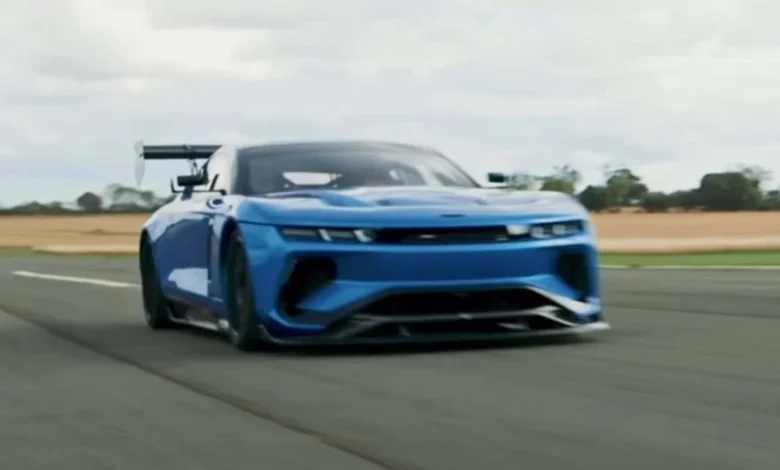
The automotive world is currently witnessing the meticulous resurrection of one of Britain’s most storied nameplates. The Jensen Interceptor, a vehicle historically celebrated for its grand touring capability and brutalist charm, has returned in the form of the Interceptor GTX. While the current iteration remains strictly confined to the track, the ongoing development program signals a clear intent from the manufacturer to transition this high-performance prototype into a series-production road car. By blending classic British automotive heritage with the raw, displacement-heavy power of American engineering, Jensen is positioning itself to compete in the ultra-luxury, high-performance GT segment.
A Chronology of the Return
The path to the GTX prototype has been a long-gestating project aimed at modernizing a legacy brand without sacrificing its original spirit. Jensen, a name that largely vanished from the mainstream consciousness following its financial collapse in the 1970s, began teasing a modern return several years ago.
The project gained significant momentum recently as the company finalized the engineering parameters for the GTX. Throughout 2024, the focus shifted from concept renderings to physical testing. The debut of the prototype marked the transition from digital design to real-world track testing, providing engineers with the data necessary to refine the suspension, chassis rigidity, and thermal management of the vehicle. This current testing phase is critical; it serves as the foundation for the road-legal variants—the GT and GTR—that the company plans to introduce in the coming years.
Engineering the Powerplant
At the heart of the Interceptor GTX lies a mechanical marriage of convenience and performance. Jensen sources a robust General Motors-derived 6.8-liter V8 engine, which is then dispatched to Late Model Engines (LME) in Texas for an extensive, ground-up overhaul. This is not a simple engine swap; it is a complete reconstruction designed to handle extreme stress and output.
The technical specifications of this mill are nothing short of formidable. LME replaces the internal rotating assembly with high-strength, race-grade components, installs bespoke CNC-machined cylinder heads, and incorporates titanium valves to reduce reciprocating mass and increase high-RPM reliability. The intake system is augmented by a high-capacity supercharger, and the entire combustion process is governed by a Motec engine management system, allowing for precise control over fuel maps and ignition timing.
In its current state of tune, the engine produces approximately 973 horsepower. However, according to engineering briefings, the platform is capable of sustaining outputs of up to 1,200 horsepower with a more aggressive calibration. This power is routed through a traditional manual gearbox, a choice that underscores Jensen’s commitment to an analog, driver-focused experience—a rarity in an era increasingly dominated by dual-clutch transmissions and heavy hybrid-electric systems.
The Philosophy of the GTX Platform
Jensen’s development strategy is divided into two distinct objectives: the current race-derived prototype and the future public-facing models. The prototype serves as a mobile laboratory, allowing Jensen to push the chassis to its absolute limits under controlled, high-stress conditions. By identifying the failure points and performance bottlenecks in a track environment, the company aims to ensure that the eventual road cars possess the structural integrity and reliability expected of a luxury GT.
The planned road-going lineup consists of two primary tiers:
- The GT: A grand touring model designed for long-distance comfort, featuring refined suspension tuning and a luxurious interior, while retaining the high-displacement V8 punch.
- The GTR: A more sporting, focused iteration likely to borrow more heavily from the aerodynamic and suspension setups currently being refined on the GTX prototype.
By creating this dichotomy, Jensen hopes to capture both the traditionalist luxury market and the modern supercar enthusiast who demands track-day capabilities.
Market Context and Industry Implications
The revival of Jensen arrives at an interesting inflection point for the automotive industry. As global manufacturers move toward mass electrification, a small-batch, combustion-only, high-horsepower vehicle represents a niche yet highly desirable commodity for collectors and driving purists.
However, the transition from a track-only prototype to a road-legal vehicle involves a daunting regulatory landscape. Homologation—the process of certifying a vehicle for public roads—requires meeting stringent crash safety standards, emissions regulations, and noise pollution mandates. These hurdles often prove insurmountable for small-scale manufacturers. For Jensen to succeed, they must successfully integrate modern safety systems—such as advanced airbags and electronic stability control—without compromising the vintage aesthetic and lightweight ethos that define the Interceptor legacy.
Furthermore, the price point of the final production version is expected to be significant. Given the custom nature of the engine, the boutique manufacturing process, and the development costs of bringing a low-volume car to market, the Interceptor GTX will likely be positioned alongside ultra-luxury rivals like Aston Martin and bespoke coachbuilders.
Expert Analysis and Future Outlook
From an industry standpoint, the Interceptor GTX is more than just a car; it is a proof of concept for the brand’s viability. If Jensen can maintain the current build quality and successfully navigate the transition to mass production, they will have successfully carved out a profitable space in the "heritage-revival" sector of the market.
The auditory profile of the vehicle has already generated significant buzz. In an era where many performance cars rely on synthesized exhaust notes, the visceral, raw sound of the 6.8-liter supercharged V8 acts as a primary marketing tool. It bridges the gap between the nostalgic appeal of the original 1960s Interceptor and the technological requirements of the 2026 model year.
While the company remains tight-lipped regarding specific timelines for the release of the road-legal variants, the current trajectory is positive. The transition from the "track-only" prototype phase to the "road-car development" phase will be the most significant indicator of the project’s long-term sustainability. For enthusiasts, the waiting game continues, but the promise of a manual-transmission, 1,000-horsepower British GT remains a compelling prospect in a market that is otherwise becoming increasingly homogenized.
Jensen has managed to do what many failed to achieve: they have made the market care about a forgotten brand again. Whether they can deliver a product that lives up to the reputation of the Interceptor name will depend on the upcoming phases of testing and the eventual, inevitable shift from the track to the showroom floor. For now, the automotive world watches with bated breath, waiting to see if this British beast can truly be tamed for the open road.