Fatal ICE Shooting in Biddeford Unearths Agent’s Troubled Past and Raises Alarms Over Agency Vetting and Training Practices

The fatal shooting of Johan Sebastián Durán Guerrero by an Immigration and Customs Enforcement (ICE) agent in Biddeford, Maine, has ignited a firestorm of controversy, casting a harsh spotlight on the agency’s recruitment and training practices. The agent, identified as David Brouillette, joined ICE earlier this year, and his involvement in the July 13 incident has brought forth a disturbing history of alleged domestic violence and professional instability, according to his former wives and court records. This case is rapidly becoming a flashpoint in the ongoing national debate surrounding the accountability and operational standards of federal law enforcement, particularly amidst accelerated hiring initiatives within ICE.
The Tragic Incident in Biddeford
On a quiet day in Biddeford, Maine, 25-year-old Johan Sebastián Durán Guerrero, a Colombian national and devoted father, was fatally shot during an ICE operation. Durán Guerrero, who arrived in the United States in 2023, was reportedly not the primary target of the operation. He had established a life working cleaning jobs and delivering food, and his partner, Martha Karolina Rojas Álvarez, described him as a man of infectious joy and deep commitment to his family, particularly his 3-year-old daughter. "He always said I was his life, and that he dreamed of a whole lifetime with me," Rojas recounted through a translator at a press conference, adding, "He always told me, Until we’re little old people."
Following the shooting, agent David Brouillette contacted his ex-wife, Ashley Brouillette, informing her he had shot Durán Guerrero and claiming self-defense, alleging Durán Guerrero tried to hit him with a car. However, Ashley Brouillette, after reviewing available surveillance footage, expressed profound skepticism, stating she believes her ex-husband "murdered" Durán Guerrero. The footage, while capturing moments before and after the shooting, has not publicly revealed the exact instant of the fatal encounter, leaving critical questions unanswered and fueling public outcry.
A Pattern of Alleged Violence: David Brouillette’s Troubled Past
The immediate aftermath of the Biddeford shooting quickly peeled back layers of David Brouillette’s personal history, revealing a deeply troubling pattern of alleged violence and aggression. His first ex-wife, Ashley Brouillette, who had not heard from him since a November voicemail containing death threats against her and their daughters, was stunned to learn of his involvement through a journalist’s inquiry. She recounted years of abuse during their marriage, which ended in 2009. These harrowing allegations, corroborated by her mother and documented in past child welfare records, include an incident where David allegedly threw hot water at her while she held their daughter, and another where he reportedly pointed a gun at her, threatening to shoot her in their bathtub. When David contacted Ashley post-shooting, asking her to speak positively about his character and to avoid mentioning past abuse, she refused, stating, "I’m not going to lie for you."
Further amplifying these concerns, Lucinda Brouillette, David’s second ex-wife, issued a stark statement to reporters, asserting her "unequivocal" belief that David is capable of extreme acts of violence. Court records, spanning hundreds of pages, detail her accusations of both physical and verbal abuse, including a disturbing account of David allegedly dumping a plate of spaghetti on his 13-year-old daughter’s head and then tackling her as she wept. Lucinda articulated a long-standing fear: "I have feared for a long time that his anger, aggression, and escalating behavior would eventually result in severe, life-threatening violence, and I often believed I would be the one on the receiving end of it."
These accounts raise significant questions about the thoroughness of background checks for individuals entrusted with lethal force by the government. The existence of such documented allegations of domestic violence and threats would typically be considered a severe disqualifier for any law enforcement position, particularly one involving the carrying of a firearm. Claire Trickler-McNulty, a former ICE official who served in both the Biden and first Trump administrations, remarked, "The seriousness of the allegations—domestic violence—you’d think would likely be disqualifying for someone who’s going to be armed by the government."
Brouillette’s Erratic Career Path and Financial Struggles
David Brouillette’s professional trajectory paints a picture of ambition intertwined with instability. According to Scott Collins, a childhood best friend, Brouillette harbored a long-standing desire to be a police officer, dating back to high school. Collins observed, "I always thought it was a superiority thing. He always wanted to be in a position of power."
After graduating from Gardiner Area High, Brouillette joined the Maine National Guard in 2007, subsequently enlisting in the Army in 2010. His military service included a nine-month deployment to Afghanistan. An estranged relative suggested that "Afghanistan destroyed him," hinting at the profound psychological toll of combat. Upon returning, Brouillette transitioned through various roles, including a corrections officer and later a police officer with the Department of Veterans Affairs (VA). He also briefly served as a volunteer firefighter in Manchester, Maine, but was reportedly fired by his former boss, Frank Wozniak, for threatening to "punch me in the face and take my job." Although rehired by a subsequent fire chief, this incident further underscores a pattern of confrontational behavior.
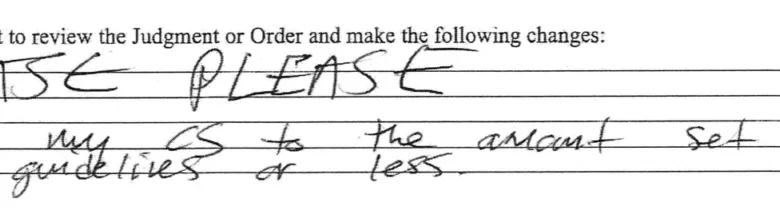
Brouillette’s personal life was also marked by significant financial distress. In 2020, he pleaded with a Maine court to reduce his child support payments following his second divorce, writing in a handwritten statement, "I am NOT ABLE to survive. PLEASE PLEASE reduce my [child support]." In January 2025, he quit a truck-driving job, citing unspecified health issues. However, a judge later determined he was "voluntarily underemployed" and denied his request to reduce child support that November. It was just two weeks later that he informed Ashley he was joining ICE, an agency then offering signing bonuses of up to $50,000. For Brouillette, after years of professional struggles and financial hardship, ICE’s recruitment drive likely represented a much-needed lifeline. Ashley, initially skeptical due to a previous unfulfilled claim of joining the Secret Service, recalled thinking, "Yeah, sure, buddy." Even his childhood friend, Scott Collins, only learned of Brouillette’s ICE employment after the July 13 shooting, remarking, "To be honest, I was surprised anybody would give that man a gun."
Scrutiny of ICE Recruitment and Training Protocols
The circumstances surrounding David Brouillette’s hiring and deployment have intensified existing concerns about ICE’s recruitment and training processes. For months, Democratic lawmakers have voiced alarms that ICE, in its push to hire over 12,000 new officers and agents, has been rushing recruits onto the streets without adequate preparation. These concerns are not new; reports have previously highlighted instances where ICE recruits were sent to field offices before completing proper training.

A critical point of contention is ICE’s policy regarding prior law enforcement experience. A current job posting for deportation officers indicates that individuals with "Local, State or other Federal Law Enforcement training with arrest authority will be exempted" from ICE’s standard basic training program in Georgia. This multi-week program is designed to immerse recruits in the nuances of their new role, including essential de-escalation techniques aimed at preventing the use of force. Given Brouillette’s tenure with the VA Police, he may have been eligible for this expedited path, raising questions about the depth of his ICE-specific training.
Marc Brown, a policing expert at the University of South Carolina and a retiree from the Federal Law Enforcement Training Centers, emphasized that under the Biden administration, it was uncommon for federal law enforcement recruits to skip significant portions of training, even with prior experience. "You don’t usually get a full pass, especially if you go into a totally different program," Brown stated, highlighting that the mission and operational context of departments like the VA are distinctly different from ICE. "Those are two totally separate systems; they need training on that new mission." VA police, Brown noted, primarily function as security guards for VA hospitals rather than municipal police patrolling streets or conducting traffic stops, implying a different scope of use-of-force training. ICE did not respond to inquiries about Brouillette’s specific training or whether VA officers receive training on use of force against individuals in vehicles.
The ICE job posting specifies that while experienced recruits might bypass basic training, they must complete a "Deportation Officer Transition Program." However, this newer program is less familiar to experts like Brown. The total training for deportation officers is listed as approximately 50 days. Anecdotal evidence from online forums, however, suggests a potentially much shorter process for some. One officer with prior Homeland Security experience claimed a virtual training program took only three days. Trickler-McNulty, the former ICE official, confirmed that allowing former law enforcement officers to skip basic training is a recent shift, particularly under the "Trump 2.0" framework. She expressed apprehension that instructors are losing a crucial opportunity "to lay eyes" on recruits and assess "how they’re interacting and responding to training before they’re out in the field."
Ryan Schwank, a former ICE instructor and attorney who resigned in February, further corroborated these concerns, arguing that even recruits who complete the full training program are inadequately prepared for their roles. He told WBUR that ICE’s instruction on vehicle stops is "fairly short and kind of rote," testing officers under ideal conditions rather than "their ability to handle complex crises or how to handle the types of situations we’re seeing happen," such as the one in Maine. "The officers are being put in a situation where they’re dealing with the public and these vehicles, and their training doesn’t line up with the role they’re expected to fulfill," Schwank concluded, calling it "very clear at this point that officers are being rushed out to make these arrests, and there’s an operational failure taking place."
Systemic Failures and Incomplete Background Checks
In response to mounting criticism, ICE has reportedly increased its core training program from 42 days to approximately 71 days, incorporating more instruction on high-risk vehicle stops, effective this month. However, this adjustment may not address a more fundamental flaw: the agency’s practice of not always conducting full background checks before deploying recruits. The Associated Press recently uncovered cases of other ICE officers hired despite questionable records, including one accused of lying in a police report and another who failed to graduate from a police academy.
A spokesperson for the Department of Homeland Security (DHS) stated that "ICE is committed to ensuring its law enforcement personnel are held to the highest standards and rigorously vets them throughout the hiring process." Yet, the spokesperson also acknowledged that some applicants receive "tentative selection letters" and are permitted to begin working "on a temporary status" before their full background checks are completed. This practice, while potentially expediting staffing, creates a window during which individuals with potentially disqualifying histories could be armed and placed in critical public-facing roles.
In David Brouillette’s case, ICE has yet to provide a comprehensive explanation of how thoroughly his background was investigated before he was entrusted with a firearm and law enforcement authority. What has become starkly clear from court records and interviews is that the agency hired an individual with a documented history of alleged abuse, professional instability, and financial struggles. This raises profound questions about the robustness of ICE’s vetting processes and the agency’s commitment to its stated "highest standards."
The Unquantifiable Cost: Durán Guerrero’s Family’s Loss
Beyond the systemic criticisms and policy debates, the Biddeford shooting has left an indelible mark of grief and devastation on Johan Sebastián Durán Guerrero’s family. At the press conference, his partner, Martha Karolina Rojas Álvarez, shared poignant details of his devotion to their 3-year-old daughter. "He lived for her; everything he did, he did in the name of his gorda," she tearfully recounted. The profound human cost of this incident is encapsulated in the heart-wrenching reality that their daughter now asks for her father every night, and Rojas, overwhelmed by sorrow, has not yet found the strength to tell her that he will not be coming home.
The family’s lawyer has publicly condemned ICE’s decision to arm David Brouillette as "reckless," suggesting that it could warrant criminal charges against those responsible for his hiring. This legal assertion underscores the severity of the implications, potentially moving beyond civil liability to questions of criminal negligence on the part of the agency.
Broader Implications for Federal Law Enforcement
The tragic events in Biddeford serve as a stark illustration of the potential dangers inherent in rapidly expanding federal law enforcement agencies without commensurate investments in rigorous vetting, comprehensive training, and robust oversight. This incident is not isolated; ICE has been involved in several high-profile and violent campaigns, including fatally shooting at least five individuals in their vehicles across the country, prompting calls for increased accountability and even the dissolution of the agency.
The case of David Brouillette exposes a critical vulnerability within federal agencies tasked with immense power: the potential for individuals with histories of violence or instability to slip through vetting processes, particularly when hiring targets are aggressive. It raises fundamental questions about public trust, the balance between national security objectives and civil liberties, and the ethical responsibility of government entities to ensure that their agents are not only proficient but also possess the temperament and judgment required for such sensitive roles. As investigations continue, the Biddeford shooting is poised to fuel an intensified national dialogue on how federal law enforcement agencies like ICE are built, maintained, and held accountable, with profound implications for policy, training reform, and the pursuit of justice for victims and their families.