Senator Tommy Tuberville Calls for New York State Assemblyman Zohran Mamdani’s Arrest and Transfer to Guantanamo Bay Over Netanyahu Criticism

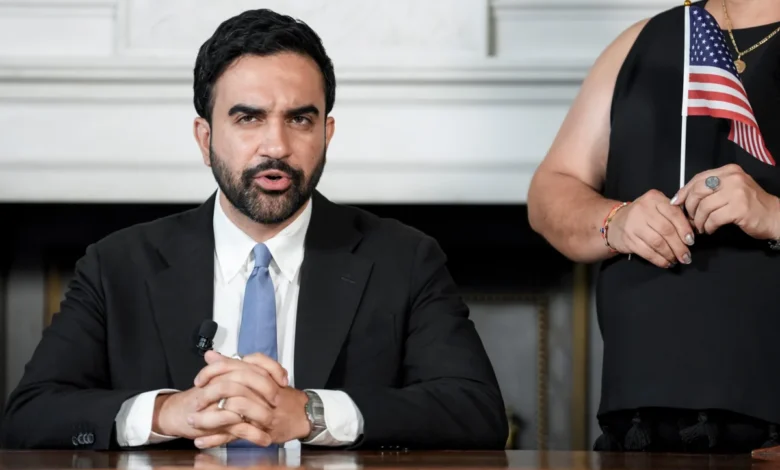
In a significant escalation of political rhetoric surrounding the ongoing conflict in Gaza and the International Criminal Court’s (ICC) actions, Alabama Senator Tommy Tuberville has publicly called for New York State Assemblyman Zohran Mamdani to be arrested and detained at the infamous Guantanamo Bay detention facility. The demand from the Republican senator stems directly from Mamdani’s recent statements criticizing Israeli Prime Minister Benjamin Netanyahu and urging the U.S. federal government to cooperate with potential ICC arrest warrants. This extraordinary call for the detention of a sitting state legislator has ignited a fierce debate about free speech, federal overreach, and the deeply polarized political landscape regarding U.S. foreign policy.
The controversy began earlier this week when Assemblyman Mamdani released a video addressing the legal implications of an ICC arrest warrant for Benjamin Netanyahu should the Israeli Prime Minister visit New York City. Netanyahu is reportedly expected to attend the General Assembly meeting at the United Nations’ New York City headquarters in September. During his campaign, Mamdani had previously indicated a willingness to explore avenues for enforcing such a warrant if Netanyahu were to visit.
The Core Controversy: Assemblyman Mamdani’s Stance on Netanyahu
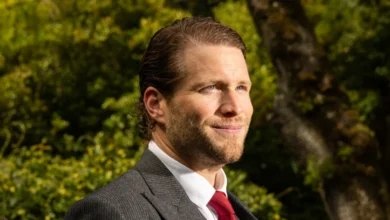
Assemblyman Zohran Mamdani, representing New York’s 36th Assembly District, explicitly stated that his administration, after a legal review, determined that the city did not possess the independent legal authority to execute an arrest warrant issued by the International Criminal Court. This clarification addressed a key point of contention and a campaign promise. However, Mamdani did not shy away from his strong condemnation of Netanyahu. In his video statement, Mamdani referred to Netanyahu as an "architect of genocide" and explicitly held him "responsible for a series of atrocities in the ongoing war on Gaza."
Crucially, while acknowledging the city’s limitations, Mamdani used the platform to urge federal intervention: "It is clear that we do not have the independent legal authority to enforce this warrant. The federal government, however, does, and I call on them to join the [International Criminal Court] and execute this warrant." He concluded his statement with an unambiguous message: "I want to be equally clear, Benjamin Netanyahu is not welcome in New York City, nor is any other war criminal at large." Mamdani’s outspoken stance reflects a growing segment of progressive political thought within the United States that is highly critical of Israel’s military operations in Gaza and supportive of international legal accountability. His comments are part of a broader political movement advocating for a shift in U.S. foreign policy regarding the Israeli-Palestinian conflict.
Senator Tuberville’s Fiery Retort and Calls for Detention
Senator Tommy Tuberville’s reaction to Assemblyman Mamdani’s statements was swift and exceptionally severe. During a public appearance, Tuberville, a Republican known for his hardline conservative views, lashed out, referring to Mamdani as a "thug." He then articulated a chilling demand: "Sooner or later, he will do something more stupid than what he’s done, where we will finally say enough is enough, go put the handcuffs on him… and send him to Gitmo." The reference to Guantanamo Bay, a facility primarily used for detaining suspected terrorists without trial, has been widely condemned as an extreme and potentially dangerous call for extrajudicial action against an elected official. Tuberville’s comments imply that Mamdani’s exercise of free speech and his call for federal adherence to international law constitute an offense warranting detention at a facility designed for national security threats. This rhetoric not only intensifies the political polarization but also raises serious questions about due process and the appropriate boundaries of political discourse.
A Cascade of Condemnation: Reactions from Across the Political Spectrum
Senator Tuberville’s remarks were not isolated. Assemblyman Mamdani’s video immediately triggered a wave of outrage from conservative politicians and prominent pro-Israel voices, illustrating the deep ideological chasm within American politics regarding the conflict.
Republican Outcry and Accusations
Among the most vocal critics was Florida Representative Randy Fine (R-Fla.), who went further than Tuberville in his personal attacks. Fine, in a social media post, labeled Mamdani, who is Muslim, an "apologist for terrorists," asserting that this "makes [him] a terrorist." Fine then called for Mamdani to be denaturalized and deported from the United States. These threats to strip Mamdani of his citizenship and deport him are not new; they have been a recurring feature of right-wing attacks against the Assemblyman, who was born in Uganda and naturalized as an American citizen in 2012. For instance, in July of the previous year, former President Donald Trump himself threatened to revoke Mamdani’s citizenship after the Assemblyman stated he would not cooperate with federal efforts to increase immigration arrests and deportations in New York City.
Similarly, Representative Nancy Mace (R-S.C.) contributed to the inflammatory rhetoric, telling a media outlet that Jewish individuals who voted for Mamdani were "self-loathing." Mace also baselessly suggested that Mamdani was complicit with the "murder" and "rape" of American women and girls by "illegal aliens," attempting to link the Assemblyman’s stance on international law to unrelated and unfounded allegations of domestic crime. Such statements underscore a pattern of personal attacks and attempts to delegitimize Mamdani based on his identity and political views.
Democratic Dissent and Shifting Alliances
The reactions were not confined to the Republican party. Senator John Fetterman (D-Pa.), whose staunch and often unconventional support for Israel has put him at odds with a significant portion of his Democratic colleagues, also weighed in. Appearing on Fox News, Fetterman suggested that Mamdani’s anger at Netanyahu stemmed from the Israeli Prime Minister having "killed a lot of people" Mamdani "admired," implying that the Assemblyman supported terrorist networks. Fetterman’s comments highlight the deep divisions within the Democratic Party over the Israeli-Palestinian conflict and his willingness to align with conservative media narratives to articulate his pro-Israel stance.
Former President Trump’s Intervention
Former President Donald Trump, a key figure in shaping conservative discourse, also responded to Mamdani’s statement via his Truth Social platform. Trump unequivocally declared, "Benjamin Netanyahu will not be arrested, in any way, shape, or form, while in the United States of America." Notably, Trump’s justification for protecting Netanyahu extended beyond direct support for Israel’s actions in Gaza. He framed Netanyahu’s immunity as part of a broader geopolitical strategy: "He is fighting against the Islamic Republic of Iran," Trump wrote, referencing Israeli assistance in his administration’s "war of choice" with Iran. Trump concluded by stating, "The only ones that should be arrested are the people that led Iran into this unprecedented SPIRAL OF DEATH AND DESTRUCTION, something that should have been dealt with years ago." This statement solidifies the U.S. federal government’s likely stance under a potential Trump administration regarding ICC warrants and intertwines the Israeli-Palestinian conflict with broader regional power struggles.
The International Criminal Court (ICC) and U.S. Jurisdiction
The controversy also illuminates the complex relationship between the United States and the International Criminal Court. The ICC, established by the Rome Statute, is an intergovernmental organization and international tribunal that sits in The Hague, Netherlands. It has the jurisdiction to prosecute individuals for the international crimes of genocide, war crimes, crimes against humanity, and the crime of aggression. In May 2024, the ICC Prosecutor, Karim Khan, announced that he was seeking arrest warrants for Benjamin Netanyahu and Israeli Defense Minister Yoav Gallant, alongside Hamas leaders Yahya Sinwar, Mohammed Deif, and Ismail Haniyeh, on charges related to war crimes and crimes against humanity in the Gaza conflict.
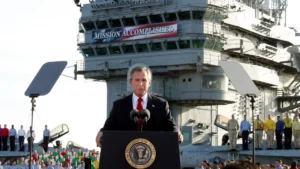
The United States is notably not a party to the Rome Statute, having withdrawn its signature from the treaty in 2002 under President George W. Bush. Historically, both Republican and Democratic administrations have expressed concerns about the ICC’s potential jurisdiction over U.S. personnel and those of its allies, often viewing it as a challenge to national sovereignty. Consequently, it is an established policy that the U.S. federal government would not move to arrest Netanyahu to bring him before the court. Assemblyman Mamdani’s call for federal action, while principled from his perspective, directly challenges this long-standing U.S. policy. His request highlights the tension between international legal norms and national sovereignty, particularly when those norms conflict with U.S. strategic interests or political alliances.
Broader Context: The Gaza Conflict and Domestic Political Polarization
The current furor is inextricably linked to the ongoing and devastating conflict in Gaza, which began in October 2023 following Hamas’s attacks on Israel. Israel’s subsequent military response has led to a severe humanitarian crisis, widespread destruction, and a staggering number of Palestinian casualties, drawing immense international scrutiny and condemnation. The scale of the humanitarian suffering and allegations of war crimes have profoundly impacted global public opinion. In the United States, there is undeniable evidence of a growing segment of the population, particularly younger generations and progressive voters, who view Netanyahu’s government and Israel’s actions against Palestinians as unconscionable and potentially constituting crimes against humanity. This shift in public sentiment has created significant fissures within the Democratic Party, challenging its traditional pro-Israel consensus.
Assemblyman Mamdani’s background as a Ugandan-born, naturalized American citizen, and his Muslim faith, have made him a recurring target for right-wing attacks. The repeated calls for his denaturalization and deportation underscore a disturbing trend of using extreme measures to silence political dissent, particularly from elected officials who are also members of minority groups. This weaponization of immigration status against political opponents raises serious civil liberties concerns and reflects a deeply xenophobic strain in contemporary American politics.
Implications for Free Speech, Political Discourse, and International Law
The demands made by Senator Tuberville and other conservatives against Assemblyman Mamdani carry profound implications. Firstly, the call to detain an elected official at Guantanamo Bay for expressing political views, however controversial, represents a severe assault on the principles of free speech and democratic debate. Such rhetoric risks normalizing the idea that political dissent can be met with extrajudicial punishment, creating a chilling effect on public officials and citizens alike.
Secondly, the episode highlights the increasing fragility of political discourse in the U.S., where policy disagreements are often framed in terms of treason or terrorism. This demonization of political opponents undermines the capacity for constructive dialogue and exacerbates societal divisions. The specific targeting of Mamdani, an immigrant and Muslim American, also signals a dangerous willingness to deploy nativist and Islamophobic tropes in political attacks.
Finally, the controversy underscores the ongoing tension between local governance, federal authority, and international legal frameworks. While Mamdani’s office clarified its lack of local authority, his subsequent call for federal action implicitly challenges the U.S.’s long-standing position regarding the ICC. This incident reflects a broader global debate about accountability for international crimes and the role of powerful nations in upholding or undermining international law. As the conflict in Gaza continues and international legal bodies pursue accountability, these domestic political battles are likely to intensify, further shaping the future of U.S. foreign policy and the robustness of its democratic norms. The unresolved questions surrounding U.S. engagement with international justice and the deeply entrenched political divides ensure that such confrontations will remain a significant feature of the national conversation.