President Trump threatens permanent closure of the Kennedy Center following adverse court ruling on facade branding

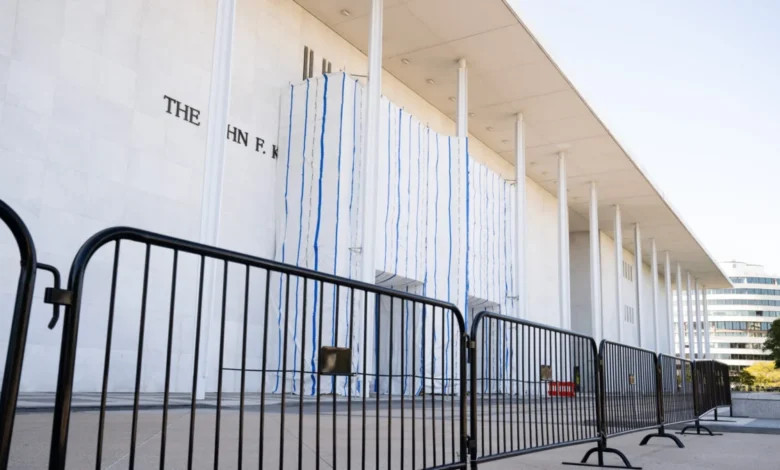
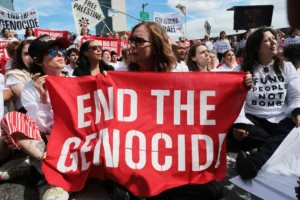
The John F. Kennedy Center for the Performing Arts, a cornerstone of American cultural life and a federally designated memorial, currently sits in a state of suspended animation. Following a federal judge’s second ruling against the administration’s efforts to affix the president’s name to the building’s facade, President Donald Trump has indicated that he may move to permanently shutter the institution. This escalation has ignited a firestorm of controversy, prompting thousands of demonstrators to congregate at the site in protest of what many observers describe as the politicization of a national monument.
The standoff centers on the president’s insistence that his administration receive prominent, permanent recognition on the exterior of the center—a move blocked by judicial oversight regarding the preservation of the memorial’s original legislative intent. With the threat of withholding $270 million in congressionally appropriated renovation funds now looming, the future of the nation’s premier performing arts center remains profoundly uncertain.
A Chronology of the Dispute
The conflict began to intensify in early September, following a series of executive directives aimed at rebranding various federal properties in the District of Columbia. The Kennedy Center, established by the National Cultural Center Act of 1958 and signed into law by President Dwight D. Eisenhower, was intended as a living memorial to the 35th president.
On September 10, legal representatives for the administration petitioned for a modification to the center’s exterior signage. This petition was met with swift opposition from historic preservation groups and descendants of the Kennedy family, who argued that the building’s identity is inextricably linked to its namesake.
On September 14, a federal judge issued a definitive ruling, stating that the proposed signage alterations violated the long-standing statutes governing the memorial’s design and historical designation. Within 24 hours of that ruling, the administration ordered the immediate closure of the facility to the public. By September 15, the president publicly articulated his frustration, stating, “The Trump administration should certainly have recognition. If we don’t do that… it’ll end up being ripped down.”
The Scope of the Funding Crisis
At the heart of the operational crisis is $270 million in federal funding earmarked for essential structural repairs, seismic retrofitting, and modernization of the center’s acoustics. These funds were authorized by Congress to ensure that the facility—which hosts the National Symphony Orchestra, the Washington National Opera, and various international touring productions—remains compliant with modern safety and performance standards.
According to financial oversight documents, the Kennedy Center relies on a public-private partnership model. While the center generates significant revenue through ticket sales, private donations, and educational programming, the federal appropriation is critical for capital improvements. Analysts suggest that a prolonged freeze on these funds would result in the degradation of the facility’s infrastructure. Without federal support, the center’s ability to host large-scale performances would be compromised, potentially leading to the cancellation of the upcoming season and widespread staff furloughs.
Public Reaction and Civil Unrest
The sudden closure of the center has prompted an unprecedented response from the arts community and the general public. Last week, thousands of patrons, musicians, and residents gathered at the site, forming a human perimeter around the building.
Robert White, an at-large member of the Council of the District of Columbia, addressed the crowd, framing the situation as a dangerous precedent for the stewardship of national landmarks. “This is a monument that was not falling down or bankrupt before he put his hands on it,” White stated. The protest, which remained largely peaceful, highlighted the deep-seated tension between the executive branch and local stakeholders who view the center as a vital public resource rather than a political asset.
The protest also drew support from national arts advocacy organizations, which have issued statements warning that the administration’s actions could alienate the philanthropic community that provides the center’s private endowment. Many donors have reportedly signaled that their financial support is contingent upon the institution maintaining its non-partisan, memorial status.
Implications for Federal Preservation Policy
The legal and administrative tug-of-war has raised broader questions regarding the authority of the executive branch over monuments that are governed by specific congressional mandates. Legal scholars note that while the president possesses broad powers over federal property, the Kennedy Center is protected by a unique legislative framework that defines its purpose and physical character.
If the administration persists in its attempts to unilaterally rebrand the center, it faces a protracted legal battle that could reach the Supreme Court. Experts in administrative law suggest that the judicial branch is likely to prioritize the original intent of the 1958 legislation, which prioritized the center as a memorial to John F. Kennedy. A ruling in favor of the administration could, however, set a precedent that allows future presidents to modify federal monuments to suit personal or political preferences, fundamentally altering the way American history is curated and displayed in the capital.
Broader Context of Washington D.C. Infrastructure
The Kennedy Center is not the only site currently affected by the administration’s recent efforts to reshape the capital’s aesthetic landscape. Over the past several months, multiple parks and minor historical markers throughout the District have been fenced off, citing “security concerns” or “ongoing renovations.” Critics argue that these closures are frequently used as leverage in political negotiations, turning public spaces into bargaining chips.
The pattern of closures has been described by some as a strategy of “hostage-taking,” where essential public services are suspended to compel compliance from local officials or the judiciary. The economic impact of these closures extends beyond the cultural sector; local businesses that rely on the foot traffic generated by these monuments have reported a significant downturn in activity.
Future Outlook and Stakeholder Positions
As of this writing, there have been no formal negotiations between the White House and the board of trustees of the Kennedy Center. The board has maintained a position of neutrality, emphasizing their legal obligation to protect the center’s historical integrity while seeking to resolve the funding stalemate.
A spokesperson for the Kennedy Center stated, “Our primary goal remains the safety of our patrons and the preservation of this institution as a world-class arts center. We continue to engage with federal partners to ensure that the facility remains accessible and that the essential renovations proceed without further delay.”
Meanwhile, the White House has remained steadfast in its messaging. Press officials have characterized the administration’s position as one of “fair representation,” arguing that the current administration deserves the same historical recognition as previous ones.
As the stalemate continues, the theater community is left to wonder if the lights will ever return to the center’s stages. With the $270 million funding package hanging in the balance, the potential for permanent damage to the institution’s physical and institutional fabric grows daily. For now, the building remains a stark, silent presence on the banks of the Potomac, a symbol of the widening divide between executive authority and the cultural institutions it is tasked with preserving.
The coming weeks will likely prove decisive. If a compromise is not reached, the administrative closure could harden into a permanent cessation of operations, effectively stripping the capital of one of its most vital cultural institutions and signaling a new, more contentious era for the management of American national landmarks. The situation serves as a stark reminder of the fragile nature of public institutions in an era of heightened political volatility.