California Pioneers Environmental Reparations with Direct Cash Aid for Inglewood Residents Impacted by Urban Oil Drilling

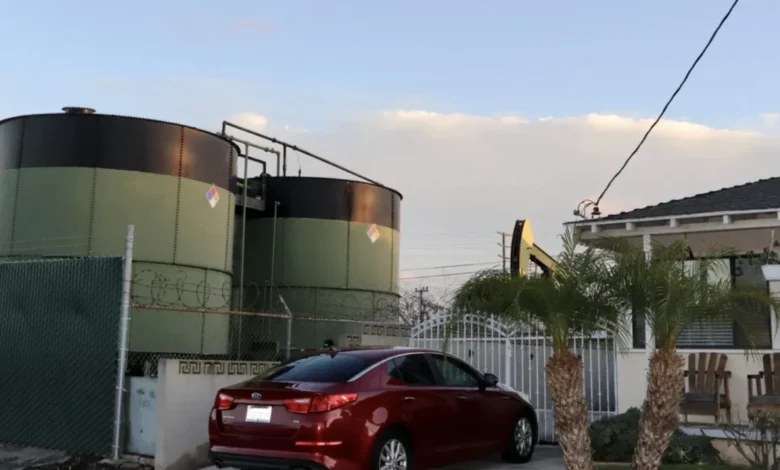
A landmark legislative effort is poised to reshape the relationship between industrial polluters and the communities they occupy as California prepares to enact a policy that provides direct financial restitution to residents living near the Inglewood Oil Field. Assembly Bill 1661, currently awaiting the signature of Governor Gavin Newsom, marks a significant shift in environmental policy by moving beyond mere regulatory oversight to a model of direct, compensatory justice. Under the proposed legislation, $5 million in funds—derived from penalties levied against low-producing oil wells—will be distributed as direct cash aid to 1,000 households within a 2.5-mile radius of the drilling site that have documented respiratory or reproductive health issues.
This initiative, championed by Assemblymember Isaac G. Bryan, represents a pragmatic evolution of the concept of "environmental reparations." While the state has long navigated the complexities of industrial regulation, this law acknowledges that the historical costs of living in "sacrifice zones"—neighborhoods disproportionately burdened by pollution—have manifested in tangible financial losses, medical burdens, and generational health disparities.
A Legacy of Exposure: The Context of Inglewood
The Inglewood Oil Field, one of the largest urban drilling operations in the United States, has functioned as a constant presence in the lives of residents in South Los Angeles, Ladera Heights, and Baldwin Hills for more than a century. For many, like Regina Martin, who grew up during the 1950s and 60s, the physical reality of oil pumpjacks was normalized as a permanent feature of the landscape. However, as public health research has advanced, the association between these operations and chronic illness has become impossible to ignore.
Scientific studies have consistently linked proximity to oil and gas extraction sites to increased rates of asthma, cardiovascular disease, low birth weights, and various forms of cancer. In the context of Los Angeles, these health risks have been concentrated in historically marginalized communities, creating a cycle where environmental toxicity intersects with systemic economic disadvantage. The sulfurous emissions and particulate matter generated by these wells are not merely aesthetic nuisances; they are significant contributors to the localized public health crises that have plagued these neighborhoods for decades.
Chronology of Legislative Action
The path to AB 1661 began several years ago as part of a concerted effort to curb the footprint of urban drilling in Los Angeles County. The following timeline outlines the key legislative milestones leading to the current proposal:
- 2024: Governor Gavin Newsom signs Assembly Bill 2716 into law. This pivotal legislation mandates the closure of the Inglewood Oil Field by 2030 and establishes a rigorous penalty structure for low-producing wells, which are identified as major sources of methane and other volatile organic compounds.
- Early 2026: Regulatory bodies begin collecting monthly penalties of $10,000 per well from operators who fail to meet environmental standards or continue to operate low-yield equipment.
- September 2026: The California legislature passes AB 1661, formalizing the redirection of these penalty funds into a community repair and reinvestment fund.
- October 2026 (Projected): Governor Newsom is expected to sign the bill into law, triggering the implementation phase for the cash assistance program.
Data and Economic Implications
The $5 million fund is a pilot program that sets a precedent for how "community repair" can be funded without drawing from the general taxpayer pool. By shifting the financial burden to the operators of the wells—who have historically profited while externalizing the costs of their operations onto the surrounding population—the state is establishing a "polluter pays" model that is increasingly favored by environmental justice advocates.
The decision to limit the initial rollout to 1,000 households acknowledges both the finite nature of the current fund and the administrative challenges of verification. With tens of thousands of residents living within the 2.5-mile radius, the selection process will be critical. Assemblymember Bryan has emphasized that the funds are intended to provide immediate relief to those who have faced the highest barriers to financial stability due to the "double burden" of illness and poverty.
Furthermore, the recent passage of legislation shielding these types of reparation payments from state taxation, introduced by Assemblymember Tina McKinnor, ensures that the aid provided is not eroded by fiscal clawbacks. This legislative pairing suggests that California is refining its administrative machinery to facilitate a broader, more robust reparations framework in the future.
Perspectives from the Frontline
The move has garnered strong support from community-based organizations, though leaders remain cautious about the long-term application. Tianna Shaw-Wakeman, the environmental justice program director at Black Women for Wellness, has been a vocal proponent of the legislation. She notes that for many residents, the primary hurdle has been the lack of formal documentation.
"We cannot expect families who have been systematically underserved by the healthcare system to provide perfect records of their ailments," Shaw-Wakeman said. The organization is advocating for a "self-attestation" model, arguing that requiring rigid medical documentation could exclude the most vulnerable households—those who may have lived with symptoms for years without the luxury of consistent, diagnostic medical care.
Assemblymember Bryan echoed these sentiments, framing the initiative as a necessary correction to decades of corporate extraction. "The company has essentially just been extracting from the community with no investments in the community," Bryan noted during the legislative process. For his constituents, the program is a step toward acknowledging that the "cost of doing business" must include the health of the neighbors who live in the shadow of the rigs.
The Challenge of Gentrification and Displacement
Despite the optimism surrounding the cash aid, the program is not viewed as a panacea. A primary concern among housing and environmental advocates is the risk of displacement. As the Inglewood Oil Field approaches its 2030 closure date, property values in the area have begun to shift. There is a palpable fear that the remediation of these sites, while necessary, could trigger a wave of gentrification that displaces the very families who have endured the pollution for generations.
The current debate has moved beyond the simple question of whether the oil should stay or go; it now encompasses the broader issue of "just transition." If a neighborhood is cleaned of its toxic legacy, policymakers must ensure that the residents who paid the price of that toxicity are the ones who benefit from the improved quality of life, rather than being forced out by rising rents and property taxes.
Broader Impact and Future Outlook
The California experiment is being closely watched by other states and municipalities grappling with similar industrial legacies. If the Inglewood program proves successful in distributing aid efficiently and without overly burdensome requirements, it could serve as a template for other "environmental reparations" initiatives.
The program’s success will ultimately be measured by its ability to scale. While 1,000 households represent a significant start, the needs of the surrounding community extend far beyond a one-time or limited cash disbursement. Future iterations of the fund, as envisioned by Bryan, could potentially support broader infrastructure projects, including urban greening, park construction, and affordable housing initiatives—all of which are designed to improve the long-term health and wealth of the community.
As California moves toward a future that prioritizes environmental justice, the Inglewood case serves as a test case for whether the state can reconcile its industrial past with its progressive present. The fundamental question remains: can a government successfully bridge the gap between acknowledging historical harm and providing the direct, meaningful restitution required to repair it? As the state prepares to sign AB 1661 into law, the answer appears to be moving toward an affirmative, though the work of implementation and equity remains just beginning. The state has committed to the principle that pollution-related harm is a public policy concern that necessitates a public, and potentially private-funded, remedy.