President Donald Trump Escalates Media Crackdown With Threats to Bar Major News Organizations From White House Press Pool

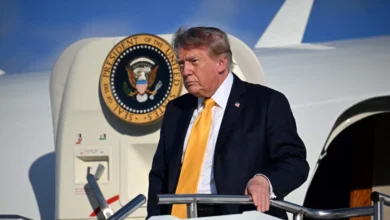
The ongoing tension between the executive branch and the American press reached a critical juncture when President Donald Trump announced plans to revoke White House press credentials for several prominent news organizations. Citing what he termed "constant reporting of fake news," the president declared that CNN, MSNOW, and Politico would face immediate exclusion from the White House press pool, warning that additional outlets would likely face similar measures in the near future.
This latest directive marks a significant escalation in the administration’s efforts to manage and restrict critical media coverage. The announcement, initially broadcast across social media and subsequently defended during an Oval Office press briefing, has immediately drawn sharp rebukes from legal experts, journalism advocacy groups, and the targeted organizations themselves. As the legal battles of his current term begin to mirror conflicts from his previous tenure, the administration’s actions have reignited a national debate over executive power, freedom of the press, and the boundaries of the First Amendment.
Chronology of Directives and Escalating Press Restrictions
The friction between the second-term Trump administration and the White House press corps has evolved through a series of increasingly stringent regulatory and access-based challenges. The timeline of these events illustrates a systematic approach to altering the landscape of official government reporting.
Early in the administration’s second term, tensions flared when the Associated Press refused to adopt the administration’s preferred terminology, which sought to officially rename the Gulf of Mexico as the "Gulf of America." In response to the outlet’s editorial independence, the administration attempted to bar AP reporters from White House grounds. This move prompted swift legal action; the Associated Press filed a federal lawsuit and successfully secured an injunction to overturn the ban.
Months later, the administration shifted its focus toward broadcast and entertainment media. Federal regulatory bodies found themselves embroiled in controversies regarding late-night television programming. Pressure was levied against corporate leadership at major networks, including ABC News, to curb or remove commentators critical of the administration. Notably, ABC faced intense scrutiny—and subsequent internal friction—over programming decisions involving late-night hosts like Jimmy Kimmel, leading to public pushback and eventual legal challenges regarding regulatory overreach. Similar pressures were reported regarding CBS and planned interviews involving political figures such as Texas candidate James Talarico, where network executives navigated implicit threats of Federal Communications Commission penalties.
The culmination of these tensions arrived on a Friday afternoon when President Trump posted his intent to strip CNN, MSNOW, and Politico of their White House access. During a subsequent Oval Office question-and-answer session with reporters, the president doubled down on his statements, indicating that cooperation and favorable coverage were prerequisites for restored access.
Official Statements and Institutional Responses
The affected news organizations and press freedom advocates responded swiftly to the president’s announcement, framing the prospective ban as an unconstitutional infringement on the foundational principles of a free press.
CNN released a definitive public statement defending the integrity of its reporting team and emphasizing the constitutional protections afforded to journalists covering the executive branch. The network stated that its reporters operate under rights explicitly guaranteed by the U.S. Constitution, designed to insulate the press from government hindrance or interference. Legal analysts have widely noted that the precedent set by the Associated Press lawsuit earlier in the administration provides a strong framework for CNN, MSNOW, and Politico to seek immediate judicial relief.
Press freedom organizations, including the Reporters Committee for Freedom of the Press and the Committee to Protect Journalists, issued separate advisories condemning the administration’s actions. These groups argue that conditioning physical access to the seat of government on editorial alignment creates an authoritarian dynamic antithetical to democratic governance.
Conversely, defenders of the administration argue that the executive branch possesses inherent authority to manage access to private and semi-private government workspaces, asserting that persistently critical or inaccurate reporting undermines national discourse. Administration officials maintain that the president’s rhetoric is a form of political speech protected under the First Amendment, intended to combat perceived media bias rather than suppress legitimate investigative reporting.
Broader Legal and Democratic Implications
The systematic restriction of press credentials carries profound implications for the relationship between the executive branch and the public. Historically, the White House press pool serves as an independent conduit of information, providing citizens with unvarnished accounts of executive decision-making, policy formulations, and presidential engagements.
Limiting access to designated outlets based on editorial viewpoint introduces significant constitutional questions. Under established First Amendment jurisprudence, the government generally cannot retaliate against specific entities or individuals based on the content of their speech. While the White House is not legally obligated to grant identical physical workspace to every media organization in the country, courts have previously scrutinized attempts to selectively exclude established news outlets from open government forums where such exclusion appears retaliatory or viewpoint-based.
Furthermore, the administration’s concurrent strategies involving regulatory agencies—such as leveraging the FCC to influence broadcast content—demonstrate a multi-pronged approach to media oversight. Legal scholars suggest that using regulatory leverage to discourage critical commentary, combined with the revocation of physical press credentials, creates a chilling effect across the broader journalistic community. Outlets may feel compelled to self-censor to preserve access or avoid regulatory penalties.
As the targeted organizations prepare formal legal challenges, the federal judiciary will likely be tasked with defining the limits of executive discretion regarding press access in the modern era. The outcome of these anticipated lawsuits will not only determine the immediate fate of reporters from CNN, MSNOW, and Politico within the White House complex, but will also establish a critical benchmark for the enforcement of First Amendment protections against government retaliation for years to come.