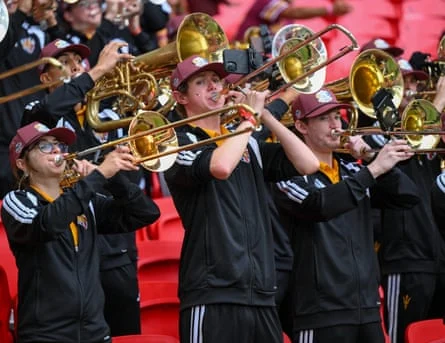
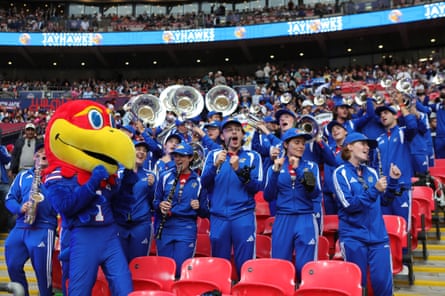
The atmosphere outside Wembley Stadium in the hours leading up to the inaugural Union Jack Classic offered a stark contrast to the typical match-day experience in London. As fans navigated Wembley Way, the air was filled not with the familiar chants of football supporters, but with the brass-heavy, high-tempo anthems of American college marching bands. The Arizona State Sun Devils’ band, performing with a theatrical intensity that saw instruments swaying in choreographed arcs, set an energetic tone that was quickly matched by the Kansas Jayhawks’ contingent.
This event, the first of its kind in nearly four decades, represented a significant logistical and promotional undertaking by the Big 12 Conference. For many local observers, the scene provided a quintessential American spectacle, complete with drum majors, high-stepping musicians, and a fan culture that prioritizes pageantry. The event was not merely a game; it was an attempt to export a cultural phenomenon, punctuated by the lighthearted interactions between visitors and local law enforcement, who found themselves at the center of a novel cross-cultural exchange.
A Stodgy Affair on the Gridiron
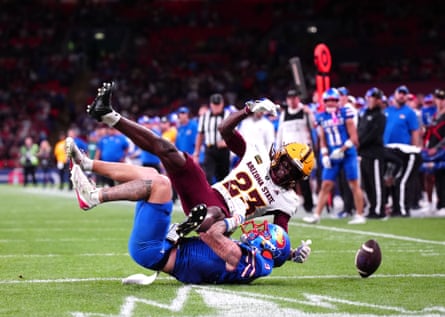
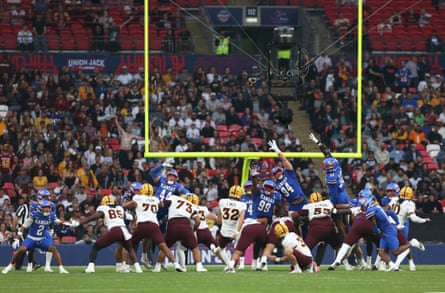
Despite the vibrancy of the pre-game atmosphere, the actual competition struggled to maintain the momentum generated by the bands. Over the course of three hours and 37 minutes, the game played out with a rhythm that felt disjointed to a British audience accustomed to the fluid nature of association football. The Arizona State Sun Devils secured a 24-17 victory over the Kansas Jayhawks, though the final scoreline masked the lopsided nature of the performance.

For much of the contest, the Jayhawks’ offense appeared stifled, struggling to generate sustained drives or meaningful yardage. The lack of offensive rhythm drew comparisons from industry analysts to mid-tier European league matches, characterized by tactical caution and frequent interruptions. Chris Fallica, a prominent Fox Sports analyst, had suggested prior to the kickoff that the quality of play would mirror that of a high-end Championship or lower-tier Premier League fixture—a prediction that seemed remarkably accurate as the game progressed.
Turning Points and Tactical Lulls
The game remained largely uninspired until the final minute of the first half, a period that proved to be the decisive juncture of the afternoon. At that stage, Kansas held a 7-3 lead, buoyed by an impressive 72-yard punt return from Taty Nagy. However, the momentum shifted abruptly. A series of unforced errors, including a botched 17-yard punt by Matthew Gill, provided Arizona State with the field position they required to pivot.
Arizona State quarterback Cutter Boley capitalized on the opportunity, finding Reed Harris for a 25-yard touchdown pass to seize a 10-7 lead. The situation worsened for Kansas moments later when Jaren Hamilton executed a spectacular 100-yard kickoff return, effectively breaking the game open. Known as “Turbo,” Hamilton’s explosive run—which he described as a moment of deep, intuitive anticipation—pushed the Sun Devils’ lead to 17-7.
The definitive blow arrived when defensive lineman Hyrum Vaeono, leveraging his 305-pound frame, recovered a fumble and rumbled 77 yards downfield. This play set the stage for a subsequent score that extended the lead to 24-7, effectively rendering the remainder of the game a formality. While Kansas attempted a late-stage comeback, it served more as a consolation than a true threat to the result.
Attendance and Market Realities
The event drew an official attendance of 46,532. While organizers pointed to the full capacity of executive boxes and premium seating as a success, the empty patches in the upper tier of the 90,000-seat stadium were impossible to ignore. The initial projections of a 60,000-strong crowd had set a high bar, and the shortfall raised questions regarding the appetite for collegiate-level American football in the UK compared to the well-established NFL International Series.
Furthermore, scheduling logistics prompted debate. By hosting the game outside of the three-week Premier League international break, organizers placed the event in direct competition with the broader sporting calendar, a decision that may have contributed to the attendance figures. The visual impact of a partially empty Wembley is a significant consideration for the Big 12 as it evaluates the viability of future European expansion.
Strategic Objectives and Brand Building
The primary motivation behind the Union Jack Classic extends far beyond the final score. For the Big 12 Conference, the game served as a pilot program for brand globalization. The presence of international students, the recruitment of prospective talent, and the enhancement of university visibility were central to the event’s purpose.
During timeouts, the stadium’s large screens displayed advertisements for Arizona State’s new London campus, framing the university as an institution with a distinct, globally-minded academic value proposition. Big 12 Commissioner Brett Yormack explicitly compared this initiative to the NFL’s successful strategy of international outreach. Yormack stated that while the league is still in the nascent stages of its European strategy, there is a clear intent to establish a recurring presence in London. "We’re not there yet, but I’m confident we’ll be back," Yormack noted.
The Player and Coaching Experience
For the student-athletes involved, the trip was framed as an educational and personal development opportunity. ASU coach Kenny Dillingham emphasized the transformative nature of the travel, noting that for many of his 105-man roster, the experience of being in London was profound.
"We wanted our families to have a once-in-a-lifetime experience," Dillingham said. "The team didn’t flinch. They stepped up, they covered the cost, and they made it an experience that I think every player will remember for the rest of their life."
The team’s enthusiasm for the city was palpable, with many players expressing a desire to return for future visits. This positive sentiment from the participants is a vital component of the Big 12’s long-term pitch to its member schools; if the experience is viewed as rewarding and culturally enriching for the athletes, it becomes a much easier sell for the institutions themselves.
Analysis: The Future of College Football in Europe
The Union Jack Classic serves as a case study in the complexities of sports globalization. While the NFL has successfully curated a loyal and growing fanbase in the UK over the past two decades, the collegiate game faces a steeper climb. The challenge lies in translating the localized, regional loyalty of American college football—which is deeply rooted in alumni networks and state identity—into a product that resonates with a British audience that is less familiar with the individual team narratives.
The logistical requirements are immense, and the financial investment from universities is significant. However, the potential upside—gaining a foothold in a major international market—is clearly viewed by Big 12 leadership as worth the gamble.
Moving forward, the conference will likely analyze several key metrics: the conversion rate of ticket holders into recurring fans, the effectiveness of the marketing campaigns linked to university international recruitment, and the feasibility of finding a more favorable spot on the calendar to maximize attendance.
While the on-field product at Wembley did not deliver a "classic" in the traditional sense, the event succeeded in its role as a cultural envoy. The marriage of American gridiron tradition and British venue history created a unique, if occasionally disjointed, spectacle. Whether this leads to a sustainable, annual fixture remains to be seen, but the intent from the Big 12 is clear: they are looking to build more than just a schedule of games; they are looking to build a brand presence on the international stage.
The success of future iterations will ultimately depend on the ability to package the collegiate experience in a way that feels accessible and exciting to a broader audience, bridging the gap between the insular world of American campus sports and the global stage of international athletics. As the sun sets on the inaugural Union Jack Classic, the organizers are left with a foundation of experience, a list of logistical lessons, and a clear, if ambitious, roadmap for the years ahead.