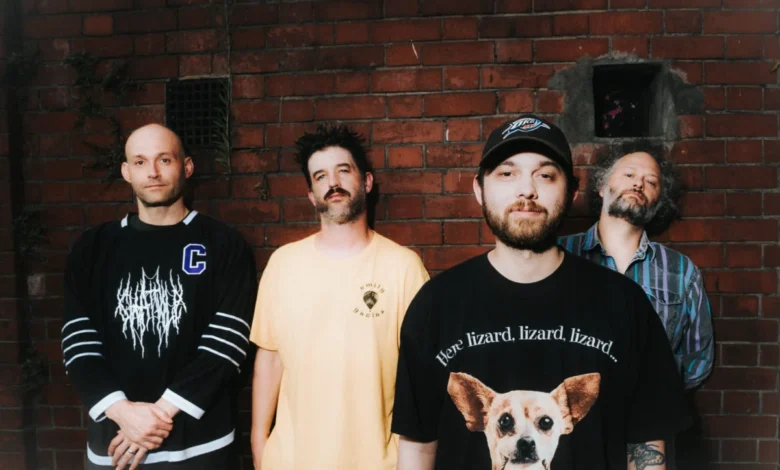
The Oklahoma City noise rock band Chat Pile has emerged as an unlikely, albeit forceful, voice in the American sociopolitical landscape. Known for a visceral, abrasive sound that draws from the depths of sludge and doom metal, the band has increasingly utilized its platform to articulate grievances regarding urban decay, systemic inequality, and the erosion of civil liberties. Their latest studio album, Who Loves the Sun, released over the 2026 Labor Day weekend, serves as a focal point for these anxieties, blending themes of climate catastrophe and labor precarity with a stark critique of the corporate and political forces shaping the American Midwest.
The band’s trajectory reflects a growing trend among contemporary independent musicians who view artistic output as an inherently political act. This approach is anchored by vocalist Raygun Busch, whose lyrics frequently bypass traditional poetic obfuscation in favor of direct, confrontational commentary. This shift toward bluntness is perhaps most evident in their 2022 single, Why, which centers on the humanitarian crisis of homelessness. The song’s opening lines—questioning why citizens are forced to live in extreme weather conditions—served as a catalyst for the band’s increased public advocacy.
A Geopolitical and Personal Backdrop
The political awareness present in the band’s work is deeply personal. For members of the ensemble, the impetus to engage with global and local issues is rooted in a history of inherited trauma. The experience of displacement and the legacy of conflict—specifically within the Vietnamese diaspora—have instilled a perspective that views local governance through the lens of historical struggle. This background informs their rejection of political apathy, which they characterize as a luxury that the working class cannot afford.
The band’s aesthetic choices further reinforce their message. The cover art for Who Loves the Sun, a photograph taken by bassist Stin, juxtaposes a charred building and a makeshift tent against the 50-story Devon Energy headquarters in Oklahoma City. This imagery highlights the tension between the transient, vulnerable populations living in the city and the institutional power of the energy sector. The visual serves as a commentary on urban development, especially as Devon Energy prepares for a significant corporate relocation to Houston, leaving behind questions regarding the future of their downtown Oklahoma City footprint and the potential economic fallout for the local workforce.
The Debate Over Surveillance and Civic Governance
The band’s critique of local politics reached a crescendo during the summer of 2026, when the Oklahoma City Council voted to renew its contract with Flock Safety, a provider of automated license plate recognition (ALPR) cameras and surveillance technology. The decision sparked intense debate among community activists and local artists, with the band positioning itself firmly against the expansion of what they describe as a "dystopian" surveillance apparatus.
The Flock Safety system has become a flashpoint for privacy advocates across the United States. While proponents argue that the technology assists law enforcement in solving violent crimes by tracking vehicles in real-time, critics point to the potential for abuse, the lack of transparency in data storage, and the disproportionate impact on marginalized communities. The Oklahoma City Council’s renewal of the contract, supported by Mayor David Holt, has drawn ire from critics who view the reliance on private-sector surveillance tools as a surrender of public oversight to corporate entities.
In interviews, the band members have expressed profound disappointment in the current municipal leadership, specifically citing the influence of the billionaire class on local governance. This rhetoric aligns with a broader national discourse surrounding the privatization of public safety, where municipal governments increasingly outsource critical infrastructure and surveillance duties to tech firms, often bypassing the public vetting processes that typically accompany such significant policy shifts.

Musical Expression as Political Literacy
Chat Pile’s engagement with politics is not limited to social media or interviews; it is embedded in their discography. The 2024 album Cool World functioned as an anti-war statement, with tracks like Shame directly addressing the humanitarian crisis in Gaza and questioning the moral legitimacy of modern warfare. By explicitly naming conflicts and systemic issues, the band attempts to bridge the gap between niche musical subcultures and mainstream political discourse.
This approach draws from a lineage of politically charged music, ranging from the anti-establishment ethos of the Dead Kennedys to the labor-conscious folk of the mid-20th century. For the members of Chat Pile, however, the modern challenge is navigating the digital era, where information saturation often leads to paralysis. They argue that the goal of their music is not necessarily to provide policy solutions, but to serve as a call to action—to force listeners to confront the reality of their surroundings rather than retreating into digital distraction.
Data and Community Action: The Impact of Sisu
Beyond the studio, the band has demonstrated a commitment to tangible community support. In September 2026, the group organized a benefit concert for Sisu, an identity-inclusive youth shelter in Oklahoma City. The event successfully raised over $32,000, providing direct aid to a facility that serves one of the city’s most vulnerable demographics. This move serves as a practical counterpoint to the "do-nothing" apathy the band frequently critiques. By choosing to support a specific, local cause, they highlight the efficacy of small-scale, community-led intervention in the face of macro-level political failures.
Implications for Independent Artists
The influence of Chat Pile’s work raises broader questions about the role of the artist in an era of intense political polarization. As social media algorithms prioritize engagement through controversy, artists often face pressure to remain neutral to protect their professional standing. Chat Pile’s choice to lean into political controversy represents a defiance of this industry standard.
Analysis of their growth suggests that a segment of the audience is actively seeking art that mirrors their own anxieties regarding the state of the world. In a period marked by climate anxiety, economic instability, and the rapid deployment of surveillance technology, the demand for "confrontational art" is rising. The band’s success indicates that being explicitly political does not necessarily limit an artist’s reach; rather, it can build a more dedicated, mobilized, and philosophically aligned fanbase.
Looking Toward the Future
As the 2026 political cycle progresses, with developments such as the nomination of progressive candidates for the Senate in Oklahoma, the role of local voices in shaping broader discourse becomes increasingly important. While the band maintains a degree of skepticism toward the capacity of electoral politics to solve fundamental structural issues, they continue to emphasize the importance of engagement.
The band’s philosophy—that consistent, small-scale action is preferable to performative inaction—serves as the cornerstone of their current mission. By weaving these values into their noise rock compositions, they have created a template for how modern artists can navigate the complexities of 21st-century life. Whether through direct lyrical confrontation or the logistical organization of benefit shows, Chat Pile remains a primary example of how art can serve as both a mirror to the political climate and a platform for dissent. The band’s ongoing trajectory will likely continue to be a litmus test for how much the modern music industry and its listeners are willing to engage with the uncomfortable realities of a rapidly changing world.