The invocation of national security has long served as a potent tool in the American executive arsenal, a broad legal umbrella used to justify classified operations, foreign policy maneuvering, and trade protections. However, since the inauguration of Donald Trump’s second term, the definition of this term has undergone a radical transformation. What was once a specialized instrument for shielding intelligence and military interests has been broadened into a sweeping, elastic catch-all for domestic policy, private financial interests, and the marginalization of political dissent. By utilizing the post-9/11 security apparatus—a structure designed for rapid mobilization and unchecked executive discretion—the administration has effectively blurred the lines between the defense of the nation and the preservation of political power.
The Evolution of Executive Overreach
The foundation for this expansion was laid in the wake of the 2001 terrorist attacks, which prompted Congress to grant the executive branch significant latitude in the name of safety. Twenty-five years later, that framework remains largely intact, yet its application has shifted from external threats to internal affairs. Historical data suggests that the use of national security as a justification for trade and domestic regulation increased steadily throughout the early 2020s, but the frequency and intensity of these claims have spiked significantly since 2025.
Legal analysts point to the administration’s reliance on Section 232 of the Trade Expansion Act of 1962 and various executive directives as the primary drivers of this trend. While these powers were intended to ensure the availability of critical materials during a wartime crisis, they are now being deployed to bypass traditional regulatory oversight. By declaring a matter a "national security threat," the administration can circumvent environmental impact assessments, public comment periods, and, in some instances, congressional budget authorization.
Chronology of Expanding Definitions
The administration’s shift in priorities is best observed through a timeline of executive actions that have redefined the scope of government concern:
- March 2025: The administration issues an executive order reclassifying roughly 950,000 federal workers as "national security-adjacent," stripping them of collective bargaining rights under the guise of protecting intelligence integrity.
- May 2025: A new federal counterterrorism strategy is published, formally identifying transgender individuals as a demographic that poses a risk to national stability, a move widely criticized by human rights organizations as a departure from standard security doctrine.
- July 2025: The White House releases an AI Action Plan, justifying massive state-led investment in data centers by framing technological dominance as a prerequisite for existential survival.
- September 2025: National Security Presidential Memorandum-7 is enacted, labeling the "antifa" movement as a domestic terrorist organization, leading to a surge in federal prosecutions.
- August 2026: The Department of Commerce introduces a 25 percent tariff on brass instruments, citing the national security risks associated with foreign copper alloy dependency.
Sectoral Impacts and Economic Consequences
The application of these security justifications has had tangible, often disruptive, effects on the U.S. economy. In the energy sector, the administration has utilized the Department of Defense to override local and state opposition to infrastructure projects. The suspension of offshore wind development, justified by a classified report from Secretary of Defense Pete Hegseth, represents a significant deviation from long-term climate targets. Industry experts note that while the report remains classified, the disruption has forced developers to re-evaluate billions of dollars in investments, potentially chilling the transition to renewable energy sources.
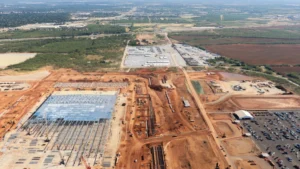
Simultaneously, the administration’s intervention in the Memphis xAI facility case—where the Department of Justice stepped in to protect the continued operation of gas turbines deemed "vital to national security"—has drawn sharp criticism from environmental advocates. The NAACP, representing local plaintiffs, argued that the site violated the Clean Air Act. The government’s intervention on the grounds that the facility supports the deployment of munitions through AI-driven logistics highlights a trend where private technological development is increasingly intertwined with military readiness.
The Annexation of Public Discourse
Perhaps the most controversial development is the use of national security rhetoric in relation to territorial and architectural projects. President Trump’s repeated suggestions regarding the acquisition of Greenland have transitioned from diplomatic curiosity to a stated national security imperative. By asserting that Greenland is "vital for the Golden Dome"—a defense project the nature of which remains vague to the public—the administration has placed significant strain on relations with NATO allies.
On the domestic front, the project to build a $400 million ballroom at the White House, characterized by the President as a "military-grade command center," demonstrates the extent to which public resources are being rebranded. Critics argue that this conflation of personal preference and state necessity erodes the credibility of the national security apparatus. When the distinction between a ballroom and a tactical command center is erased in official communication, the legislative branch loses its ability to perform effective oversight.
Institutional Responses and Legal Challenges
The judiciary has become the primary arena for contesting these definitions. While the Supreme Court has occasionally granted the administration latitude, lower courts have begun to push back. Judges in various jurisdictions have signaled skepticism regarding the administration’s claims that wind farms or specific private-sector activities constitute "threats."
Legal scholars note that the current administration is testing the limits of the "political question" doctrine, which typically prevents courts from intervening in matters of foreign policy and national defense. By framing domestic issues—such as labor rights, environmental regulation, and even the importation of brass instruments—as matters of national security, the administration seeks to insulate its policies from judicial review.
Implications for the Future
The long-term impact of this "securitization" of policy is a significant concern for democratic stability. By expanding the definition of national security to encompass virtually any policy preference, the administration has created a precedent that could be exploited by future leaders to bypass the checks and balances of the federal government.
Furthermore, the economic impact of these protectionist tariffs and regulatory shifts remains to be seen. The drone industry, for example, is currently benefiting from tariffs that favor domestic manufacturers, including companies with ties to the Trump family. However, trade economists warn that such policies invite retaliatory measures from international partners, potentially harming broader U.S. exports.
As the administration continues to frame its agenda through the lens of security, the tension between executive power and institutional oversight will likely intensify. Whether the "national security" justification remains a viable tool for governance or eventually collapses under the weight of its own internal contradictions remains the central question for the remainder of this term. For now, the administration shows no sign of narrowing its focus, continuing to apply this doctrine across an ever-widening array of domestic and international issues.