Ed Sheeran Faces Backlash and Creative Turmoil After High-Profile Tour Cancellations Sparked by Political Intervention

The intersection of global geopolitics and the commercial entertainment industry has collided with unprecedented intensity in recent weeks, placing global pop superstar Ed Sheeran at the center of a volatile debate regarding artistic freedom, venue censorship, and the responsibilities of platformed artists. The controversy, which has resulted in the systematic departure of his entire opening lineup, stems from a directive issued by New England Patriots owner and billionaire Robert Kraft, who demanded the removal of rapper Macklemore from the lineup of Sheeran’s stadium tour following the latter’s vocal criticism of Israeli military actions in Gaza.
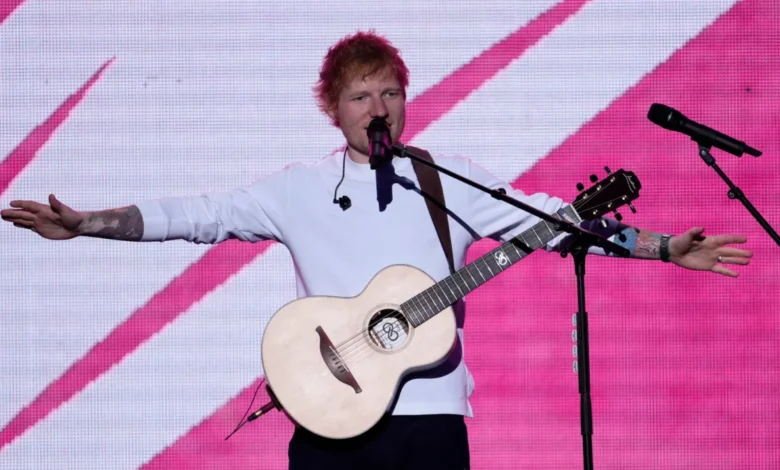
Sheeran’s return to the stage in Philadelphia this past Saturday was marked by a somber and meticulously scripted address to his audience. Appearing to read from a teleprompter, the musician navigated a delicate balance between acknowledging the humanitarian crisis in Gaza and attempting to distance his brand from the political polarization that has enveloped his current tour. For many industry observers, the moment served as a stark illustration of the narrowing space for political expression in high-stakes corporate music environments.
A Chronology of the Conflict
The friction began to intensify following a series of performances at MetLife Stadium in East Rutherford, New Jersey, earlier this month. During these shows, rapper Macklemore utilized his platform to condemn the humanitarian situation in Gaza, characterizing the Israeli military campaign as a genocide—a term increasingly cited by human rights organizations and international legal scholars.
The response from the venue’s ownership was swift. Robert Kraft, a prominent figure in American business and a significant donor to pro-Israel political action committees, intervened directly. Reports indicate that a tense 40-minute phone call between Kraft’s team and Sheeran’s management resulted in the ultimatum to remove Macklemore from the upcoming Gillette Stadium performances.
Following the announcement that Macklemore would be barred from the stage, the fallout was immediate. In an act of solidarity, all four of the remaining opening acts on the tour announced their withdrawal. This mass exit left the tour’s structural integrity in question and placed the responsibility of narrative control squarely on Sheeran, who has historically avoided direct political engagement in his professional output.
The Dynamics of Venue Power and Corporate Censorship
At the heart of the dispute is the question of "pre-approval" for performer content. In his address to the Philadelphia crowd, Sheeran articulated a clear unease regarding the precedent being set. "I am deeply worried about the idea that venues pre-approve content of performers," he stated. "It should never happen in the free world."
However, this critique of censorship has been met with skepticism by various advocacy groups, including the Palestinian Campaign for the Academic and Cultural Boycott of Israel (PACBI). Critics argue that Sheeran’s attempt to frame the situation as a binary choice between "unity" and "division" ignores the material reality of the conflict he addressed. By calling the events in Gaza "catastrophic and unjustifiable and disproportionate" while simultaneously lamenting the need for "unity," detractors claim Sheeran is attempting to occupy a neutral ground that is untenable given the severity of the humanitarian crisis.
The economic implications are equally significant. As of April 2026, Spotify data ranked Sheeran as the sixth-most streamed artist in the platform’s history. His tours are massive, multi-million-dollar logistical operations that involve hundreds of vendors, venue staff, and corporate partners. The withdrawal of his opening acts represents a significant financial loss for the artists involved, signaling the high personal and professional cost of taking a stand against venue policies.
Official Stances and Institutional Context
Robert Kraft’s justification for the removal of Macklemore was articulated in a public statement released last week. The billionaire framed the decision as a response to a "broader history of antisemitic rhetoric and imagery" that he asserted was "deeply offensive and hurtful to the Jewish community." Kraft’s history of involvement in regional and national politics provides necessary context to this decision. He has long been a benefactor of the Friends of the Israel Defense Forces (FIDF) and has contributed heavily to the United Democracy Project, a super PAC affiliated with the American Israel Public Affairs Committee (AIPAC).
The juxtaposition of Kraft’s political influence and the creative autonomy of touring artists has highlighted a growing tension in the music industry. While stadiums are private property, they serve as the primary public squares for cultural discourse in the 21st century. When venue owners act as arbiters of permissible speech, it inevitably leads to a chilling effect on the content that artists feel empowered to share with their audiences.
The "Both-Sides" Dilemma
Sheeran’s attempt to navigate this "important and passionate argument" has failed to satisfy either side of the debate. To the pro-Palestinian activists, his refusal to name the parties involved or explicitly support the calls for justice beyond a vague plea for humanity makes his apology seem performative. To others, his admission of "making mistakes" suggests an acknowledgment of his own complicity in the system that allowed his tour to be compromised.
In his concluding remarks at the Philadelphia show, Sheeran expressed profound personal distress, noting that the preceding week had been among the worst of his life. "I really didn’t know whether I’d be even getting onstage again, whether I even wanted to be an artist at all," he confided to the audience. This level of vulnerability suggests that the pressures of global superstardom are being fundamentally altered by the requirement for artists to take stances on complex, high-stakes international crises.
Implications for the Future of Live Performance
The Sheeran-Macklemore incident serves as a bellwether for the future of large-scale touring. As artists increasingly use their platforms to address global events, the contractual relationship between performers and venue owners is likely to become a focal point of future negotiations.
Key implications include:
- Contractual Transparency: Future tour contracts will likely include specific clauses regarding "morality" and "content control," defining the boundaries of what an artist can say on stage without risking a breach of contract or cancellation.
- Venue Neutrality: There is growing pressure from advocacy groups and artists to establish standard policies that prevent venue owners from using their financial power to suppress political speech, though such standards face significant legal hurdles in a landscape where stadiums are predominantly private commercial entities.
- The Professionalization of Activism: Artists are being forced to navigate a landscape where "neutrality" is no longer an option. The expectation from fans to engage with current events means that pop stars must be prepared for the political consequences of their statements, including potential backlash from corporate sponsors and venue partners.
Ultimately, the events surrounding the Sheeran tour represent a broader societal struggle over the limits of speech in the public sphere. Whether the industry moves toward a model of strictly monitored, safe-for-all-audiences content or toward a more robust, if chaotic, model of artistic freedom remains to be seen. For now, Ed Sheeran’s struggle to reconcile his brand of "unity" with the harsh realities of global politics stands as a defining moment for the music industry in 2026, underscoring the reality that in an interconnected world, there is no longer a place for an artist to remain entirely insulated from the political consequences of their influence.