New York City Leads Multi-State Legal Challenge Against Revived Trump-Era Public Charge Immigration Rule

The legal landscape surrounding United States immigration policy has entered a period of intense volatility as New York City, acting as the lead plaintiff in a coalition of 22 states and multiple municipal entities, has filed a sweeping lawsuit against the Trump administration. The litigation seeks to enjoin the federal government from implementing a revised "public charge" rule, which critics characterize as a discriminatory barrier to legal residency that functions as a "wealth test" for prospective immigrants. The regulation, slated for implementation on September 18, represents a significant departure from the more permissive 2022 guidelines and revives a contentious policy framework that historically disproportionately impacted low-income families and marginalized communities.
The Core of the Litigation
At the heart of the legal dispute is the federal government’s reinterpretation of what constitutes an "inadmissible" immigrant. Under the new guidelines, federal immigration officers are granted broad discretion to factor in an applicant’s past, present, or potential future use of non-cash public assistance—including the Supplemental Nutrition Assistance Program (SNAP), the Children’s Health Insurance Program (CHIP), and Medicaid—when determining whether to grant a green card.
Plaintiffs, led by New York City Mayor Zohran Mamdani and New York Attorney General Letitia James, argue that this policy is both unlawful and antithetical to established federal precedent. The lawsuit contends that the rule discards over a century of settled legal guidance, instead granting administrative officials the power to make subjective, inconsistent, and potentially discriminatory decisions. By tethering an immigrant’s legal status to their socioeconomic background, the plaintiffs argue, the administration is effectively penalizing individuals for utilizing basic health and nutritional resources that are intended to support public well-being.
A Chronology of the Public Charge Rule
The history of the public charge doctrine is rooted in 19th-century nativist sentiment, specifically aimed at restricting the entry of impoverished immigrants from Southern and Eastern Europe.
- 1882: The initial Immigration Act established the "public charge" concept, allowing authorities to exclude individuals deemed likely to become dependent on the government for subsistence.
- 1999: The Immigration and Naturalization Service issued field guidance clarifying that "public charge" applied primarily to individuals primarily dependent on government assistance for long-term institutionalized care or direct cash assistance.
- 2019–2020: During his first term, President Donald Trump expanded the definition to include non-cash benefits, triggering a wave of litigation and mass confusion that caused thousands of families to withdraw from public assistance programs out of fear of jeopardizing their immigration status.
- 2021: The Biden administration formally rescinded the 2019 expansion, reverting to the 1999 guidance and removing the "wealth test" hurdles.
- 2026 (Current): The Trump administration reintroduces the expansive version of the rule, prompting the immediate legal challenge from New York and its coalition partners.
Economic and Health Data: The "Chilling Effect"
The potential consequences of this rule change extend far beyond the courtroom, raising significant concerns among public health experts. A comprehensive report published by the Kaiser Family Foundation (KFF) this summer underscored the magnitude of the potential impact. KFF estimates that between 1.4 million and 4.1 million individuals currently enrolled in Medicaid or CHIP within mixed-status households may disenroll from these programs due to fear of the new rule.
This "chilling effect" is not merely anecdotal. During the previous iteration of the policy in 2020, data suggested that even immigrants who were legally eligible for benefits—or those whose U.S.-citizen children were entitled to them—began opting out of aid. The result was an increase in food insecurity and untreated health conditions within immigrant communities. By discouraging families from seeking preventative medical care, the policy could result in increased long-term public health costs, as minor, treatable issues escalate into emergency-level medical crises that disproportionately burden urban hospital systems.
Official Responses and Legal Strategy
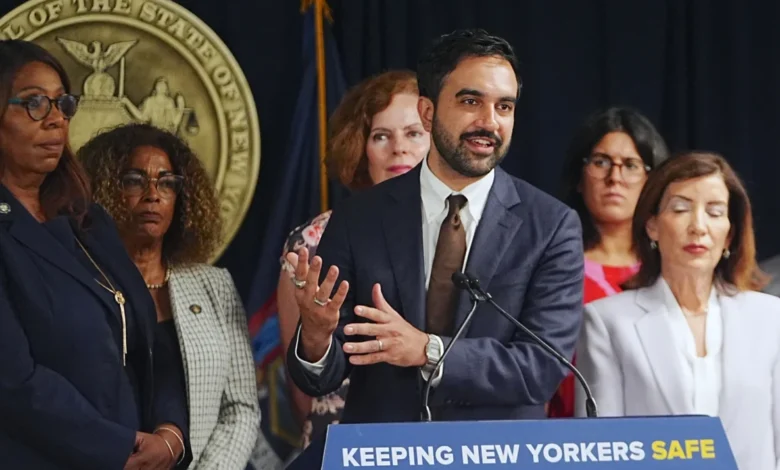
In a recent press conference, Mayor Zohran Mamdani highlighted the urgency of the situation, announcing a $7.25 million emergency fund dedicated to providing legal defense for those affected by federal overreach. "The new public charge rule seeks to push immigrant families away from the programs that have kept people fed and healthy for decades," Mamdani stated. "That fear will not stop at the families that the federal government is targeting. Families who remain fully eligible for benefits will feel a chilling effect, and all New Yorkers will pay for it."
The Attorney General’s office, working in tandem with the city, has prepared an argument rooted in the Administrative Procedure Act, suggesting that the federal government failed to provide a sufficient justification for the reversal of the 2022 policy. They argue that the rule change is "arbitrary and capricious" because it ignores the legislative intent of Congress, which historically sought to integrate immigrants into the workforce and society, rather than isolate them through deprivation.
Conversely, supporters of the rule argue that it is a necessary measure to ensure that immigrants entering the country are self-sufficient and do not place an undue burden on the American taxpayer. This faction of the administration posits that the government has a sovereign right to set high standards for residency, asserting that the use of public resources should be reserved for those who have already established a long-term, legal footing in the country.
Broader Implications and Socioeconomic Analysis
The implications of this lawsuit are far-reaching. If the courts allow the rule to take effect, it marks a fundamental shift in how the United States views the role of the immigrant in the modern economy. By prioritizing wealth as a primary metric for admissibility, the policy effectively narrows the pathway to legal status for working-class individuals, potentially impacting sectors that rely heavily on immigrant labor, including hospitality, construction, and agriculture.
Furthermore, the "chilling effect" on public health systems poses a structural risk to cities like New York. When large swaths of a population are deterred from accessing health clinics, immunization programs, or nutritional support, the overall public health profile of the city suffers. Public health experts have repeatedly noted that the health of the community is inextricably linked to the health of its most vulnerable members.
The legal battle is also a test of municipal power. New York City’s willingness to spearhead a 22-state coalition signals a growing trend of local governments acting as a bulwark against federal policies they view as harmful to their demographic and economic interests. As the September 18 deadline approaches, the legal community is bracing for an expedited appeals process, as the case is expected to eventually reach higher federal courts, potentially setting a lasting precedent for how "public charge" definitions can be manipulated by shifting executive administrations.
Conclusion
As the case moves forward, the primary question remains whether the judicial system will prioritize the administrative discretion of the executive branch or the protection of public health and long-standing social policy. The conflict between the federal government’s desire for restrictive immigration criteria and the municipal mandate to ensure the health and safety of all residents—regardless of status—serves as a flashpoint for a broader national debate on the soul of American immigration policy. For now, millions of families remain in a state of uncertainty, weighing the necessity of life-sustaining benefits against the long-term goal of securing their future in the United States.