Ireland-Israel soccer match proceeds amid fierce national outcry and moral debate over Gaza conflict

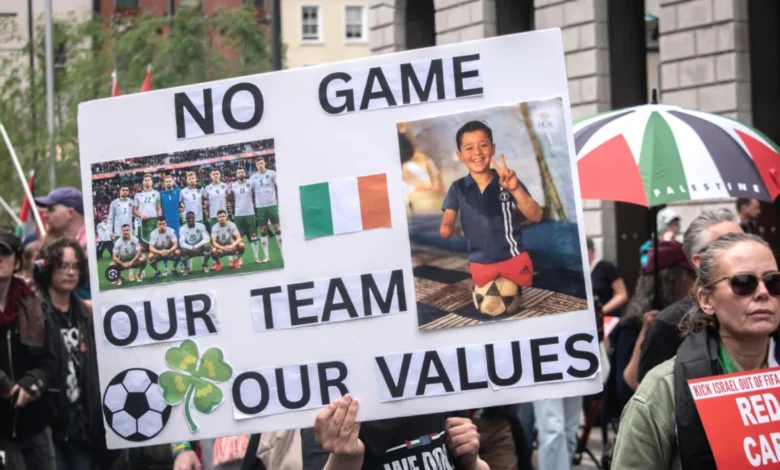
The Republic of Ireland’s national soccer team is set to face Israel in a high-stakes UEFA Nations League fixture this week, a match that has become the epicenter of a profound national debate regarding the intersection of international sport and humanitarian advocacy. As the team prepares for the encounter in Debrecen, Hungary, the decision to proceed with the game has triggered a wave of public protests, internal dissent within the squad, and a broader interrogation of the role of sporting governing bodies in the face of geopolitical crises.
The match, which serves as a "home" fixture for Israel due to UEFA’s ongoing prohibition of games held within Israeli territory since October 2023, represents more than a routine athletic competition. It has emerged as a litmus test for how nations balance contractual obligations to international sporting associations against the moral demands of their citizenry.
A Chronology of Contention
The tension surrounding the fixture did not emerge overnight; it is the culmination of a year of mounting pressure on the Football Association of Ireland (FAI). Following the escalation of hostilities in Gaza, which various international bodies have characterized as a genocide, pressure groups across Ireland began calling for a total sporting boycott.
The timeline of the escalation is as follows:
- October 2023: UEFA suspends all international matches in Israel, citing security concerns following the onset of the war in Gaza.
- August 2026: The FAI confirms that the Nations League fixture against Israel will take place in Hungary, with no ticket allocation requested by the Irish side.
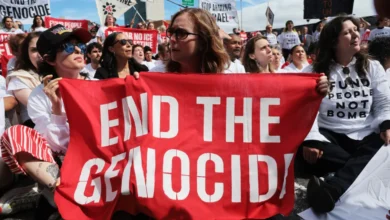
- September 2026: A series of open letters and protests gain momentum, with over 160 Irish sportspeople calling for a cancellation.
- Late September 2026: After a marathon four-hour meeting between players, staff, and FAI executives, the Irish squad votes to fulfill the fixture to avoid potential sanctions.
- October 4, 2026: The return leg is scheduled to take place behind closed doors at the TSC Arena in Bačka Topola, Serbia.
The Moral Dilemma of Professional Athletics
The decision to move forward with the match has placed the Irish national team in an untenable position. While the players are tasked with maintaining their professional qualifications for future tournaments—including the upcoming 2028 UEFA European Football Championship, which Ireland is slated to co-host—the personal toll of the decision has been palpable.
Goalkeeper Gavin Bazunu’s departure from the squad serves as the most prominent act of dissent. In a public statement, Bazunu clarified that his decision was not directed at the Israeli people or the Jewish community, but rather represented a firm stance against the ongoing violence in the region. "There are few times where you get a chance in life to stand up for something bigger," Bazunu wrote, highlighting the internal struggle faced by athletes who feel their professional responsibilities are at odds with their conscience.
The FAI has attempted to mitigate the backlash through symbolic gestures. Manager Heimir Hallgrímsson and the squad have announced that players will wear black armbands to honor the lives lost in the conflict. Furthermore, the team has confirmed they will opt out of traditional pre-match rituals, such as handshakes and the exchange of team pennants, in an effort to distinguish their athletic participation from a tacit endorsement of the current political status quo.
Institutional Pressure and the Threat of Sanctions
A central component of the FAI’s argument for playing the matches involves the potential for punitive measures from UEFA. Historically, governing bodies have maintained a strict "no politics" policy, often punishing national associations that refuse to fulfill fixtures. The FAI has pointed to the precedents set by Lithuania, Latvia, and Estonia, which were handed 3-0 forfeit losses and financial penalties after refusing to play against Belarus.
However, critics argue that these consequences are overstated. Luke O’Riordan, communications director for Bohemian FC, has been a vocal opponent of the FAI’s narrative, suggesting that the association exaggerated the potential fallout to coerce delegates into a "yes" vote. "It is not acceptable to put a price on standing up for what is right," O’Riordan stated, echoing the sentiments of many activists who believe that the financial and competitive penalties would have been a small price to pay for a principled stand.
Broader Implications for Global Sports
The controversy in Ireland highlights a glaring inconsistency in how international sporting bodies apply their regulations. The suspension of Russia from all FIFA and UEFA competitions in February 2022 following its invasion of Ukraine established a precedent for excluding nations based on their state conduct. By maintaining Israel’s eligibility while simultaneously enforcing bans on other nations for similar violations of international law, UEFA faces mounting accusations of institutional hypocrisy.
Amnesty International has been among the most vocal critics, with Regional Director for Europe Steve Cockburn stating that the participation of the Israeli team is a "betrayal" of the principles of human rights that UEFA claims to uphold. The argument is further complicated by historical context: as noted by observers, the Israel Football Association was originally established in the 1920s as the Palestine Football Association, a fact that remains a point of intense historical and symbolic debate in the region.
Public Sentiment and the Political Divide
Ireland, which has historically been one of the most pro-Palestinian nations in the European Union, finds itself in a state of civil friction. Polls conducted in the lead-up to the match suggest that approximately two-thirds of the Irish public favor a boycott. This public sentiment is reflected in the country’s diplomatic history, including being the first EU member state to formally advocate for Palestinian statehood.
The political leadership, however, has maintained a more cautious approach. Prime Minister Micheál Martin, while acknowledging the moral weight of the situation, has defended the necessity of separating sports from politics. Conversely, opposition figures like Ruth Coppinger have lambasted this stance, arguing that when a conflict reaches the scale of a potential genocide, the concept of "neutral" sport is a fallacy. "You can’t play against genocide; the best statement against genocide is not playing," she remarked during a parliamentary session.
The Road Ahead
As the teams prepare to take the pitch in Hungary, the match itself is likely to be overshadowed by the political climate surrounding it. The empty stands at the secondary fixture in Serbia will serve as a quiet, yet powerful, testament to the reality that this is no ordinary sporting event.
The long-term impact of this episode on the FAI and its relationship with the Irish public remains to be seen. If the Irish team succeeds in their athletic goals, they may face the challenge of reconciling those achievements with the vocal disapproval of a significant portion of their fanbase. Conversely, if the boycott movement continues to grow, it could force a fundamental reevaluation of how international soccer handles political conflict.
Ultimately, the Ireland-Israel fixture acts as a microcosm of the modern world’s struggle to find moral consistency in a globalized era. Whether through symbolic gestures like black armbands or the more radical act of total withdrawal, the sporting community is being forced to confront the reality that for millions of people, a game is never just a game. As the world watches, the actions of the Irish players on the pitch will be scrutinized not just for their technical skill, but for their role in a narrative that extends far beyond the confines of the stadium.
Related posts: