Trump Threatens Total Destruction of Iran During Combative United Nations General Assembly Address

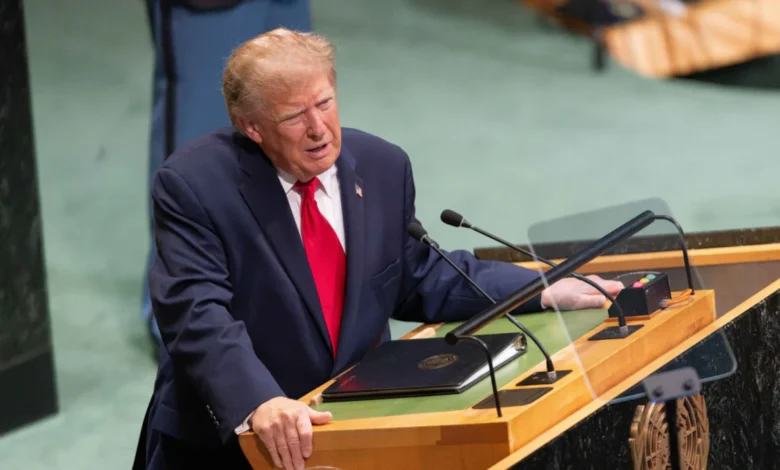
President Donald Trump delivered a contentious and combative address to the United Nations General Assembly on Tuesday, September 22, 2026, marking a significant escalation in his administration’s rhetoric regarding the ongoing conflict in Iran. During his remarks at the UN headquarters in New York City, the President openly questioned whether the United States should pursue the total annihilation of the Islamic Republic, framing the existential threat as a potential solution to the war he initiated alongside Israel in February 2026.
The President’s comments, which have drawn immediate condemnation from international observers and policy experts, represent a sharp departure from traditional diplomatic discourse at the UN. By framing the conflict as a binary choice between total destruction and potential future threats, Trump has signaled an unwillingness to engage in the multilateral de-escalation strategies that have historically characterized the assembly’s mandate.
Chronology of the Conflict
The current military engagement in Iran traces its origins to early 2026, following a period of heightened regional volatility.
- February 2026: The United States and Israel launched a series of coordinated military strikes against Iranian infrastructure, citing the acceleration of Iran’s nuclear enrichment program and regional destabilization efforts as the primary justifications.
- March–May 2026: Initial military successes reported by the coalition were met with asymmetric counter-responses, leading to a protracted conflict that crippled regional supply chains.
- June 2026: Diplomatic backchannels attempted to establish a framework for a ceasefire. However, internal political shifts in Tehran led to the rise of hardline factions, which observers argue significantly undermined the authority of the Iranian executive to negotiate.
- August 2026: A series of contradictory public statements from the White House regarding potential terms for peace caused widespread confusion among international allies, with the administration simultaneously suggesting a readiness to negotiate and a commitment to "total victory."
- September 2026: The UN General Assembly speech served as the latest public escalation, with the President moving beyond calls for containment to explicit inquiries about the total destruction of the nation.
The Nuclear Question and Strategic Impasse
A central pillar of the administration’s justification for the war remains the status of Iran’s nuclear program. Throughout the last seven months, the White House has provided a shifting set of objectives, often conflating nuclear non-proliferation with broader regime change goals.
Security analysts note that the current military campaign has had the paradoxical effect of accelerating the very outcomes the administration claims to fear. By creating an environment of perpetual insecurity, the conflict has empowered domestic hardliners within Iran, effectively dismantling the political capital required for a return to the Joint Comprehensive Plan of Action (JCPOA) model. According to intelligence briefings from late August, the destruction of critical infrastructure has hindered international monitoring, making it increasingly difficult for the International Atomic Energy Agency (IAEA) to verify the status of uranium stockpiles.
Humanitarian Consequences and Economic Toll
While the President focused his UN address on the strategic necessity of military force, the humanitarian impact of the conflict has reached critical levels. Reports from international aid organizations indicate that the destruction of essential infrastructure—including water treatment facilities, electrical grids, and food distribution networks—has displaced millions.
The conflict has resulted in tens of thousands of confirmed fatalities, a figure that continues to rise as the intensity of the air campaign persists. The "scorched earth" approach adopted by the coalition has led to a collapse in basic services, exacerbating the suffering of the civilian population. Despite these developments, the humanitarian crisis was notably absent from the President’s formal remarks, which focused exclusively on the strategic and geopolitical dimensions of the war.
International Reactions and Expert Analysis
The response to the President’s rhetoric has been largely critical, with experts warning that such statements undermine the stability of the international order. Matt Duss, a fellow at the Center for International Policy and a former foreign policy adviser, characterized the President’s comments as "dangerously unhinged."
"Such rhetoric is not merely reckless; it is a criminal threat of genocide against an entire nation," Duss stated in a post-speech press release. "The international community, and specifically U.S. lawmakers, have a duty to unequivocally reject language that threatens the wholesale destruction of a sovereign state and its people."
European Union representatives, speaking on condition of anonymity, expressed "profound concern" regarding the implications of the President’s address. Several member states have indicated that the focus on total annihilation complicates the ability of neutral parties to facilitate a peaceful resolution. Analysts suggest that the rhetoric has effectively narrowed the window for diplomatic intervention, leaving military escalation as the only viable path forward in the eyes of the current administration.
Strategic Implications and Global Stability
The broader implications of the President’s stance extend far beyond the immediate theater of war. By openly debating the "annihilation" of a nation at the UN—an institution founded specifically to prevent such outcomes—the administration is challenging the post-World War II consensus on state sovereignty and international law.
Economically, the war has caused significant disruption to global energy markets. The volatility in the Persian Gulf has led to a sustained increase in crude oil prices, impacting inflation rates in both developing and developed economies. Furthermore, the reliance on military solutions has strained the U.S. budget, with the Congressional Budget Office (CBO) noting that the costs of the conflict are expected to outpace initial projections if the current tempo of operations continues through the end of the fiscal year.
Analytical Outlook
The path forward remains fraught with uncertainty. The administration’s refusal to articulate clear, consistent objectives beyond the vague promise of "victory" has left allies and adversaries alike questioning the long-term strategy. The hardline shift within the Iranian government, brought about by the sustained military pressure, suggests that any future negotiations will be significantly more complex than those conducted in previous years.
As the UN General Assembly continues, the focus will likely shift to whether the international community can exert enough pressure to pivot the administration back toward a diplomatic framework. However, given the President’s current stance, the likelihood of an immediate de-escalation appears low. The conflict, which began as a tactical operation in February, has evolved into an ideological and existential struggle, with the civilian population of the region bearing the highest cost of the administration’s strategic pivot.
The coming months will be critical in determining whether the rhetoric delivered at the United Nations is a precursor to an even wider conflict or a rhetorical posturing meant to satisfy domestic political interests. Regardless of the intent, the consequences of such language are being felt in the corridors of the UN and, more significantly, in the cities and towns currently affected by the ongoing hostilities. The global community now faces a sobering reality: a major nuclear-capable power has publicly questioned the right of another nation to exist, effectively challenging the very foundations of 21st-century diplomacy.
Related posts: