Donald Trump and the Twenty-Year Legacy of 9/11 Mythmaking: A Chronicle of Self-Aggrandizement

September 11 remains the most solemn observance on the American calendar, a day dedicated to honoring the nearly 3,000 lives lost during the 2001 terrorist attacks. For the nation’s commander-in-chief, the occasion demands a standard of solemnity, reverence, and empathy that places the victims and survivors above all else. Yet, throughout his public life, Donald Trump has consistently struggled to align his commemorative remarks with traditional norms of humility, frequently redirecting the narrative of the national tragedy toward his own personal exploits, real estate holdings, and grievances.
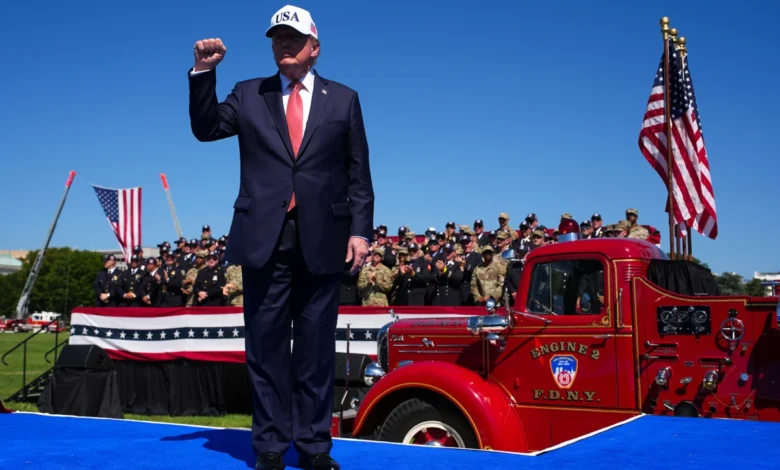
As the nation marked the 25th anniversary of the attacks, remarks made by Trump during a commemorative event for first responders and victims underscored a long-standing pattern. Rather than focusing entirely on the sacrifice of the fallen, the president revived contested claims about his own physical presence and actions at Ground Zero in the immediate aftermath of the tragedy, illustrating a complex, decades-long relationship with the defining national crisis of the twenty-first century.
Recounting the Immediate Aftermath: The Disputed Claims at Ground Zero
During a speech commemorating the quarter-century milestone, Trump revisited his actions on the day of the attacks and the days that followed. "I took the whole crew down there right after this happened," he stated to attendees. "Everyone went down with me. We went down as a big group of people. There wasn’t too much we could do."
In the same address, Trump expanded upon his narrative of personal involvement, recalling an anecdote in which he claimed two firefighters physically lifted and carried him out of harm’s way due to fears that the nearby United States Steel Building was on the point of structural collapse.
Despite these assertions, archival records, contemporaneous reporting, and eyewitness accounts from emergency personnel provide no evidence that Trump visited Ground Zero in the immediate aftermath of the attacks, nor do they support the account of him being evacuated from a crumbling skyscraper by firefighters. Retired New York Fire Department Deputy Chief Richard Alles, who spent months managing recovery operations at the site, previously addressed similar claims made by Trump, stating unequivocally that he never witnessed the future president participating in recovery efforts and noting that Trump was a private citizen at the time without an operational role.
The Commemoration of Welles Crowther and Personal Rivalries
Trump’s address also touched upon the heroism of Welles Crowther, widely known as the "Man in the Red Bandana." Crowther, a 24-year-old equities trader and former volunteer firefighter, used a red handkerchief to cover his face against smoke and dust as he guided multiple survivors to safety from the upper floors of the South Tower before losing his life when the building collapsed.
While Trump acknowledged Crowther’s posthumous award of the Presidential Medal of Freedom, which the administration had previously conferred, he framed the recognition through a personal lens. Referencing Crowther’s enduring legacy, Trump remarked, "He’s become more famous than me. I don’t like it. I’m very unhappy. He’s become much more famous than me."
The comments followed reporting by The New York Times regarding internal discussions surrounding the 25th-anniversary events. According to the report, Trump had initially considered hosting the national commemoration at Ground Zero but altered his itinerary after learning that sitting politicians are barred from delivering formal speeches at the memorial site to maintain the solemnity of the grounds. Trump strongly denied the report, labeling the coverage false and criticizing the journalists involved.
A Chronology of Self-Reference: From 2001 to the Present
Trump’s public statements concerning September 11 have frequently drawn scrutiny for merging national mourning with personal commentary. A chronological examination of his remarks over the past twenty-five years reveals a consistent pattern of self-referential observation:
- September 11, 2001: Hours after the towers fell, during a telephone interview with Secaucus, New Jersey station WWOR, anchor Rolland Smith asked Trump if his building at 40 Wall Street had sustained any damage. Trump diverted the question to note that the destruction of the World Trade Center now made his downtown skyscraper the tallest building in the area. "40 Wall Street actually was the second-tallest building in downtown Manhattan," Trump said during the broadcast. "Before the World Trade Center it was the tallest. Then when they built the World Trade Center it became known as the second-tallest, and now it’s the tallest."
- Post-9/11 Recovery Funding: Although 40 Wall Street sustained no structural damage from the attacks, Trump subsequently applied for and received federal recovery grants intended for small businesses affected by the disaster in Lower Manhattan. When questioned in later years about retaining the funds, Trump defended the allocation by asserting that he permitted displaced individuals and emergency organizations to utilize the building for logistics and storage.
- 2005 Congressional Testimony: While testifying before a congressional committee regarding building codes and construction materials, Trump defended the historical use of asbestos. He argued that if the World Trade Center had been constructed utilizing the now-banned, heat-resistant mineral, the towers would not have collapsed.
- September 11, 2013: In a social media post commemorating the twelfth anniversary of the attacks, Trump wrote: "I would like to extend my best wishes to all, even the haters and losers, on this special date, September 11th." The message drew widespread criticism from political commentators and families of victims for its casual tone.
- 2015 Campaign Trail: During a rally in Birmingham, Alabama, ahead of the 2016 presidential election, Trump claimed to have witnessed "thousands and thousands of people" in Jersey City celebrating as the World Trade Center towers collapsed. The claim was thoroughly investigated and debunked by fact-checkers and law enforcement officials, though Trump utilized the assertion to advocate for increased surveillance of Muslim communities. Later in the campaign cycle, during a televised primary debate, he attributed the collapse of the towers to foreign policy failures by former Presidents Bill Clinton and George W. Bush, before noting that he had "lost hundreds of friends" in the disaster.
- 2018 Bloomberg Interview: In an interview with Bloomberg News, Trump discussed his standing within the Republican Party and compared his approval ratings favorably to historical figures, noting that former President George W. Bush’s high approval following the attacks—symbolized by his use of a bullhorn at Ground Zero—lasted for only "a tiny period of time."
- 2019 Memorial Remarks: During a speech marking the anniversary at the Pentagon, Trump again referenced his presence in Lower Manhattan following the attacks, stating that he spent significant time at the site alongside first responders, statements that were subsequently contradicted by municipal emergency officials on duty during the recovery phase.
Financial and Political Implications
The recurring intersection of September 11 and Trump’s public persona has frequently ignited debates among historians, political analysts, and victims’ advocacy groups regarding the boundaries of political rhetoric during national tragedies. While supporters argue that Trump’s unorthodox communication style reflects a pragmatic New Yorker’s perspective on the rebuilding of the city’s financial district, critics contend that framing historical atrocities around personal grievances, property valuations, and comparative fame diminishes the solemnity owed to the victims.
The financial controversies surrounding federal recovery grants allocated to downtown properties—including 40 Wall Street—also highlight the administrative complexities that followed the disaster. While the Empire State Development Corporation and federal agencies distributed billions to stabilize the local economy, the inclusion of non-damaged commercial real estate among the beneficiaries remains a subject of study regarding post-crisis economic relief distribution.
Broader Impact on Political Discourse
The evolution of presidential commemorations over the past quarter-century reflects broader shifts in American political culture. As institutional norms surrounding solemn national days have evolved, public figures face heightened scrutiny regarding their utilization of historical trauma for political messaging or personal narrative building.
The ongoing discourse surrounding Trump’s statements highlights the tension between personal branding and institutional leadership during moments of collective remembrance. As generations pass since the events of 2001, the preservation of the historical record—distinguishing verified accounts of survival and rescue from political mythmaking—remains a central focus for historians, journalists, and the families of those who perished.
Related posts: