Truth Social Monetizes President Trump’s Market-Moving Statements with Premium API Access, Sparking Ethical Debates

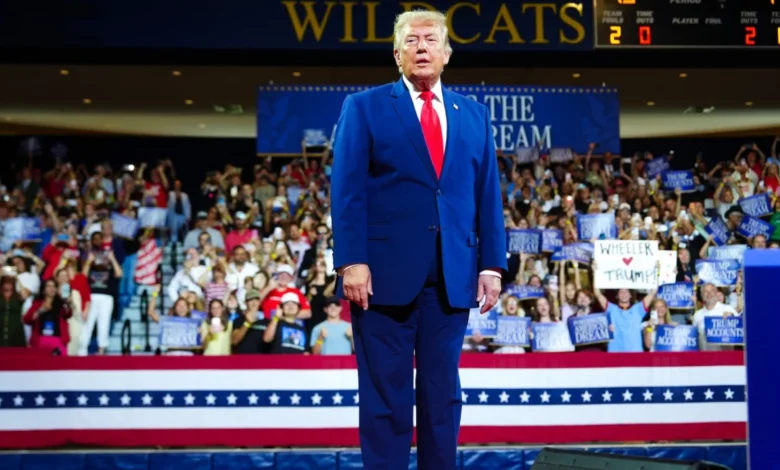
Truth Social, the social media platform founded by Donald Trump, announced last week a controversial new revenue stream: selling immediate access to President Trump’s posts via a premium Application Programming Interface (API) for a staggering $100,000 per month. This offering, set to launch on August 1, is specifically structured to provide deep-pocketed institutional buyers, particularly those in the financial sector, with near-instantaneous access to statements from the current president of the United States. While seemingly a standard data licensing model, the exorbitant price point, combined with the unique market-moving influence of its primary user, Donald Trump, has ignited a fierce debate on Wall Street and beyond regarding market fairness, political ethics, and the monetization of public office.
The Genesis of Truth Social and its Financial Imperatives
Truth Social emerged from a tumultuous period for Donald Trump in early 2021, following his permanent suspension from major social media platforms like Twitter (now X) and Facebook in the wake of the January 6 Capitol riot. Citing censorship and a desire to create a "free speech" alternative, Trump announced the formation of Trump Media & Technology Group (TMTG) in October 2021, with Truth Social as its flagship product. The platform officially launched in February 2022, positioning itself as a haven for conservative voices and a direct communication channel for the former, and now current, president.
From its inception, TMTG’s business model was heavily reliant on Trump’s persona and continued engagement. The company went public in March 2024 through a merger with a special purpose acquisition company (SPAC), Digital World Acquisition Corp. (DWAC), a deal that saw its valuation skyrocket, albeit with significant volatility. Despite this public listing, Truth Social has consistently struggled to achieve profitability and significantly expand its active user base beyond a core loyalist demographic and Trump himself. Financial disclosures have repeatedly highlighted the company’s dependency on Trump, with typical SEC filings stating: "TMTG believes President Trump’s reputation and relationships are a critical element to the success of TMTG’s business. TMTG’s future success will depend, to a significant extent, upon the continued presence and popularity of President Trump." This foundational reliance underscores the company’s persistent search for viable revenue streams.
Unpacking the Truth API Offering: Access at a Premium
The new Truth API is designed to deliver a direct, licensed, real-time feed of the platform’s most impactful "Truths." While social media companies and financial news services like Dow Jones and Bloomberg have long offered licensed data feeds to capitalize on the demand for rapid information, Truth Social’s implementation stands out. For $100,000 a month, subscribers will gain a critical, albeit small, temporal advantage over those following Trump’s posts via the public web interface. This fractional lead can be invaluable in the realm of high-frequency trading, where milliseconds can translate into millions in profits.
Kevin McGurn, Interim Chief Executive Officer of TMTG, articulated the company’s strategic rationale in a press release: "Markets already move on Truth Social posts. Truth API delivers a direct, licensed, real-time feed of the platform’s most market-moving Truths while advancing our strategy to monetize proprietary assets through a high-margin, recurring revenue stream. As adoption grows, we expect Truth API to become a meaningful, ongoing source of revenue for the company, creating lasting value for shareholders."
The implicit, yet undeniable, truth in McGurn’s statement is that only one user on Truth Social consistently moves markets: President Donald Trump. His pronouncements on policy, trade, or international relations have, on numerous occasions, triggered immediate shifts in stock prices, commodity markets, and currency valuations. A prime example occurred on April 9, 2026, when Trump posted on Truth Social that he would be suspending most tariffs, a statement that reportedly sent stock markets soaring. Such incidents underscore the platform’s unique, almost singular, value proposition. Given Trump’s significant ownership stake in TMTG—estimated at roughly 42 percent—any financial success derived from the Truth API directly translates into substantial personal gain for the president. The company claims to have already secured initial customers and anticipates more subscriptions before the program’s official launch.
Industry Comparison and Trump’s Exclusivity Advantage
The concept of selling rapid access to information is not novel. Wall Street firms routinely invest heavily in wire services and direct data feeds to gain a competitive edge in high-speed algorithmic trading. However, the pricing structure of Truth Social’s API is notably aggressive. According to reports, the $100,000 monthly fee is more than double what platforms like Twitter (now X) typically charge for API access, despite Twitter boasting a vastly larger user base and a wider array of market-moving accounts. Larger social media entities like Meta and LinkedIn, while also offering enterprise-level data access, typically negotiate bespoke deals for such high-volume or premium services.
The justification for Truth Social’s premium pricing lies in a unique exclusivity agreement signed in 2022 between Donald Trump and TMTG. This deal stipulates that Trump must post content on Truth Social six hours before sharing it on any other platform. While this agreement initially contained a significant caveat—allowing Trump to post content related to political messaging, fundraising, or get-out-the-vote efforts anywhere, at any time—its impact has evolved. In 2022, when Trump was out of office, this carve-out seemed to diminish Truth Social’s exclusive value. However, with Trump now in office, the "market-moving content"—typically related to economic policy, trade, or geopolitical stances—has largely remained exclusive to Truth Social for that critical six-hour window. This exclusivity, which once appeared to be a weakness in TMTG’s business plan, has ironically become its most lucrative asset, creating an artificial scarcity that justifies the elevated price of the API feed.
Timeline of Key Developments
- January 2021: Donald Trump permanently suspended from Twitter and Facebook following the January 6 Capitol riot.
- October 2021: Trump announces the formation of Trump Media & Technology Group (TMTG) and its social media platform, Truth Social.
- February 2022: Truth Social officially launches to the public.
- 2022: TMTG signs an exclusivity deal with Donald Trump, requiring him to post content on Truth Social six hours before any other platform, with exceptions for political messaging.
- March 2024: TMTG goes public through a merger with Digital World Acquisition Corp. (DWAC).
- April 9, 2026: President Trump posts on Truth Social about suspending most tariffs, reportedly causing a surge in stock markets, highlighting the platform’s market influence.
- Mid-July 2026: Truth Social officially announces the launch of the Truth API, a licensed data service offering real-time access to market-moving posts.
- August 1, 2026: Anticipated launch date for the Truth API program.
Ethical Quandaries and Fiduciary Obligations
The Truth API offering has not been met with universal approval, particularly within the financial community. Reports from the Financial Times indicate significant discomfort among some Wall Street executives. One top executive at a hedge fund reportedly pointed out a critical ethical and legal dilemma: even if a firm views the API feed as marginally useful or morally objectionable, particularly if their trading strategy isn’t solely high-frequency, they might still face a fiduciary obligation to subscribe. Fiduciary duty requires company executives to act in the best financial interest of their shareholders, meaning that avoiding a service that could provide a competitive advantage, however slight, might expose them to lawsuits from shareholders if competitors profit from it.
A second macro hedge fund executive reportedly labeled the initiative "scandalous" but conceded that subscribing might be a necessary evil to avoid falling behind rivals. Another crypto trader criticized the move as "a huge misuse of power," calling it "a terrible look… not exactly presidential and impartial." These reactions highlight a fundamental tension between market competitiveness and ethical governance.
The broader implications extend beyond Wall Street. The monetization of a sitting president’s public statements for private gain, especially when those statements are known to influence global markets, raises profound questions about political ethics and the integrity of public office. It blurs the lines between public service and personal enrichment, potentially creating an incentive structure where a president’s communication strategy could be influenced by commercial considerations rather than purely public interest. Critics argue that it creates an unfair playing field, where those with financial means can gain privileged access to information that impacts the broader economy, exacerbating information asymmetry.
Broader Impact and Regulatory Scrutiny
The Truth API could invite increased scrutiny from regulatory bodies such as the Securities and Exchange Commission (SEC). The SEC’s mandate includes ensuring fair and transparent markets and preventing insider trading or unfair advantages. While the API is publicly available for subscription, the specific targeting of financial firms and the explicit acknowledgement of its market-moving potential could trigger investigations into whether such an arrangement creates an undue advantage or compromises market integrity. The fundamental principle of equal access to material information for all market participants could be seen as undermined by a system that grants immediate access only to those able to pay a substantial fee.
Furthermore, this move could set a precedent for future political figures or public officials. If the monetization of market-moving political statements becomes normalized, it could lead to a broader erosion of trust in public institutions and the political process. The inherent conflict of interest between a president’s duty to the public and their personal financial interests becomes starkly evident.
For Truth Social itself, the API represents a critical attempt to diversify and stabilize its revenue. Given its struggles with user growth and profitability, securing a "high-margin, recurring revenue stream" from institutional clients could be vital for its long-term viability, reducing its reliance on a volatile and often politically charged advertising market. However, this financial stability comes at the cost of intensified ethical debate and potential regulatory challenges.
In conclusion, Truth Social’s premium API offering is more than just a new product; it is a profound intersection of politics, finance, and ethics. By monetizing immediate access to President Trump’s market-moving statements, TMTG aims to secure a lucrative revenue stream, directly benefiting its largest shareholder, the president himself. While rooted in existing market practices for data licensing, the unique context of a sitting president’s direct financial gain from such an arrangement, coupled with the ethical dilemmas it poses for financial institutions, ensures that the Truth API will remain a focal point of discussion regarding market fairness, political integrity, and the evolving landscape of information dissemination in the digital age.
Related posts: