The numbers gave Honda every reason to exit China, yet it just extended the GAC deal all the way to 2038

Honda Motor Co. has signaled a definitive long-term commitment to the world’s largest automotive market, choosing to double down on its presence in China despite a staggering decline in regional sales performance. The Japanese automaker officially announced a 10-year extension of its joint venture agreement with Guangzhou Automobile Group (GAC), pushing the expiration of the partnership from 2028 to 2038. This move comes at a critical juncture for Honda, as it navigates a landscape where traditional dominance is being rapidly eroded by the rise of domestic electric vehicle (EV) manufacturers and shifting consumer preferences toward "New Energy Vehicles" (NEVs).
The extension of the GAC-Honda partnership, which has been the cornerstone of Honda’s operations in the region for a quarter-century, underscores a strategic "stay the course" mentality. While many analysts have questioned the viability of legacy foreign brands in a market increasingly dominated by local players like BYD and Tesla, Honda’s leadership appears to view the current volatility as a transitional phase rather than a permanent displacement. By securing its operational framework until 2038, Honda is betting that a refreshed product lineup and a pivot toward electrification will allow it to regain its footing.
A Paradox of Strategy: Commitment Amidst Contraction
The decision to extend the GAC deal by another decade is visually and statistically at odds with Honda’s recent performance data. In the automotive industry, a 60% drop in sales over a five-year period would typically signal an impending exit or a massive scale-back of operations. For Honda, the peak of its Chinese success occurred as recently as 2020, when the company sold a combined 1.62 million vehicles through its two primary joint ventures: GAC-Honda and Dongfeng-Honda.
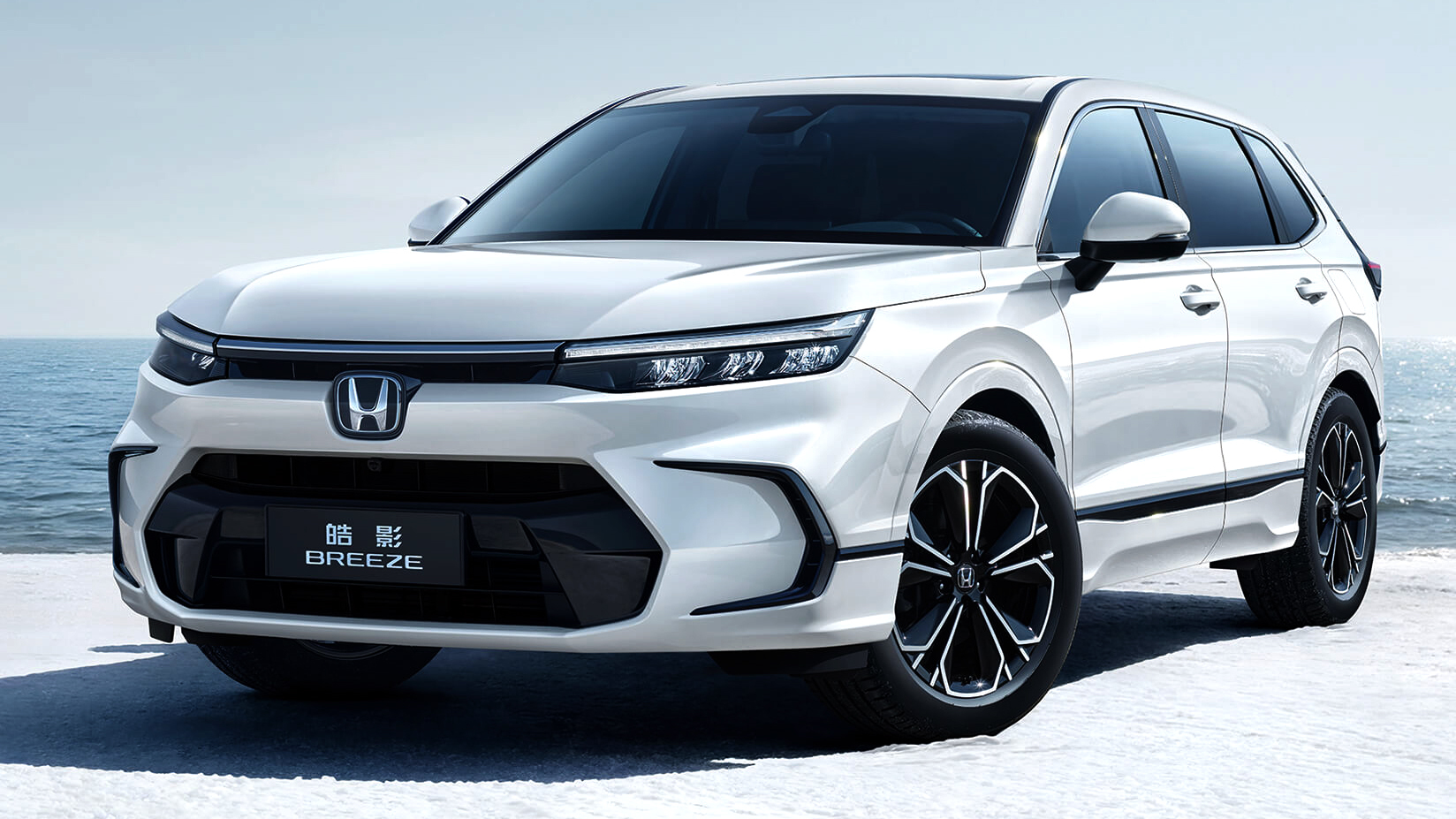
By the end of 2023, those figures had plummeted. Total sales for the year cratered to approximately 640,000 units. Of this total, the GAC-Honda joint venture accounted for roughly 340,000 units, while the remainder came from the Dongfeng partnership. This precipitous decline represents one of the most dramatic retreats for a major global automaker in modern history. The vacuum left by Honda and its Japanese peers has been filled almost entirely by Chinese domestic brands that have mastered the art of high-tech, affordable electric propulsion.
Despite these sobering figures, the extension of the GAC deal suggests that Honda views China not just as a sales market, but as a vital laboratory for global automotive evolution. The spokesperson for Honda, in a statement provided to Nikkei Asia, noted that while the market is shifting rapidly, the company needs business continuity to assess and adapt to the changing environment. The commitment to 2038 provides a decade-long runway for Honda to reinvent its brand identity in the eyes of Chinese consumers.
The Magnitude of the Sales Slump and Market Realities
To understand the severity of Honda’s situation, one must look at the broader context of the Chinese automotive sector. For decades, foreign joint ventures were the gold standard for Chinese consumers. Brands like Honda, Toyota, and Volkswagen represented reliability, status, and engineering excellence. However, the shift toward electrification has fundamentally changed the value proposition.
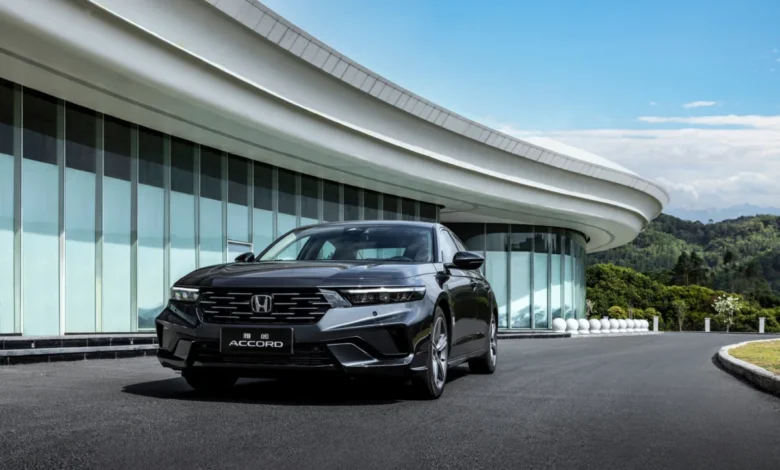
In 2020, Honda’s internal combustion engine (ICE) models, such as the Accord, Civic, and CR-V, were among the best-selling vehicles in their respective segments. Today, those same models are struggling to compete with a new generation of smart EVs that offer superior software integration, larger screens, and lower operating costs. The "brand premium" that Honda once enjoyed has evaporated, replaced by a consumer preference for "software-defined vehicles."

The financial impact of this shift has been profound. In early 2024, reports surfaced that Honda was forced to slash the price of the Accord—a vehicle that once sold itself at full MSRP—by nearly $15,000 in certain Chinese regions just to move inventory. Such drastic discounting is a double-edged sword; while it helps clear dealer lots, it severely damages the brand’s resale value and long-term prestige.
A Quarter-Century of Partnership: The GAC-Honda Legacy
The relationship between Honda and GAC began in 1999, during the early stages of China’s automotive boom. At the time, the Chinese government required foreign automakers to form 50/50 joint ventures with local state-owned enterprises to manufacture vehicles within the country. This policy was designed to facilitate technology transfer and build a domestic industrial base.
Over the last 25 years, GAC-Honda has produced more than 11 million vehicles. It was instrumental in introducing modern manufacturing standards and dealership networks to the Chinese market. The venture’s success was so pronounced that for many years, GAC-Honda was the most profitable arm of Honda’s global operations. The 2038 extension ensures that this legacy continues, but the nature of the partnership is expected to change. Moving forward, the focus will shift from localizing Japanese designs to co-developing vehicles that meet the specific digital and electric demands of the Chinese public.
Strategic Right-Sizing: Capacity Reduction and Plant Closures
While the extension of the GAC deal shows a commitment to the future, Honda is not ignoring the realities of the present. The company has begun a painful process of "right-sizing" its manufacturing footprint in China. Earlier this year, Honda announced a retreat from its 1.2 million-car production peak, aiming to consolidate its capacity to approximately 720,000 units annually.
This reduction involves the closure of aging internal combustion engine plants and the repurposing of labor toward new EV-focused facilities. By shrinking its footprint, Honda hopes to eliminate the overhead costs associated with underutilized factories. This lean approach is essential for survival in a market characterized by a brutal price war that has seen margins for traditional automakers compressed to near-zero levels.
The "Ye" Series: Honda’s Electric Offensive
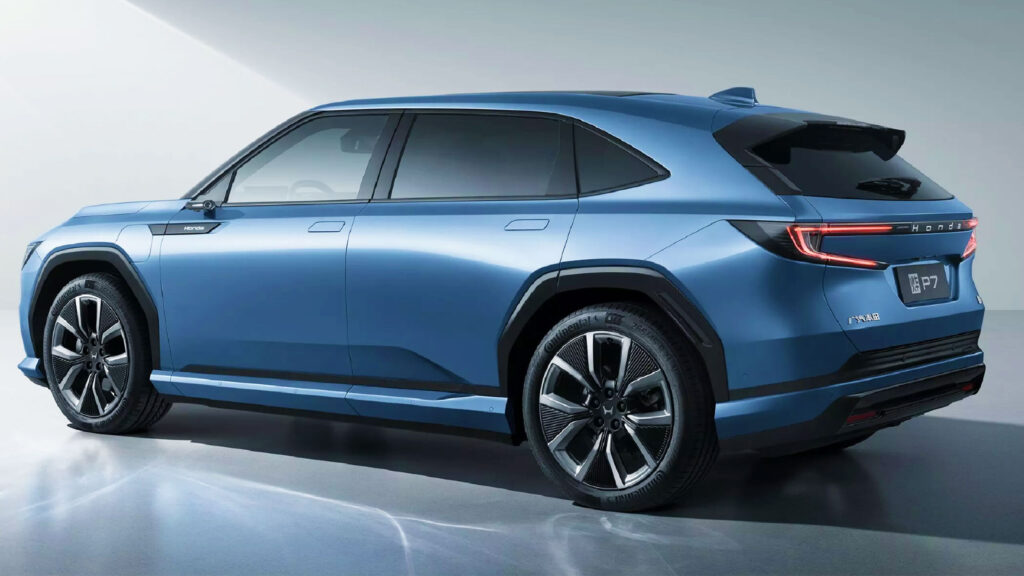
The centerpiece of Honda’s recovery plan is the "Ye" series, a new brand of electric vehicles designed specifically for the Chinese market. Launched in 2024, the Ye series represents a departure from Honda’s global design language. The first models include the P7, built through the GAC joint venture, and the S7, produced with Dongfeng.
These vehicles are built on a dedicated EV platform and feature advanced driver-assistance systems (ADAS) and high-tech cockpits. However, the initial reception has been lukewarm. Critics and market analysts point out that while the Ye models are a significant improvement over Honda’s previous electric efforts, they still struggle to stand out in a crowded field where domestic competitors like the Xiaomi SU7 and the BYD Seal offer more compelling tech-to-price ratios.
Honda’s challenge with the Ye series is one of perception. In the West, Honda is seen as a leader in engineering. In China, it is increasingly viewed as a "legacy" brand trying to catch up. The extension to 2038 provides Honda the time to iterate on the Ye series and potentially introduce solid-state battery technology, which the company has been developing in Japan, as a game-changing differentiator.

Industry-Wide Context: The Struggle of Legacy Foreign Automakers
Honda is not alone in its predicament. Its Japanese rivals, Toyota and Nissan, are facing similar headwinds. Nissan, in particular, has seen its market share eroded by the same domestic forces, leading to plant closures and a re-evaluation of its Chinese strategy. Even Volkswagen, which has been the market leader in China for decades, has been forced to partner with Chinese startup Xpeng to accelerate its EV development.
The common thread among these legacy giants is the difficulty of pivoting from a business model based on mechanical excellence to one based on digital innovation. Chinese consumers now prioritize "intelligent" features—such as voice-activated controls, autonomous parking, and in-car entertainment ecosystems—over traditional metrics like engine displacement or suspension tuning.
Looking Toward 2038: Risks and Potential Rewards
By extending the GAC deal to 2038, Honda is effectively doubling down on the belief that China will remain the center of the automotive universe. There are several strategic reasons for this:
- Supply Chain Access: China currently controls the vast majority of the world’s battery supply chain. By maintaining a strong presence in the country, Honda ensures it remains at the forefront of battery tech and raw material procurement.
- R&D Hub: The speed of development in China is significantly faster than in Japan, Europe, or North America. Using the GAC joint venture as an R&D hub allows Honda to test new technologies and bring them to market at a pace that matches local competitors.
- Long-term Market Potential: Despite the current economic slowdown, China’s middle class is still growing, and the long-term demand for personal mobility remains high.
However, the risks are equally significant. Geopolitical tensions between Japan and China could result in sudden regulatory shifts or consumer boycotts. Furthermore, if Honda cannot close the "tech gap" with domestic EV makers within the next three to five years, the GAC-Honda joint venture may find itself managing a portfolio of niche products rather than mass-market leaders.
Conclusion: A High-Stakes Pivot
The numbers certainly gave Honda every reason to consider a managed exit from the Chinese market. A 60% sales decline is a clear indicator of a brand out of sync with its audience. Yet, the 10-year extension with GAC proves that Honda is not ready to surrender its position in the world’s most influential car market.
The road to 2038 will be fraught with challenges. It will require a fundamental transformation of how Honda designs, builds, and sells cars. It will require the company to shed its conservative image and embrace the radical, fast-paced innovation that defines the modern Chinese automotive sector. Whether Honda can successfully reinvent itself or if this extension is merely a prolonged farewell remains to be seen. What is certain is that the next decade will be the most consequential in the history of GAC-Honda, determining whether the Japanese giant can remain a global leader or if it will be relegated to the history books of China’s automotive past.