Toyota Rumored Mid-Engined Sports Car Spotted Testing at Fuji Speedway as Gazoo Racing Eyes Standalone Brand Expansion

The automotive world has been set abuzz following the emergence of new video footage capturing a mysterious Toyota prototype undergoing high-speed testing at the iconic Fuji Speedway in Japan. This latest sighting, shared via social media by user @You_SuiKoyoAZ, provides the most substantial evidence to date that Toyota is moving forward with a high-performance, mid-engined sports car intended to revive one of its legendary nameplates. The footage, though brief, offers critical insights into the vehicle’s mechanical configuration, including a distinctive exhaust note and a shift pattern that strongly suggests the inclusion of a traditional manual transmission. This development comes at a pivotal moment for Toyota as the company seeks to transition its Gazoo Racing (GR) division from a performance sub-brand into a fully realized, standalone automotive marque.
Observations from the Fuji Speedway Prototype Sighting
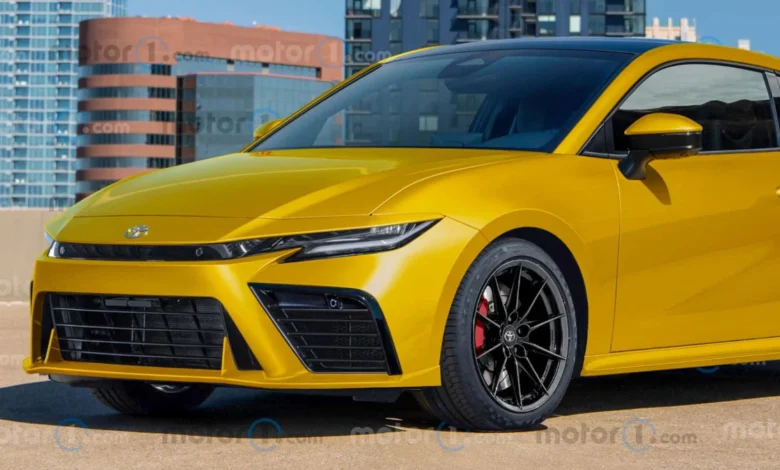
The prototype captured at Fuji Speedway displays several design characteristics that distinguish it from previously seen test mules. While a different mystery prototype was spotted on rally stages several months ago, this track-focused version appears much closer to a production-ready form. The vehicle is a dedicated two-door coupe featuring a low-slung silhouette, slim downturned LED headlights, and a prominent hood vent designed for thermal management. At the rear, the taillight assembly aligns with Toyota’s current design language, seen on models like the GR Supra and the GR86, but with more aggressive aerodynamic integration.
One of the most significant takeaways from the video is the auditory profile of the engine. The burbly, aggressive exhaust note suggests a high-output turbocharged powerplant, while the audible interruptions in acceleration during gear changes point toward a manual gearbox—a feature increasingly rare in the modern sports car segment but central to the GR brand’s driver-centric philosophy. While the exact placement of the engine remains difficult to confirm with absolute certainty from external footage, the proportions of the vehicle and the location of the cooling intakes strongly imply a mid-engined or rear-mid-engined layout, fueling rumors of a successor to the MR2 or a radical reimagining of the Celica.
Historical Context: The Revival of the "Three Brothers"
The prospect of a new mid-engined or all-wheel-drive sports car fits into a long-term strategic vision often referred to by Toyota Chairman Akio Toyoda as the revival of the "Three Brothers." Historically, Toyota’s performance lineup was anchored by a trio of sports cars: the entry-level Celica, the mid-engined MR2, and the flagship Supra. With the GR86 (serving as a spiritual successor to the Celica/Corolla Levin) and the GR Supra already in production, a third high-performance model has long been the missing piece of the puzzle.
The Celica, particularly in its GT-Four iterations, was a dominant force in the World Rally Championship (WRC) during the 1990s, utilizing an all-wheel-drive system and a turbocharged four-cylinder engine. Conversely, the MR2 was celebrated for its lightweight, mid-engine, rear-wheel-drive configuration. Current reports suggest that the new prototype may attempt to bridge these two legacies, potentially offering a mid-engined layout paired with a sophisticated all-wheel-drive (AWD) system—a configuration that would position it as a unique offering in the global market, competing with the likes of the Porsche 718 Cayman and the Lotus Emira.
Technical Specifications and Powertrain Development
At the heart of this new project is Toyota’s newly developed 2.0-liter turbocharged four-cylinder engine. This engine is part of a broader family of powerplants designed to be compact, powerful, and compatible with carbon-neutral fuels. Sources within the Japanese automotive industry indicate that this engine is being engineered for multiple states of tune.
The standard road-going version of the sports car is expected to produce approximately 400 horsepower, a figure that would place it comfortably above the GR86 and in direct competition with the Nissan Z and the base-model Supra. However, whispers from the Gazoo Racing development team suggest an even more extreme variant is in the works. This "hotter" version, equipped with a larger turbocharger and reinforced internals, could push output closer to 600 horsepower. Such a figure would elevate the car into the realm of supercars, showcasing the maximum potential of Toyota’s internal combustion engineering.
Furthermore, there is persistent speculation regarding the integration of electrification. Given Toyota’s "multi-pathway" approach to carbon neutrality, the 2.0-liter engine may be paired with a high-performance hybrid system. This would not only provide a significant torque boost but also allow the vehicle to meet increasingly stringent global emission standards without sacrificing the visceral experience of a high-revving combustion engine.
Gazoo Racing: Transitioning to a Standalone Brand
The development of this mystery sports car is inextricably linked to the evolution of Gazoo Racing. Toyota has expressed a clear intention to establish GR as a standalone performance brand, similar to how Mercedes-Benz utilizes AMG or BMW utilizes its M division. By spinning off GR, Toyota can create a more distinct identity for its performance vehicles, separating them from the more utilitarian and mass-market image of the standard Toyota lineup.
This strategic pivot is reflected in the branding of the prototype. Some industry analysts believe the production version may not carry a traditional Toyota badge at all, instead being branded solely as a "GR" model. This move would allow for more aggressive styling and specialized engineering choices that might otherwise be constrained by the parent brand’s broader corporate identity. The Fuji Speedway testing is a critical component of this brand-building exercise, proving that GR-developed vehicles can compete at the highest levels of track performance.
Chronology of Development and Future Timeline
The journey of this prototype can be traced back through several key milestones in Toyota’s recent history:
- December 2021: Toyota reveals a "Sports EV" concept during its battery electric vehicle (BEV) showcase, featuring proportions reminiscent of a mid-engined sports car.
- Late 2023: Rumors intensify regarding the development of a new 2.0-liter turbocharged engine intended for high-performance applications.
- Early 2024: A mystery prototype is spotted testing on gravel rally stages in Japan, sporting an AWD system and a body style that hints at a Celica revival.
- Late 2024: The Fuji Speedway footage emerges, showing a more refined, track-focused version of the prototype with a distinct exhaust note and manual transmission.
- 2025-2026 (Projected): Continued testing and refinement, with potential appearances at major international auto shows in concept or "near-production" form.
- 2027 (Projected): The anticipated debut of a WRC-spec version of the car, followed shortly by the launch of the road-going production model.
The decision to debut a WRC-spec version before or alongside the production car follows the successful blueprint established by the GR Yaris. By proving the car’s durability and performance in the grueling environment of world rallying, Toyota builds immediate enthusiast credibility and technical data that directly informs the final road-going product.
Market Implications and Competitive Landscape
The arrival of a 400-to-600 horsepower sports car from Toyota would significantly disrupt the current performance car market. Currently, the mid-engined segment is largely dominated by European manufacturers with premium price tags. If Toyota can leverage its manufacturing efficiencies to offer a mid-engined, AWD performance machine at a more accessible price point than a Porsche or a Ferrari, it could capture a significant share of the enthusiast market.
The vehicle also serves as a response to domestic rivals. With Nissan having recently updated the Z and Honda preparing to revive the Prelude nameplate, the Japanese sports car "renaissance" is in full swing. Toyota’s entry would likely be the most technologically advanced of the group, particularly if it successfully integrates the high-output 2.0-liter engine with an AWD layout.
Analytical Perspective: Why Now?
Toyota’s heavy investment in a new internal combustion-based sports car might seem counterintuitive in an era dominated by a shift toward electric vehicles. However, from a strategic standpoint, the timing is logical. Toyota is capitalizing on the "last hurrah" of internal combustion performance, catering to a dedicated audience of enthusiasts who value mechanical engagement and the sound of a gasoline engine.
By developing these engines to be compatible with synthetic and carbon-neutral fuels, Toyota is also hedging its bets, ensuring that its performance heritage can survive in a future where traditional gasoline may be restricted. The "Multi-Pathway" strategy allows Toyota to remain a leader in hybrid and EV technology while still producing the "emotional" cars that define the brand’s character and engineering prowess.
As the prototype continues its testing cycle at Fuji Speedway and beyond, the automotive world will be watching closely. Whether it eventually wears the Celica badge, the MR2 name, or simply becomes the flagship of a standalone GR brand, this vehicle represents Toyota’s commitment to the art of the sports car. If the 2027 timeline holds true, we are only a few years away from witnessing the rebirth of a legend that aims to redefine the limits of four-cylinder performance.