Jensen Interceptor GTX Prototype Debuts With Nearly 1,000 Horsepower And A Manual Transmission

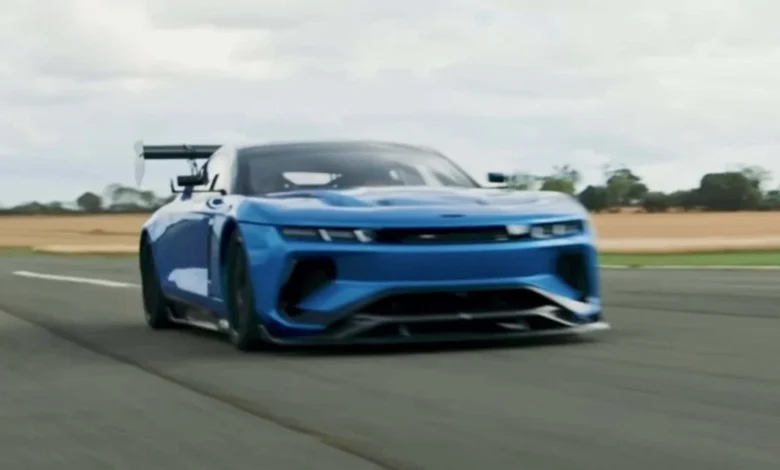
The automotive world has long held a nostalgic reverence for the Jensen Interceptor, a grand tourer that defined the British luxury-performance segment during the late 1960s and 1970s. Today, that legacy is being aggressively reclaimed as the Jensen Interceptor GTX prototype breaks cover. While currently confined to track-only status, the vehicle serves as a high-performance testbed for the brand’s ambitious plans to re-enter the road-legal automotive market. By fusing classic British design sensibilities with raw, modern American-sourced powertrain technology, the GTX represents a significant turning point in the storied history of the Jensen marque.
The Genesis of the Modern Interceptor
The story of the new Jensen Interceptor begins with the brand’s strategic decision to revive its identity through extreme engineering. After years of dormancy and speculation surrounding the brand’s return, the unveiling of the GTX prototype serves as the first tangible proof of concept. The development team has opted for a "track-first" methodology, utilizing the rigors of competitive circuit driving to refine chassis dynamics, cooling systems, and structural integrity before contemplating the compromises necessary for a road-going variant.
This approach is deliberate. By benchmarking against contemporary high-performance machinery, Jensen is attempting to bridge the gap between vintage charm and hypercar-level output. The prototype is not merely a restomod; it is a ground-up reimagining of what an Interceptor should be in the 21st century.
Powertrain Architecture and Technical Specifications
At the heart of the Jensen Interceptor GTX lies a mechanical masterpiece that bridges the Atlantic. The propulsion system begins as a robust General Motors-sourced V8 block, a platform chosen for its reliability and vast potential for modification. However, in its factory state, the engine is insufficient for the performance targets set by Jensen’s engineers.
The block is shipped to Late Model Engines (LME) in Texas, a facility renowned for pushing domestic V8s to their structural limits. The overhaul is comprehensive: the engine receives CNC-machined cylinder heads, high-strength titanium valves, and a completely upgraded rotating assembly designed to withstand extreme combustion pressures. To manage this internal fury, Jensen employs a sophisticated Motec engine management system.
The result of this collaboration is a supercharged 6.8-liter V8 capable of generating approximately 973 horsepower. Remarkably, the development team has indicated that with further tuning and fuel optimization, the power output could scale upward to 1,200 horsepower. Perhaps most impressive in an era dominated by dual-clutch transmissions and seamless electrification is the retention of a traditional manual gearbox, ensuring that the driver remains physically connected to the immense torque being delivered to the rear wheels.
Chronology of the Brand’s Rebirth
The return of Jensen has been a multi-year project marked by careful planning and incremental reveals. The trajectory of this comeback can be traced through several key milestones:
- Initial Announcement: Following years of rumors, official confirmation surfaced regarding the brand’s intent to produce a "reborn" sports car, signaling a departure from the company’s previous silence.
- Nameplate Confirmation: The brand officially confirmed that the project would carry the iconic "Interceptor" name, linking the new vehicle to the 1966-1976 original models.
- Track-Only Focus: Early development phases were strictly categorized as track-only to allow for rapid iteration without the regulatory burdens of mass-production safety and emission standards.
- The GTX Debut: The unveiling of the GTX prototype marked the first time the public was exposed to the vehicle’s finished aesthetics and its distinctive, visceral exhaust note.
- Future Road-Car Development: Current activities are focused on translating the race-ready prototype data into a platform suitable for the public, with two distinct tiers of vehicles—the grand touring GT and the performance-oriented GTR—proposed for the future.
Analytical Perspective: The Challenge of Road-Legalization
The transition from a prototype track car to a road-legal production vehicle is rarely a linear path. For Jensen, the engineering hurdles are substantial. A track-only car benefits from a stripped-down interior, stiffened suspension, and a disregard for noise, vibration, and harshness (NVH) standards. Transforming the GTX into a "Grand Tourer" will require a delicate balancing act.
The chassis, currently tuned for the consistent surface of a racetrack, must be recalibrated for public roads, where comfort and ride quality are as critical as cornering speed. Furthermore, the 1,200-horsepower potential of the LME engine presents a significant cooling and emissions challenge. Meeting modern emission standards with a forced-induction, 6.8-liter displacement engine is an arduous task that will likely necessitate advanced catalytic converter technology and potentially complex hybrid-assist systems, though the latter may contradict the brand’s purist aesthetic.
However, the implications of this project are profound for the boutique manufacturing sector. By maintaining a niche, high-performance focus, Jensen is positioning itself as a competitor to ultra-luxury coachbuilders. The value proposition for potential owners will not be efficiency or utility, but the synthesis of heritage design with "old-school" displacement and modern power.
Official Positioning and Market Implications
While Jensen has not provided a definitive timeline for the release of the road-going Interceptor, the company’s messaging remains consistent: the goal is to produce a vehicle that honors the brand’s legacy while utilizing the very best of current automotive engineering.
Industry analysts suggest that when these vehicles eventually reach production, they will occupy a premium pricing tier, likely competing with the likes of Aston Martin’s bespoke creations or limited-run offerings from specialist supercar manufacturers. The "GT" and "GTR" designations suggest a bifurcated strategy: the GT will prioritize the refined, long-distance comfort for which the original Interceptor was famous, while the GTR will lean into the aggressive track performance evidenced by the current prototype.
The Sound of the Future
The sensory experience of the GTX is perhaps its most compelling marketing tool. The auditory profile of the supercharged 6.8-liter V8 is distinctly aggressive, characterized by a deep, guttural idle and a high-pitched mechanical shriek under load. This sound is not incidental; it is a signature of the engine’s internal components and the free-flowing exhaust architecture required for such high power output. For enthusiasts, this sound serves as a reminder that even as the automotive industry trends toward silence and automation, there remains a market for the visceral, unfiltered experience of high-displacement internal combustion.
Conclusion
The Jensen Interceptor GTX prototype is a testament to the enduring appeal of the British GT car. By choosing to embrace the complexities of high-horsepower engineering, Jensen has effectively grabbed the attention of the automotive world. While the road to production remains fraught with regulatory and engineering challenges, the foundation—a formidable, highly refined V8 engine and a commitment to manual-transmission performance—is firmly in place.
If Jensen can successfully translate the grit of the track prototype into a cohesive road-legal vehicle, the new Interceptor will be more than just a revival of a nameplate; it will be a significant entry in the annals of modern automotive performance. The brand has demonstrated that it is not merely looking back at its history, but is actively working to ensure its future is as loud, fast, and uncompromising as its past. For now, the automotive community waits to see if the prototype’s thunderous roar will soon be heard on public roads, marking the definitive return of one of Britain’s most beloved automotive marques.
Related posts: