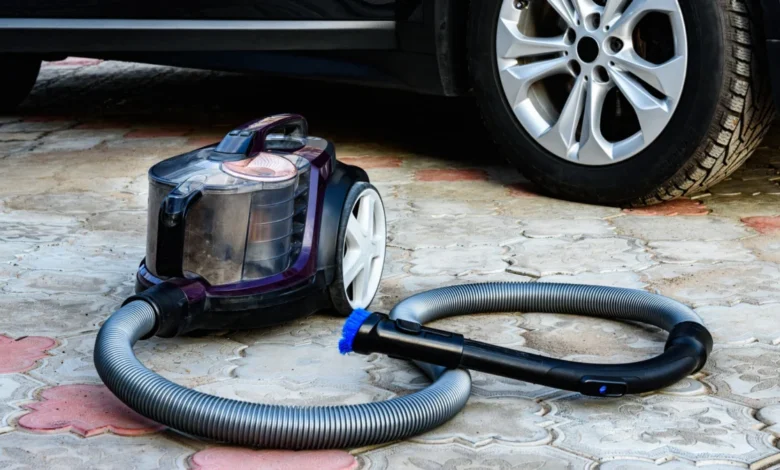
The ACSI, a national economic indicator of customer evaluations of the quality of goods and services available to household consumers in the United States, uses data from interviews with roughly 500,000 customers annually. In its most recent analysis, the index revealed that the aggregate satisfaction score for vacuum cleaners stands at 79 out of 100, while the automotive industry lags behind with a score of 78. This one-point delta may seem marginal at first glance, but when analyzed through the lens of price disparity and product complexity, it signals a significant disconnect between what car manufacturers are delivering and what modern consumers expect.
The Landscape of Consumer Satisfaction
The ACSI 0-to-100 scale provides a rigorous framework for comparing disparate industries. To put the automotive score of 78 in perspective, the highest-performing categories in the manufacturing sector—soft drinks and athletic shoes—consistently reach scores of 83. Conversely, traditional subscription television services often languish at the bottom of the rankings, recently recording a score of 70.
For the automotive sector, the 78-point score is a composite of both luxury and mass-market brands. However, the data suggests that luxury brands are facing a unique crisis. Historically, the premium price tag of a luxury vehicle guaranteed a superior customer experience, but that gap is narrowing. As vehicles become more expensive, with the average new car price hovering around the $50,000 mark, consumer expectations have skyrocketed. When those expectations are not met, the resulting dissatisfaction is more pronounced than it is for lower-cost household goods.
The Reliability and Warranty Gap
One of the most telling aspects of the ACSI study is how consumers perceive the "Dependability" of their vehicles versus the "Durability" of their vacuum cleaners. In the automotive sector, dependability encompasses engine performance, mechanical reliability, and the frequency of breakdowns. In the vacuum sector, durability measures how well the machine stands up to repeated use over time.
While both luxury cars and vacuum cleaners earned a respectable score of 81 in these categories, the paths diverge when it comes to the safety net provided by the manufacturer. Vacuum cleaners outperformed automobiles in warranty coverage satisfaction, scoring an 80 compared to the automotive industry’s 79.
Industry analysts suggest this is a matter of perceived value. A consumer purchasing a $400 Dyson or Shark vacuum expects a seamless replacement or repair process if the unit fails. When that expectation is met, satisfaction remains high. In contrast, a consumer spending $60,000 on a luxury SUV expects the warranty to be an ironclad guarantee of reliability. When faced with complex dealership service schedules, parts shortages, or "wear and tear" exclusions, automotive customers feel a greater sense of frustration. Out of 14 key benchmarks measured by the ACSI, warranty coverage ranked near the bottom—11th for luxury brands and 12th for mass-market vehicles.
Energy Efficiency and the Range Paradox
The comparison extends into the realm of energy. For vacuum cleaners, this includes the battery life of cordless models and the efficiency of robotic units, earning a score of 79. For the automotive world, this metric is split between gas mileage for internal combustion engines (ICE) and total driving range for electric vehicles (EVs).
The data highlights a significant pain point for the modern driver. Luxury vehicle owners reported the lowest satisfaction with their driving range, scoring a mere 72. Mass-market owners were slightly more satisfied with gas mileage (79) but remained frustrated with range (74).
This dissatisfaction is likely exacerbated by the current economic climate. With fuel prices remaining volatile and the infrastructure for EV charging still in a state of expansion, the "economy of use" has become a primary concern for households. Vacuum cleaners, by contrast, have successfully transitioned to cordless and autonomous technology without the same level of "range anxiety" or infrastructure dependence, leading to a more harmonious user experience.
Complexity vs. Simplicity: The Infotainment Struggle
Perhaps the most significant area where automakers could take a cue from appliance manufacturers is "Ease of Operation." In the vacuum cleaner sector, this is the top-ranked benchmark, boasting a score of 84. Whether it is a traditional upright or a sophisticated robot vacuum programmed via a smartphone, consumers find these devices intuitive and functional.
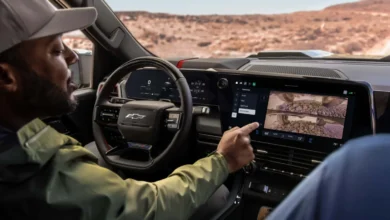
The automotive industry has taken a different path, increasingly replacing physical tactile controls with complex touchscreen interfaces and sub-menus. The ACSI data suggests this move toward "all-digital" cockpits may be backfiring. Satisfaction scores for automotive technology—which includes touchscreens, navigation, and cabin controls—are lower than the ease-of-use scores for vacuums across all segments.
Drivers have expressed growing frustration with having to navigate multiple screen layers to perform simple tasks like adjusting the air conditioning or tuning the radio. This "interface friction" not only impacts satisfaction but has also raised safety concerns, leading some manufacturers, such as Volkswagen and physical-button proponents like Mazda, to publicly commit to bringing back more tactile controls in future models.
Economic Realities and Resale Value
The financial burden of vehicle ownership is also weighing heavily on satisfaction scores. The ACSI report notes that cars are not only getting more expensive to purchase but are also taking longer for consumers to pay off. As loan terms stretch to 72 or even 84 months, the long-term value of the asset becomes a critical factor.
Automotive customers expressed significant dissatisfaction with resale and trade-in values. This is particularly true in the EV segment, where rapid technological advancement and aggressive price cuts by major players like Tesla have led to steep depreciation for early adopters. While resale value is not a primary metric for vacuum cleaners, the "disposable" nature of smaller appliances means consumers have lower stakes. When a car—often the second-largest purchase a person will make—loses value faster than expected, it creates a lasting negative impression of the brand.
Chronology of a Shifting Market
To understand how the automotive industry arrived at this point, one must look at the timeline of the last five years:
- 2020-2021: The COVID-19 pandemic caused global supply chain disruptions and a semiconductor shortage, leading to record-low inventories and the disappearance of consumer incentives.
- 2022: Prices for both new and used vehicles surged to historic highs. Dealers frequently applied "market adjustments" above MSRP, eroding consumer goodwill.
- 2023: As inventories began to stabilize, high interest rates made financing more expensive, further straining household budgets.
- 2024: The "tech-heavy" interior trend reached its peak, just as consumers began to signal fatigue with subscription-based features and complex software interfaces.
Throughout this period, the appliance industry managed to maintain a more stable trajectory. While vacuum cleaners also faced supply chain issues, the lower barrier to entry and more straightforward functional improvements (such as better HEPA filtration and improved battery density) allowed them to stay ahead of the consumer satisfaction curve.
Implications for the Future of Automaking
The ACSI findings serve as a wake-up call for the automotive C-suite. The data suggests that "more" is not always "better" in the eyes of the consumer. More technology, more screen real estate, and more complex trim levels are currently resulting in less satisfaction.
To regain their lead over household appliances, automakers may need to focus on "brilliant basics." This includes:
- Simplifying User Interfaces: Returning to a hybrid of physical buttons and screens to reduce driver distraction and frustration.
- Enhancing Warranty Transparency: Moving beyond the standard 3-year/36,000-mile model to provide more comprehensive long-term coverage that mirrors the "worry-free" experience of high-end appliances.
- Improving Real-World Efficiency: Closing the gap between advertised MPG/range and what consumers actually experience on the road.
- Stabilizing Pricing: Moving away from the volatile pricing models that have characterized the last few years to protect consumer equity and resale value.
The comparison between a $50,000 car and a $400 vacuum cleaner may seem unfair, but the ACSI data proves that satisfaction is not about the price of the product—it is about how well that product fulfills its promise. As long as vacuum cleaners continue to suck up dirt more reliably than cars move people through their daily lives without frustration, the appliance industry will continue to hold the lead in the hearts and minds of the American consumer.