Geely E2 Dominates the Chinese Electric Vehicle Market as the Nation’s Best-Selling Car Through 2025 and 2026

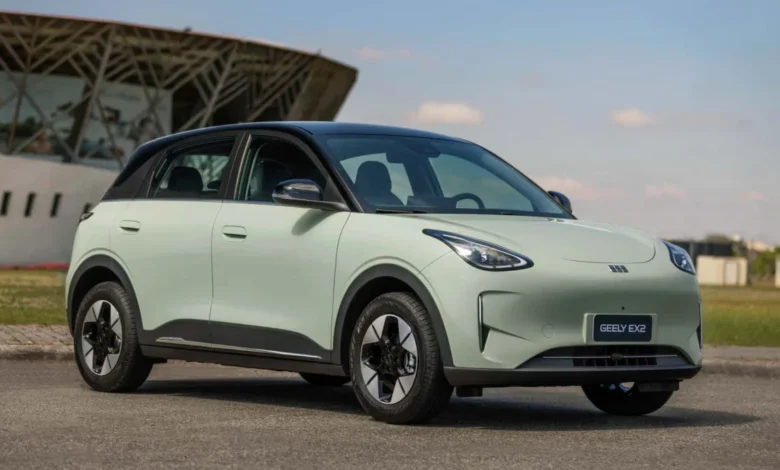
The automotive landscape in the People’s Republic of China has undergone a seismic shift, culminating in the rise of the Geely E2 as the definitive market leader for 2025 and the first half of 2026. This compact electric hatchback, which has successfully navigated a complex rebranding strategy across several of Geely’s sub-brands—including the Geely EX2, Geely Galaxy Xingyuan, and Geome Xingyuan—has emerged as a cultural and commercial phenomenon. According to preliminary industry data and market estimates, the E2 secured approximately 244,000 sales in the Chinese domestic market during the first six months of 2026. This performance not only solidifies its position at the top of the sales charts but also places it significantly ahead of formidable global and domestic competitors, including the Tesla Model Y, which recorded 215,000 units, and the Xiaomi SU7, which saw 182,000 deliveries in the same period.
The success of the Geely E2 marks a transition in consumer preference within the world’s largest automotive market. While high-end electric SUVs and performance sedans previously dominated the headlines, the current trend favors accessibility, efficiency, and urban-centric design. The E2’s ability to outsell the Leapmotor A10 (171,000 units) and other established New Energy Vehicles (NEVs) highlights a strategic victory for Geely’s product planning and manufacturing scale.
The Evolution of the Geely E2: A Strategic Chronology
The journey of the Geely E2 to the top of the sales rankings was not an overnight occurrence but rather the result of a multi-year development cycle aimed at democratizing electric mobility. In early 2024, Geely identified a gap in the "B-segment" hatchback market—a space that required a vehicle larger than the ultra-compact city cars but more affordable than the premium electric crossovers.
By late 2024, the vehicle was launched under various nomenclatures to appeal to different demographic segments. The "Galaxy Xingyuan" variant was positioned for tech-savvy younger buyers, while the "Geome" (Geometry) branding targeted value-conscious families. This multi-channel approach allowed Geely to saturate the market effectively. Throughout 2025, as charging infrastructure in China’s Tier 2 and Tier 3 cities expanded, the E2’s popularity surged. By the end of that year, it had officially become the best-selling vehicle in the country, surpassing traditional internal combustion engine (ICE) favorites and high-priced EVs alike. Entering 2026, the momentum has continued, with the E2 maintaining its lead despite an influx of new competitors from manufacturers like BYD and Chery.
Market Context: The Rise of New Energy Vehicles
The dominance of the Geely E2 must be viewed within the context of China’s aggressive transition to NEVs, a category that encompasses battery electric vehicles (BEVs), plug-in hybrids (PHEVs), and range-extended electric vehicles (REEVs). As of mid-2026, NEVs account for approximately 63 percent of all new car sales in China. This represents a historic tipping point where electric propulsion is no longer a niche alternative but the primary choice for the majority of consumers.
Government incentives, combined with a robust domestic supply chain for lithium-iron-phosphate (LFP) batteries, have allowed Chinese automakers to drive down costs. The Geely E2 represents the pinnacle of this cost-optimization strategy. By offering a vehicle that meets the needs of daily commuters at a price point previously reserved for basic gasoline-powered cars, Geely has successfully captured the "heart of the market."
Technical Specifications and Design Philosophy
The Geely E2 measures 162.0 inches in length, positioning it at the upper threshold of the B-segment. This size is critical; it is compact enough for congested urban environments in Beijing and Shanghai, yet large enough to serve as a primary vehicle for a small family. Its 104.3-inch wheelbase is particularly noteworthy, as it maximizes interior legroom, providing a spacious cabin that rivals vehicles in the larger C-segment.
Aesthetically, the E2 departs from the aggressive, often polarizing "futuristic" styling of many modern EVs. It adopts clean, aerodynamic lines and a friendly, approachable silhouette. This design philosophy has proven successful in attracting buyers who are transitioning from traditional gasoline vehicles and prefer a sense of familiarity alongside modern technology.
Under the skin, the E2 is powered by a single rear-mounted electric motor. The use of LFP battery technology is a cornerstone of its value proposition. LFP batteries are known for their durability, safety, and lower production costs compared to nickel-cobalt-based alternatives. Depending on the specific configuration, the E2 offers a driving range between 157 and 214 miles (250 to 345 kilometers) on a single charge. While these figures are modest compared to long-range luxury EVs, they are specifically calibrated for the average daily driving distance of Chinese urban dwellers, which typically falls under 30 miles.
Comparative Pricing and Value Proposition
The most significant factor in the E2’s market conquest is its pricing structure. In China, the vehicle starts at approximately ¥64,800, which translates to roughly $9,000 USD. To put this in perspective, the ultra-popular but much smaller Wuling Hongguang Mini EV starts at ¥44,800 ($6,600). The Geely E2 offers significantly more utility, safety features, and range for a marginal price increase.
When compared to its closest direct competitor, the BYD Seagull (marketed internationally as the Dolphin Mini), which starts at ¥69,900 ($10,300), the Geely E2 provides a slightly more competitive entry point while offering a larger footprint. Furthermore, the price gap between the E2 and the Tesla Model Y (starting at ¥263,500 or $38,900) illustrates why the Geely is moving in such high volumes; it addresses the mass-market segment that remains priced out of the premium EV category.
Standard equipment on the E2 further enhances its value. Even base models include:
- An 8.8-inch digital instrument cluster for the driver.
- A 14.6-inch central infotainment touchscreen powered by Geely’s latest Flyme Auto operating system.
- Full-LED lighting signatures.
- Adaptive cruise control and basic Level 2 driver assistance systems.
- A "frunk" (front trunk) offering 2.5 cubic feet of additional storage, a rarity in the budget segment.
Industry Reactions and Expert Analysis
Automotive analysts suggest that Geely’s success with the E2 is a testament to the company’s vertical integration and platform sharing. By utilizing a modular architecture that supports multiple brands, Geely has achieved economies of scale that few other manufacturers can match.
"The Geely E2 is the ‘Volkswagen Beetle’ of the electric era in China," noted one industry analyst. "It provides reliable, stylish, and high-tech transportation to a demographic that was previously underserved by the EV market. Its success isn’t just about the price; it’s about the fact that it doesn’t feel like a ‘cheap’ car despite the low cost."
Geely’s corporate leadership has expressed that the E2 (and its Xingyuan counterparts) is a "strategic pillar" for the company’s goal of achieving 50% electrified sales globally by 2030. The vehicle’s performance in China serves as a proof of concept for its international ambitions.
Global Implications and the European Market
The success of the Geely E2 is not confined to Chinese borders. Geely has already begun exporting the model to international markets, including Europe. In Italy, where it has recently been introduced, the vehicle starts at approximately €20,900. While this is significantly higher than the domestic Chinese price—due to shipping costs, import duties, and VAT—it remains one of the most affordable electric vehicles in the European Union.
The E2 enters a European market that is currently hungry for affordable EVs. Competitors like the Renault 5 E-Tech, the Peugeot e-208, and the upcoming Volkswagen ID.2 will find the Geely E2 to be a formidable rival. The E2’s larger interior space and higher standard technology levels could give it an edge over European domestic brands, provided Geely can navigate the evolving landscape of EU tariffs on Chinese-made vehicles.
The vehicle’s entry into Europe is also a branding exercise. For many European consumers, the E2 will be their first interaction with a Geely-badged product. Success in this segment could pave the way for Geely’s more premium offerings, such as the Zeekr or Lynk & Co brands, to gain wider acceptance.
Broader Impact on the Automotive Industry
The Geely E2’s reign as China’s best-selling car has broader implications for the global automotive industry. First, it signals that the "SUV-or-nothing" trend may be cooling in favor of more efficient, urban-friendly hatchbacks when the price is right. Second, it demonstrates that the technology gap between "budget" and "premium" cars is narrowing. Features like large touchscreens and advanced ADAS (Advanced Driver Assistance Systems), once reserved for luxury vehicles, are now standard in a $9,000 car.
Furthermore, the E2’s success is putting immense pressure on traditional "Big Three" automakers from the US and Europe who have struggled to produce a profitable EV at the sub-$25,000 price point. The Geely E2 serves as a stark reminder that the battleground for the future of the automotive industry is not just in the luxury segment, but in the high-volume, affordable categories where most of the world’s population shops.
As 2026 progresses, the industry will be watching to see if Geely can maintain this momentum. With potential software updates and battery density improvements on the horizon, the E2 is well-positioned to remain a dominant force. Its story is more than just a sales report; it is a blueprint for how electric vehicles can achieve true mass-market penetration through the balance of price, technology, and practical design.