2027 Audi Q7 and SQ7 Debut With Major Performance Upgrades and New Pricing Structure for the North American Market

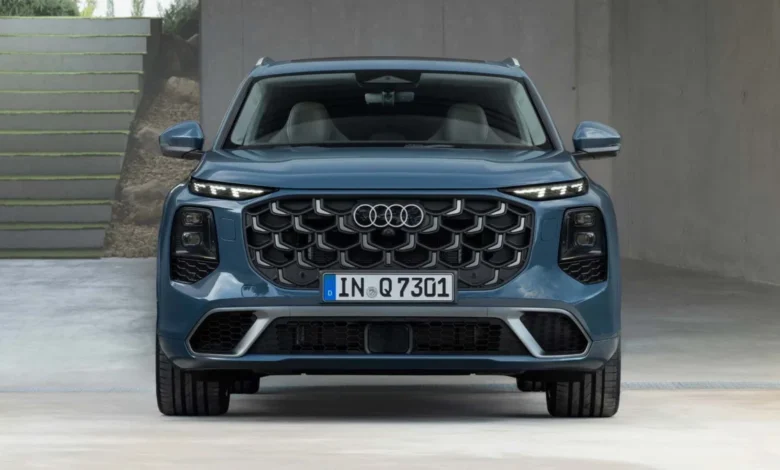
Audi has officially unveiled a comprehensive mid-cycle refresh for its flagship mid-size SUV, the 2027 Q7, signaling a strategic shift in performance, styling, and market positioning. As the automotive industry navigates a complex transition between internal combustion engines and full electrification, Audi’s latest update to the Q7 lineup demonstrates a commitment to refining its traditional luxury pillars. When the 2027 model arrives in United States showrooms during the fourth quarter of this year, it will carry a starting MSRP of $70,900, representing a $3,300 increase over the outgoing 2026 model. This price adjustment reflects a broader trend within the luxury segment, where manufacturers are balancing increased production costs with the integration of more sophisticated standard technologies and higher-output powertrains.
The 2027 Audi Q7 arrives at a critical juncture for the Ingolstadt-based automaker. While the brand has been aggressive in its rollout of the e-tron electric vehicle family, the Q7 remains a cornerstone of its North American sales volume, particularly among affluent families who require the utility of a three-row configuration. The 2027 overhaul is not merely cosmetic; it introduces significant mechanical enhancements designed to keep the aging second-generation platform competitive against fresher rivals from Munich and Stuttgart.
Enhanced Powertrains and Performance Metrics
At the heart of the 2027 Audi Q7 is a standard twin-turbocharged 2.9-liter V-6 engine. This powerplant, which has seen various applications across the Audi and Porsche portfolios, has been meticulously tuned for this application to produce 429 horsepower and 442 pound-feet of torque. These figures represent a substantial leap in performance capability for the base model. Audi’s engineering team has prioritized acceleration and responsiveness, resulting in a claimed zero-to-60 mph sprint of just 4.8 seconds. This is a remarkable 0.7-second improvement over the previous iteration, a delta that is rarely achieved in a mid-cycle refresh without a total platform redesign.
For enthusiasts seeking the pinnacle of Audi’s internal combustion engineering, the 2027 SQ7 remains the high-performance benchmark of the lineup. The SQ7 continues to utilize the formidable twin-turbocharged 4.0-liter V-8 engine, a unit shared with some of the most prestigious performance vehicles in the Volkswagen Group. In this configuration, the V-8 delivers an authoritative 591 horsepower and 590 lb-ft of torque. The performance gains for the SQ7 are equally impressive, with a zero-to-60 mph time of 3.7 seconds—shaving 0.3 seconds off the previous model’s time. The SQ7 will enter the market with a starting price of $98,700, a $4,900 premium over its predecessor.
Aesthetic Refinement and Technological Integration
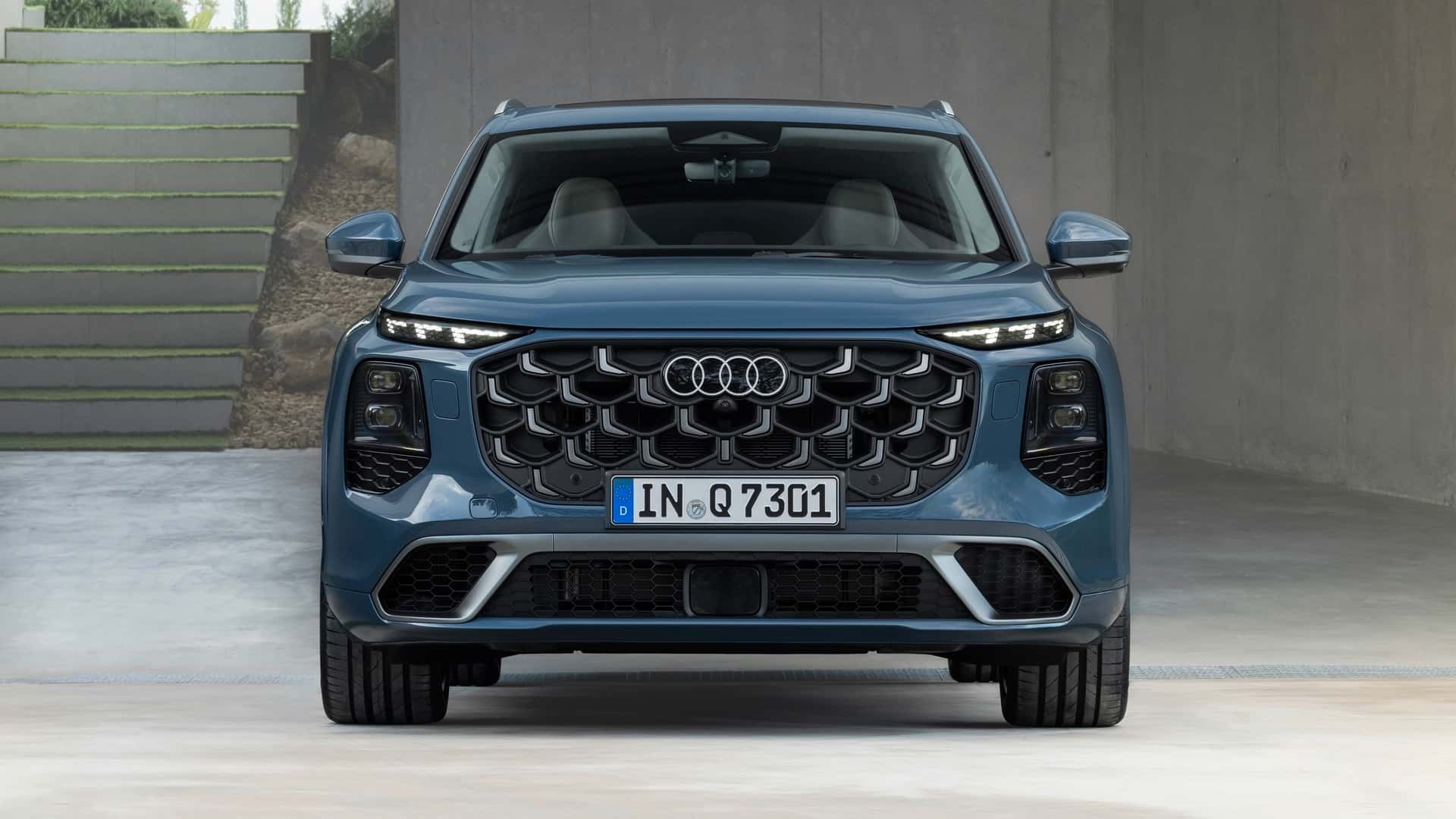
The visual identity of the 2027 Q7 has been modernized to align with Audi’s latest design language. The front fascia features a revised Singleframe grille with new octagonal inserts, framed by redesigned HD Matrix LED headlights. These lighting units are more than just a stylistic choice; they incorporate Audi’s latest laser light technology, which significantly extends the range of the high beams at speeds above 43 mph. Furthermore, the 2027 model introduces digital daytime running light signatures, allowing owners to choose between four distinct lighting patterns via the infotainment system.
The rear of the vehicle sees similar attention to detail, with digital OLED taillights that offer a proximity indication feature. If another vehicle approaches a stationary Q7 from behind within 6.6 feet, all OLED segments automatically illuminate to increase the vehicle’s visibility. Inside, the cabin retains its reputation for impeccable build quality while introducing the latest iteration of the Audi Virtual Cockpit. The 2027 model year sees an expansion of the app store integration, allowing third-party applications like Spotify and Amazon Music to be used directly through the MMI system without the need for a smartphone interface.
Comparative Market Analysis: Audi vs. BMW and Mercedes-Benz
The luxury SUV segment is perhaps the most contested territory in the North American automotive market. Audi’s pricing strategy for the 2027 Q7 places it in direct competition with the BMW X5 and the Mercedes-Benz GLE-Class, though the Q7 maintains a unique value proposition.
| Model | Starting Price | Standard Engine | Horsepower | Seating Capacity |
|---|---|---|---|---|
| 2027 Audi Q7 | $70,900 | 2.9L V6 Twin-Turbo | 429 hp | 7 Passengers |
| 2027 BMW X5 | $69,800 | 3.0L I6 Turbo | 394 hp | 5 Passengers |
| 2027 Mercedes GLE | $62,250 | 2.0L I4 Turbo | 255 hp | 5 Passengers |
While the BMW X5 starts at $69,800—$1,100 less than the Audi—it is important to note the standard configurations. The BMW X5 40i features a 394-hp turbocharged straight-six. While highly regarded, it trails the Audi’s new V-6 in raw horsepower. More importantly, the Q7 includes three rows of seating as standard equipment. In contrast, the BMW X5 and Mercedes-Benz GLE are primarily two-row vehicles; while a third row is occasionally offered as an option on certain trims, it is often cramped and treated as an afterthought.
The Mercedes-Benz GLE presents a more complex comparison. With a starting price of $62,250 for the GLE 350, it appears significantly more affordable. However, that entry-level price point includes a 255-hp four-cylinder engine, which lacks the prestige and effortless power associated with the Q7’s V-6. To match the Audi’s performance, buyers must look toward the GLE 450, which carries a starting price of $72,250—placing it above the Audi in cost while still lacking the standard seven-passenger capacity.
The Strategic Importance of the Three-Row Layout
Audi’s decision to maintain the three-row configuration as a standard feature is a calculated move to capture a specific demographic: the luxury-oriented family. In the American market, the "mid-size plus" segment—vehicles that offer more room than a traditional crossover but are less cumbersome than a full-size SUV like the Cadillac Escalade—is booming.
By positioning the Q7 as a standard seven-seater, Audi avoids the "tweener" status that sometimes plagues the BMW X5. For many buyers, the Q7 serves as the perfect bridge between the smaller Q5 and the flagship Q8 (which, despite its higher number, only offers two rows). This utility, combined with the 2027 model’s improved 0-60 mph times, suggests that Audi is targeting drivers who refuse to sacrifice driving dynamics for family practicality.
Industry Context and the Evolution of the Q7
The Q7 has come a long way since its initial debut at the Frankfurt Motor Show in 2005. The first generation was a heavy, off-road capable beast that shared underpinnings with the Volkswagen Touareg and Porsche Cayenne. The second generation, launched for the 2017 model year in the U.S., utilized the MLB Evo platform, which shed hundreds of pounds and transformed the Q7 into one of the best-handling vehicles in its class.
The 2027 update represents the final, most refined iteration of this internal combustion platform. Industry analysts suggest that this "major overhaul" is intended to extend the lifecycle of the current Q7 for several more years as Audi prepares for an eventual all-electric successor. By boosting the horsepower of the 2.9-liter V-6 to 429 hp, Audi is ensuring that the Q7 remains relevant in a market where consumers are increasingly demanding higher performance even from their "family haulers."
Expert Analysis: Implications for the Brand
The $3,300 price hike for the Q7 and the nearly $5,000 jump for the SQ7 indicate that Audi is leaning into its "premium" status. Rather than competing on price, Audi is competing on the "Vorsprung durch Technik" (Progress through Technology) philosophy. The inclusion of advanced lighting and upgraded infotainment systems is a direct response to consumer feedback requesting more "digital luxury."
Furthermore, the performance gap between the Q7 and its rivals has narrowed or, in some cases, vanished. A 4.8-second 0-60 mph time for a base-level luxury SUV was unheard of a decade ago; today, it is the price of entry for a brand that wants to be taken seriously by enthusiasts. The SQ7, with its sub-4-second sprint, remains one of the few vehicles that can genuinely bridge the gap between a family transport and a track-capable machine.
Conclusion and Future Outlook
The 2027 Audi Q7 and SQ7 represent a sophisticated evolution of a proven formula. By focusing on substantial powertrain improvements, exterior lighting technology, and maintaining the utility of a three-row cabin, Audi has reinforced the Q7’s position as a leader in the luxury SUV space. While the increased pricing reflects the current economic reality of the automotive industry, the added performance and standard features offer a compelling justification for the investment.
As the first units begin arriving at dealerships in late 2024, the market will determine if Audi’s focus on "internal combustion excellence" can hold its own against the rising tide of electrification. For now, the 2027 Q7 stands as a testament to the enduring appeal of the German luxury SUV—faster, smarter, and more capable than ever before. Owners can expect a vehicle that handles the school run with the same poise it brings to a high-speed interstate cruise, wrapped in a design that is quintessentially Audi.