Methane Emissions and the Climate Crisis: A Comprehensive Guide to Sources, Measurement, and Mitigation Strategies

Methane is a colorless, odorless hydrocarbon gas that serves as the primary component of natural gas and represents the second most significant driver of anthropogenic climate change, trailing only carbon dioxide in its contribution to global warming. While carbon dioxide (CO2) remains in the atmosphere for centuries, methane is a short-lived climate pollutant with an atmospheric lifespan of approximately 12 years. However, its brevity is offset by its extraordinary potency; over a 20-year period, methane is roughly 86 times more effective at trapping heat than CO2. Because of this combination of high intensity and short duration, atmospheric scientists and policy experts increasingly view methane reduction as the single most effective lever for slowing the rate of global warming within the next two decades.
The Chemical and Biological Foundations of Methane
At its molecular level, methane (CH4) consists of one carbon atom bonded to four hydrogen atoms. It is generated through two primary pathways: geological and biological. Geologically, methane is produced when organic matter is subjected to intense heat and pressure deep underground over millions of years, forming the fossil fuel deposits currently extracted by the energy industry. Biologically, methane is a byproduct of methanogenesis, an anaerobic respiration process carried out by microorganisms known as archaea. This process occurs in oxygen-poor environments, such as the waterlogged soils of wetlands, the digestive tracts of ruminant animals like cows and sheep, and the depths of landfills.

Since the Industrial Revolution, human activity has disrupted the natural methane cycle. While natural "sinks"—such as soil bacteria and chemical reactions in the troposphere—break down methane into water vapor and CO2, they can no longer keep pace with human-caused emissions. As of 2023, atmospheric methane concentrations reached 1,934 parts per billion (ppb), a 265 percent increase over pre-industrial levels. Current data suggests that human activities are responsible for approximately 60 percent of annual methane emissions, while natural sources account for the remaining 40 percent.
The Measurement Revolution: From Ground Estimates to Satellite Surveillance
Accurately quantifying methane emissions has historically been a challenge for climate scientists, leading to significant discrepancies between reported data and atmospheric reality. Traditionally, measurement relied on "bottom-up" approaches, which involve taking localized measurements at a specific source—such as a single wellhead or a specific breed of cattle—and extrapolating those figures across an entire industry or region. While useful for establishing baselines, this method often fails to account for "super-emitters," which are specific incidents or facilities responsible for disproportionately large volumes of leakage.
In recent years, the advent of "top-down" measurement technologies has revolutionized the field. High-altitude aircraft and advanced satellite constellations, such as those operated by GHGSat and the Environmental Defense Fund’s MethaneSAT, now allow for the real-time detection of methane plumes from space. These technologies have revealed that traditional inventories, such as those provided by the U.S. Environmental Protection Agency (EPA), may underestimate oil and gas sector emissions by as much as 60 percent. Satellite data has been particularly effective at identifying "methane bombs"—large-scale leaks in regions like Turkmenistan and the Permian Basin—where a single malfunctioning valve can release methane at a rate equivalent to the hourly emissions of an entire industrialized nation.

Primary Anthropogenic Sources: Agriculture, Energy, and Waste
Human-caused methane emissions are largely concentrated within three critical sectors:
The Agricultural Sector
Agriculture is the leading source of anthropogenic methane, contributing roughly 40 percent of the global total. Within this sector, livestock production is the primary driver. Ruminant animals possess a specialized digestive system where microbes break down tough plant fibers through enteric fermentation, producing methane that is subsequently exhaled. Cattle raised for beef and dairy are the largest contributors, followed by sheep and goats. Additionally, the storage of liquid manure in lagoons creates anaerobic conditions that further stimulate methane production. Rice cultivation is another significant factor, as flooded paddies provide the ideal oxygen-free environment for methane-producing archaea, accounting for approximately 8 percent of human-caused emissions.
The Fossil Fuel Industry
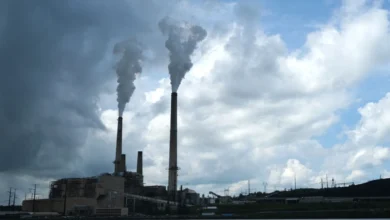
The extraction, processing, and transport of fossil fuels account for roughly 35 percent of human-caused methane. In the oil and gas industry, methane is often released intentionally through "venting" (releasing gas to manage pressure) or accidentally through leaks in aging infrastructure. Coal mining also contributes significantly; methane trapped within coal seams is released during the mining process for safety reasons or seeps out from abandoned mines. Experts note that reducing leaks in the energy sector is often the most cost-effective mitigation strategy, as the captured gas can be sold as fuel.

Waste Management
Landfills and wastewater treatment plants contribute approximately 20 percent of anthropogenic methane. As organic waste—such as food scraps and paper—decomposes in the oxygen-starved environment of a landfill, it releases significant quantities of biogas. With global solid waste production expected to rise by 73 percent by 2050, managing methane from the waste sector has become a high priority for urban planners and environmental agencies.
The "Bridge Fuel" Controversy and the LNG Myth
For over a decade, natural gas (which is primarily methane) was promoted as a "bridge fuel" that could help nations transition from carbon-intensive coal to renewable energy. Proponents argued that because burning natural gas emits roughly half the CO2 of coal at the power plant, it was a net positive for the climate. However, recent scientific analysis has debunked this narrative by incorporating the impact of methane leakage across the entire supply chain.
Research indicates that if as little as 0.2 percent of methane leaks during production and transport, the climate benefits of switching from coal to gas are effectively neutralized. When accounting for the full lifecycle of Liquefied Natural Gas (LNG)—which involves energy-intensive liquefaction and transoceanic shipping—some studies suggest its 20-year global warming potential is 33 percent higher than that of coal. This has led to increased scrutiny of planned LNG export terminal expansions, with climate advocates warning that a continued build-out could lock in decades of high-potency emissions.

Natural Feedback Loops and Tipping Points
One of the most concerning aspects of methane is its role in positive climate feedback loops. As the planet warms due to human activity, natural systems begin to release stored methane, which in turn accelerates further warming.
- Wetland Feedback: Rising temperatures and shifting rainfall patterns are causing tropical wetlands to expand and Arctic wetlands to thaw, leading to "exceptional growth" in natural methane emissions that exceeds previous scientific projections.
- Permafrost Thaw: The Arctic permafrost contains vast amounts of organic matter frozen for millennia. As it melts, microbes begin to decompose this matter, potentially releasing a "carbon bomb" of methane and CO2.
- Wildfires: Increased wildfire activity not only releases CO2 but also significant amounts of methane. A study of California’s 2020 wildfire season found that the fires contributed nearly 14 percent of the state’s total methane emissions for that year.
Public Health Implications: The Ozone Connection
Beyond its role in climate change, methane is a primary precursor to the formation of ground-level ozone (smog). When methane reacts with other pollutants in the presence of sunlight, it creates ozone, which is toxic to human health and vegetation. Ground-level ozone is linked to roughly 500,000 premature deaths annually due to respiratory and cardiovascular diseases. It also reduces global crop yields, causing the loss of millions of tons of wheat, soy, and rice each year. Consequently, reducing methane emissions provides immediate "co-benefits" by improving air quality and enhancing food security.
Mitigation Strategies and the Global Methane Pledge
The Intergovernmental Panel on Climate Change (IPCC) has stated that methane emissions must be reduced by 34 percent by 2030 to keep the 1.5-degree Celsius warming limit within reach. Achieving this requires a multi-faceted approach:

- Energy Sector: Implementing mandatory leak detection and repair (LDAR) programs, banning non-emergency venting and flaring, and capping abandoned oil and gas wells.
- Agriculture: Introducing seaweed-based feed additives that can reduce enteric methane by up to 82 percent, improving manure management via anaerobic digesters, and adopting "alternate wetting and drying" techniques in rice cultivation.
- Waste: Diverting organic waste from landfills through municipal composting and installing gas-capture systems at existing waste sites.
- Policy: The Global Methane Pledge, launched at COP26, now includes 159 nations committed to a collective 30 percent reduction in methane emissions by 2030. While a significant diplomatic milestone, analysts emphasize that current policies only cover about 13 percent of global emissions, leaving a substantial "implementation gap" that must be closed through domestic regulation and corporate accountability.
Individual and Collective Action
While systemic change in the energy and agricultural industries is paramount, individual actions contribute to the broader effort. Shifting toward plant-based diets or reducing meat and dairy consumption can significantly lower an individual’s methane footprint. Homeowners can transition from gas-powered stoves and furnaces to electric induction ranges and heat pumps, eliminating localized methane leaks. Ultimately, however, the scale of the methane challenge requires organized advocacy. Supporting policies that end fossil fuel subsidies and promote transparency in emissions reporting remains the most impactful way for citizens to contribute to a stable climate future.
Related posts: