Harvesting the Heavens: How Fog Catchers Are Transforming Water Security in Chile’s Atacama Desert

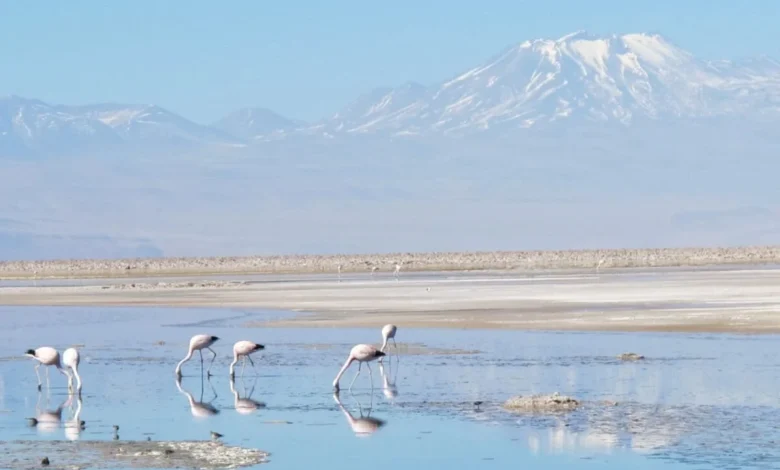
The Atacama Desert in northern Chile is widely recognized as the most arid non-polar environment on Earth. In certain sectors of this vast, lunar-like landscape, rainfall is a phenomenon that occurs perhaps only a few times per century, while in others, a single drop of rain has never been officially recorded in human history. For the rural communities and indigenous settlements scattered across this hyper-arid terrain, water is not merely a utility but a precious, hard-won commodity. Historically, local governments have been forced to rely on expensive and logistically complex solutions, such as trucking in water from distant regions or tapping into ancient, non-renewable underground aquifers. However, as these groundwater reserves face the threat of depletion and the costs of transportation soar, a revolutionary yet deceptively simple technology is gaining ground: fog harvesting.
By capturing the dense, low-lying clouds known locally as the camanchaca, researchers and community leaders are unlocking a sustainable freshwater source from the very air that blankets the coast. This innovative approach, which utilizes specialized mesh nets to "intercept" water droplets, is transitioning from a fringe experiment into a critical pillar of water resilience strategy for the 21st century.
The Atmospheric Engine: Science of the Camanchaca
To understand the viability of fog harvesting, one must first understand the unique geography of northern Chile. The region is defined by the intersection of the cold Humboldt Current in the Pacific Ocean and the steep coastal mountains of the Andes and the Chilean Coast Range. As warm air moves over the cold ocean waters, it cools and condenses into a thick, persistent layer of stratocumulus clouds. Driven by prevailing winds, this fog—the camanchaca—blows inland, where it becomes trapped against the high altitudes of the coastal cliffs.

"In a very simple way, we have to understand that clouds are made up of water droplets," explains Camilo del Río, director of the Atacama Desert Center at the Catholic University of Chile. "They’re already formed, they’re already condensed. So whenever a cloud is transported by wind and comes into contact with the Earth’s surface, what is touching the surface is thousands and thousands of liters of water."
Unlike rain, which falls vertically, fog moves horizontally. This movement is the key to harvesting. When this moisture-laden air passes through a fine-weave mesh—typically a polypropylene or polyethylene material known as Raschel mesh—the tiny droplets collide with the fibers. As they accumulate, they merge into larger drops, which then succumb to gravity and trickle down into a collection trough connected to storage tanks.
A Chronology of Innovation: From "Crazy Cloud People" to Proven Technology
The practice of capturing moisture from the air is not entirely new; historical records suggest that indigenous populations in the Canary Islands and Oman used "fountain trees" and stone cisterns to collect condensation centuries ago. However, the modern, systematic application of fog harvesting finds its roots in the mid-20th century, with Chile serving as the primary global laboratory.
The 1950s-1960s: Early Prototypes
The first scientific attempts to quantify fog-water potential began in the 1950s in the Antofagasta region. Researchers began experimenting with rudimentary nets to see if the camanchaca could be tamed. Simultaneously, in South Africa, scientists were modifying rain gauges to measure the water-intercepting capabilities of local vegetation, eventually developing plastic screens by 1969.

1987: The Chungungo Milestone
A pivotal moment occurred in 1987 in the fishing village of Chungungo. Facing a severe water crisis, the community, with international support, installed 100 large-scale fog collectors. These structures, featuring mesh sheets measuring 12 by 4 meters, were capable of providing 33 liters of clean water per day to each of the village’s 300 residents. This project proved that fog harvesting could support a permanent human settlement, though it eventually faced maintenance challenges that highlighted the need for community-led management.
The 1990s-2000s: Refinement and Persistence
During this era, local pioneers like Orlando Rojas Figueroa, president of the Atacama Fog Catchers Group, entered the scene. Initially met with skepticism—earning the moniker "the crazy cloud people"—Rojas and his team spent decades refining the placement and design of the nets. By 2004, they had significantly improved yields, moving from 400 liters per day to over 1,000 liters. On peak days with high-density fog, their systems have recorded yields as high as 12,000 liters.
Quantifying the Potential: Data-Driven Expansion
As the technology matures, the focus has shifted toward scientific optimization and scaling. In 2023, a comprehensive study focused on Alto Hospicio, a community traditionally dependent on groundwater, sought to determine the exact "harvestable" potential of the region.
The research utilized Standard Fog Collectors (SFC)—a 1-square-meter mesh frame used as an international benchmark—alongside meteorological sensors measuring wind speed, solar radiation, and relative humidity. The data revealed a significant opportunity:

- Optimal Altitude: The highest potential for collection was found between 700 and 1,100 meters above sea level.
- Yield Variability: Researchers recorded collection rates ranging from 0.2 to 4.9 liters of water per square meter of mesh per day.
- Scalability: The study estimated that an investment in 1,000 square meters of fog collectors could provide between 200 and 4,900 liters of water daily for the community.
Virginia Carter, a lead author of the study and a National Geographic explorer, emphasizes that while the numbers are promising, they are subject to atmospheric variability. "We have the problem, and we also have the solution," Carter says. Her work now involves creating high-resolution "fog-water maps" to help communities identify the most productive locations for new installations, moving away from guesswork toward precision engineering.
Beyond Drinking Water: Agriculture, Economy, and Ecosystems
The impact of fog harvesting in the Atacama is no longer limited to basic survival; it is fueling a micro-economy. The Atacama Fog Catchers Group has successfully used harvested water to cultivate a variety of crops that would otherwise be impossible to grow in the desert, including:
- Root vegetables: Potatoes and carrots.
- Leafy greens: Lettuce and herbs.
- Fruit trees: Lemons, peaches, pomegranates, and figs.
Furthermore, the association has begun bottling the water for sale, marketing it as a high-purity, sustainable product. This commercial aspect provides the necessary funds for maintaining the infrastructure, which is often the Achilles’ heel of rural development projects.
The initiative has also sparked a renewed interest in "fog ecosystems." In 2022, the Alto Hospicio tourism and heritage office conducted surveys identifying Tillandsia plants—species that have evolved to survive solely on atmospheric moisture. By observing where these plants thrive, officials can identify natural "sweet spots" for fog harvesting. This has led to the development of environmental education tours, where school groups and tourists visit the collector sites to learn about the desert’s hidden hydrological cycle.

Challenges to Implementation and Political Will
Despite the proven success of pilot projects, fog harvesting has yet to be integrated into Chile’s national water policy on a large scale. Several hurdles remain:
- Infrastructure and Storage: Collecting the water is only half the battle. Storing it and transporting it from high-altitude ridges down to coastal settlements requires piping and reservoir systems that demand initial capital investment.
- Reliability Concerns: Unlike desalination plants, which provide a constant flow of water, fog harvesting is dependent on weather patterns. While the camanchaca is frequent, it is not constant, requiring large storage buffers to ensure a steady supply during "clear" periods.
- Institutional Skeptics: Many government officials still view fog harvesting as a "niche" or "primitive" solution compared to industrial-scale desalination.
Nicolás Prado, an anthropologist and official in the Alto Hospicio tourism office, notes that the lack of political will is a significant barrier. "There’s still a lack of confidence," he observes. "There’s a need to move beyond the idea of making money from these things. Fog collectors are something anyone can build at home with simple materials… but to scale it, we need a public agenda."
The Broader Impact: A Blueprint for Arid Regions
The implications of the Atacama’s fog harvesting success extend far beyond Chile’s borders. As climate change accelerates desertification and water scarcity worldwide, the lessons learned in northern Chile offer a blueprint for other arid coastal regions, such as parts of Peru, Morocco, Namibia, and California.
Compared to desalination—the primary alternative for coastal desert regions—fog harvesting is significantly more environmentally friendly. Desalination is energy-intensive, often relying on fossil fuels, and produces toxic brine that can harm marine ecosystems. In contrast, fog harvesting is a passive technology with a near-zero carbon footprint and no chemical byproducts.

Conclusion: The Future of Atmospheric Water
The journey of the "crazy cloud people" has come full circle. What began as a desperate attempt to find water in a land where it never rains has evolved into a sophisticated field of study that bridges the gap between traditional knowledge and modern science.
As researchers like Virginia Carter and Camilo del Río continue to refine the technology, the goal remains clear: to move fog harvesting from isolated mountain peaks into the heart of municipal water management. By treating the camanchaca not as a weather phenomenon but as a renewable "aerial aquifer," Chile has the opportunity to lead the world in sustainable water innovation. In the driest place on Earth, the solution to thirst was never underground—it was simply waiting in the air.
Related posts: