Luke Bryan Brings Hits and Humor to The Tonight Show While Celebrating New Album Release and Reflecting on Chris Stapleton Bond

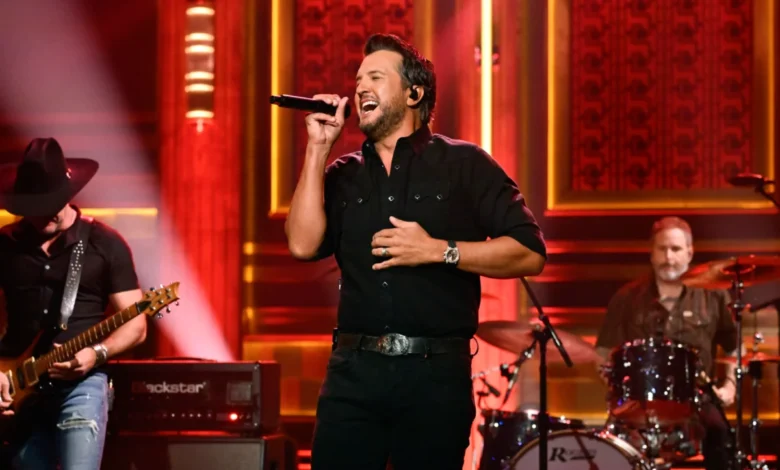
Country music superstar Luke Bryan brought his signature energy to late-night television this week, stopping by The Tonight Show Starring Jimmy Fallon to deliver a vibrant live performance of his mid-tempo single, Signs. Backed by his touring band, Bryan showcased the track to a national audience, highlighting the musical sensibilities that have made him a fixture of modern country radio. The performance served as a high-profile promotional push for his latest studio album of the same name, which officially dropped on September 18.
The 12-track project, produced by longtime collaborators Jeff Stevens and Jody Stevens, arrives as the latest chapter in Bryan’s prolific career. Alongside the title track—written by Jody Stevens, Patrick Murphy, Jason Duke, Tommy Cecil, and Jon Mills, and released to fans in August—the record features the radio hit Country and She Knows It. As Bryan continues to promote the new body of work, he has been reflecting on the milestone releases, the collaborative spirit of the Nashville music community, and his enduring journey in the entertainment industry.
A Star-Studded Nashville Celebration
The release of Signs was commemorated in grand fashion with a massive celebration in Nashville at the Bridgestone Arena. The event brought together some of the biggest names in contemporary country music, highlighting the tight-knit camaraderie among Nashville’s elite headliners. Artists including Jason Aldean, Dierks Bentley, Kane Brown, Darius Rucker, Chris Stapleton, and Carrie Underwood gathered to support Bryan and mark the arrival of his new music.
During his interview with Jimmy Fallon, Bryan opened up about the significance of the Bridgestone Arena gathering, focusing in particular on a memorable moment shared with Chris Stapleton. Bryan reflected on the deep history the two artists share, tracing back to a song that remains one of the most emotional recordings in Bryan’s catalog: Drink a Beer.
Written by Stapleton well before his own meteoric rise as a solo superstar, the poignant ballad became a massive emotional anchor for Bryan’s career. Stapleton famously performed the track alongside Bryan at the Country Music Association (CMA) Awards and contributed backing vocals to the original studio recording. The recent Nashville celebration offered the two artists a chance to share a more intimate musical moment, reflecting on how far they have both come since those early collaborative milestones.
Bryan, known for his quick wit and self-deprecating humor, did not miss an opportunity to joke about Stapleton’s intense and mesmerizing stage presence. He told Fallon that he considers Stapleton to be the number one entry on his personal "Mount Rushmore" of vocalists, praising him as his favorite singer in the industry.
"He really stares at you while he’s singing with you because he’s watching your lips," Bryan joked to Fallon, describing the experience with mock intimidation. "And then as he’s watching your lips, it’s very intimidating. And then the whole, I’m kind of falling in love."
The Evolution and Production of Signs
The rollout of Signs represents a strategic evolution for Bryan, who has spent well over a decade balancing stadium tours, television appearances, and continuous radio releases. Working once again with the production team of Jeff Stevens and Jody Stevens, Bryan has maintained a signature sonic identity while exploring new lyrical and thematic depths.
The creative team behind the album has a long history of crafting radio-friendly anthems that resonate with mainstream country audiences. Jody Stevens’ involvement in penning the title track, alongside co-writers Murphy, Duke, Cecil, and Mills, underscores the collaborative songwriting ecosystem that Nashville is famous for. By premiering the track on late-night television, Bryan aimed to bridge the gap between traditional country radio listeners and the broader demographic reached by network talk shows.
The mid-tempo nature of Signs allows Bryan to lean into a more nuanced vocal delivery, showcasing growth since his early uptempo party anthems. Industry analysts note that established country artists often utilize these middle-career projects to recalibrate their artistic identity, offering longtime fans familiar hooks while introducing mature storytelling elements.
A Monumental Transition for American Idol
Beyond his musical endeavors, Bryan continues to maintain a massive presence on television screens across America through his long-running role on ABC’s reality singing competition, American Idol. During his broader media rounds, Bryan confirmed that he will officially return to the judging panel for Season 25. He will sit alongside returning superstar Carrie Underwood and music industry icon Lionel Richie, maintaining the star power that has revitalized the historic franchise in recent years.
The upcoming milestone season, however, comes amid a major logistical shift for the production. After two decades of calling Hollywood its primary home—dating back to its original run on the Fox network before transitioning to ABC—American Idol is officially moving its production hub to the state of Georgia for future seasons.
This relocation marks a historic change of scenery for the competition show, which has used Los Angeles as its operational base for live shows, auditions, and Hollywood Week since its inception in 2002. The decision to move to Georgia reflects broader industry trends of production decentralization, leveraging state tax incentives, studio infrastructure, and regional accessibility. For Bryan, who has deep southern roots and a farm in Georgia, the relocation to the Peach State is a natural fit that brings the Hollywood production machine closer to the heartland of country music.
The Broader Impact on Bryan’s Career
As Luke Bryan navigates the dual demands of promoting a new album and preparing for a relocated season of American Idol, his career remains a blueprint for modern country music longevity. By successfully bridging the gap between chart-topping radio singles, major arena events, and primetime television exposure, Bryan continues to adapt to the shifting mechanics of the entertainment business.
The reception to Signs and the star-studded nature of his Nashville album release celebration demonstrate that Bryan retains substantial influence and goodwill among his peers. Meanwhile, his ongoing tenure on American Idol ensures that his cultural footprint extends well beyond country music circles, introducing him to new generations of pop and mainstream entertainment fans.
With a busy promotional schedule, a newly minted album on the charts, and major television commitments locked in for the foreseeable future, Luke Bryan shows no signs of slowing down. As Season 25 of American Idol approaches its transition to Georgia and the tracks from Signs continue to make waves at country radio, Bryan remains a central pillar of contemporary American entertainment.