The Enduring Legacy of the 1979 Iran Crisis: A Naval Aviator’s Sacrifice and its Modern Echoes

A recent online post has reignited discussions surrounding the 1979 loss of a U.S. Navy EA-6B Prowler crew, whose sacrifice is now being invoked amidst contemporary tensions between the United States and Iran. The post, circulating within a social media group for a veteran squadron, proposed memorializing the fallen aviators by inscribing their names on ordnance designated for operations against Iranian-backed threats. This initiative highlights the deep-seated historical grievances and the enduring impact of the 1979 Iran Hostage Crisis on military families and U.S. foreign policy, drawing a direct line between a decades-old tragedy and current geopolitical flashpoints.
The 1979 Tragedy: A Nation Responds
The roots of the current sentiment trace back to November 1979, a period marked by profound political instability in Iran and escalating tensions with the United States. Following the Iranian Revolution, militants stormed the U.S. Embassy in Tehran on November 4, 1979, taking 52 American diplomats and citizens hostage. This act precipitated an international crisis that would dominate U.S. foreign policy for 444 days. In response to the hostage-taking, the U.S. swiftly initiated a significant military buildup in the Persian Gulf region, aimed at projecting strength and deterring further aggression.
Among the deployed assets was the USS Kitty Hawk aircraft carrier, dispatched to the Indian Ocean and later repositioned towards the Persian Gulf. Aboard the Kitty Hawk was VAQ-135, the "Black Ravens," an electronic warfare squadron operating EA-6B Prowler aircraft. The Prowler, a sophisticated electronic countermeasure platform, was crucial for disrupting enemy radar and communications, providing vital support in a potential conflict zone. The squadron’s commanding officer, Commander Peter Rodrick, led VAQ-135, operating out of Naval Air Station (NAS) Whidbey Island, Washington, before their deployment.
On November 28, 1979, just weeks after the hostage crisis began, an EA-6B Prowler from VAQ-135 suffered a catastrophic operational accident. Commander Peter Rodrick, Lieutenant Commander William Coffey, Lieutenant Bradley Brown, and Lieutenant John Chorey were killed when their aircraft crashed into the Arabian Sea, approximately 63 miles east of Diego Garcia. Subsequent investigations suggested that the Prowler, likely flying a low-level mission with radar altimeters disengaged, misjudged a banking turn, causing a wing to strike the water. The impact led to the immediate disintegration of the aircraft. Search and rescue efforts by helicopters were unsuccessful, yielding only scattered wreckage and an oil slick on the surface. This incident marked one of the earliest casualties for the U.S. military in what some retrospectively refer to as the nascent stages of an undeclared conflict with Iran.
The EA-6B Prowler and its Strategic Role

The Grumman EA-6B Prowler, a variant of the A-6 Intruder, was a critical component of naval aviation for decades. Designed specifically for electronic warfare (EW), its primary mission was to protect strike aircraft by jamming enemy radar and communications, gathering intelligence, and disrupting hostile air defenses. The Prowler carried a crew of four: a pilot and three electronic warfare officers (EWOs) who operated the sophisticated jamming and surveillance systems. Its distinctive large pod on the tail housed a variety of antennas for electronic intelligence gathering.
During the 1979 crisis, the Prowler’s role was particularly vital. The U.S. military needed to be prepared for various contingencies, including potential rescue operations or retaliatory strikes. The ability to neutralize Iranian air defense systems and communications would have been paramount in such scenarios. The deployment of VAQ-135 and other electronic warfare assets underscored the strategic importance of controlling the electromagnetic spectrum in modern conflict. The loss of such a specialized aircraft and its highly trained crew represented a significant blow to the operational capabilities in the region at a critical time.
Echoes in the Digital Age: A Call for Retribution
Decades after the tragic loss of Commander Rodrick and his crew, the memory of their sacrifice has resurfaced in a starkly contemporary context. A former member of VAQ-135 recently shared an email request within the "VAQ-135 World Famous Black Ravens Past and Present" Facebook group. Addressed to the Office of the Secretary of Defense, the email sought a specific act of remembrance: marking ordnance destined for operations against Iranian-backed threats with the names of the four fallen aviators. The proponent argued that these men were among the first American service members to give their lives in what has evolved into the "War on Terror," specifically linking their deaths to the ongoing conflict with the Iranian regime.
The proposal quickly garnered support within the online community, with many veterans expressing their approval. One poignant endorsement came from a widow of a crew member from Commander Rodrick’s flight, who expressed gratitude for the remembrance. This reaction underscores a deep-seated desire among some military families and veterans for recognition and, for some, a form of retribution for losses sustained in conflicts perceived as directly or indirectly orchestrated by adversaries like Iran. The sentiment reflects a long-held grievance within segments of the veteran community that the 1979 incident, and subsequent Iranian actions, constitute an ongoing conflict that has yet to see a decisive resolution or full accountability.
This proposal taps into a broader debate about the ethics of military memorialization, particularly when it involves acts of warfare. While naming ships, buildings, or memorials after fallen heroes is a common practice, the idea of inscribing names on active ordnance raises questions about the nature of remembrance and its potential to be interpreted as a call for vengeance, rather than solely an honorific. The strong support from many veterans, however, highlights the visceral connection between past sacrifices and present-day military engagements, particularly when the perceived adversary remains the same.
The Human Cost: Grief Across Generations

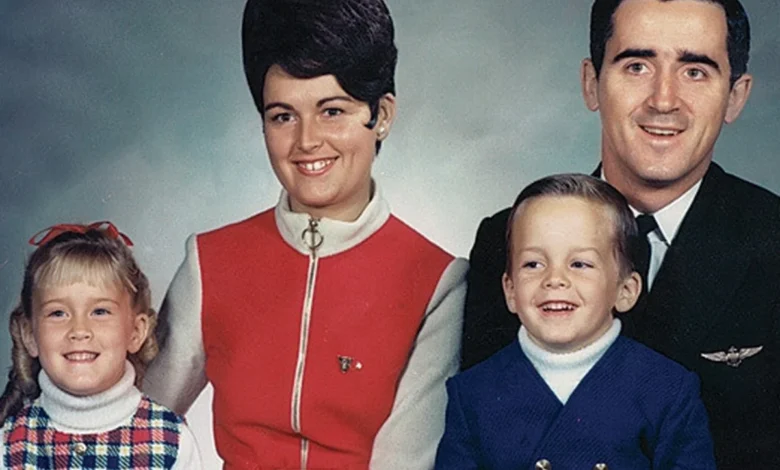
The enduring personal impact of the 1979 tragedy is profoundly illustrated through the experiences of those left behind. Stephen Rodrick, Commander Peter Rodrick’s son, was an eighth-grader when his father’s plane went down. His narrative reveals the immediate and long-lasting trauma of losing a parent in military service. The cancellation of a planned reunion trip, the sudden notification of his father’s disappearance, and the subsequent confirmation of his death etched a permanent mark on his life. This personal grief is now intersected by the modern discourse surrounding Iran, forcing a re-evaluation of his father’s sacrifice through the lens of current hostilities.
The complexity of this grief is further illuminated by a parallel story: that of Brian Danielson, a retired Navy commander whose father, Air Force Lt. Benjamin Franklin Danielson, was shot down over Laos in December 1969. Lt. Danielson was initially listed as MIA during the Vietnam War, a status that left his family in prolonged uncertainty until his remains were partially recovered decades later. Brian Danielson’s relentless pursuit of his father’s story, culminating in a search at the crash site and a final funeral at Arlington, mirrors the profound and often incomplete journey of military families seeking closure.
Both Rodrick and Danielson’s experiences highlight the intergenerational nature of military loss. Rodrick named his own son, Peter, after his father, and consciously attempts to forge memories with him before he reaches the age Rodrick was when his father died. This desire to connect generations, to transmit a legacy of service and sacrifice, is a common thread among military families. However, it also exposes children to the lingering shadows of past conflicts, challenging them to understand a history of loss they did not personally experience. The visit to the Prowler Memorial at NAS Whidbey Island, where Commander Rodrick’s name is etched, serves as a tangible link between past and present, a physical manifestation of a sacrifice that continues to resonate.
The Evolving Nature of US-Iran Conflict
The 1979 incident, while an operational accident, occurred within the immediate context of a severe diplomatic crisis that profoundly reshaped U.S.-Iran relations. The hostage crisis cemented a perception of Iran as a hostile state, a perception that has only intensified over subsequent decades. From the Iran-Iraq War (1980-1988), where the U.S. initially supported Iraq but later engaged in skirmishes with Iranian forces, to accusations of Iran’s nuclear ambitions, sponsorship of terrorism, and proxy warfare in the Middle East, the relationship has been defined by antagonism.
Brian Danielson’s perspective, shaped by his own service, illustrates this ongoing conflict. His deployment to Iraq, where he witnessed the devastating effects of explosively formed projectiles (EFPs) sourced from Iran’s Islamic Revolutionary Guard Corps (IRGC), solidified his view of the Iranian regime as a direct and lethal threat. His strong conviction that "killing the mullahs is a net positive" reflects a sentiment shared by many who have faced Iranian-backed aggression on the battlefield. This personal experience adds a layer of understanding to the broader calls for aggressive action against Iran, moving beyond abstract geopolitical analysis to the tangible impact on military personnel.
The "undeclared war" with Iran, a term used by the author and echoed by others, accurately describes a series of confrontations, proxy conflicts, and covert operations that have characterized the relationship without a formal declaration of war. From the Lockerbie bombing in 1988 (though Libya was primarily implicated, Iran’s broader role in state-sponsored terrorism was a concern), to the 1996 Khobar Towers bombing (attributed to Saudi Hezbollah, an organization with alleged ties to Iran), to the recent drone strikes and cyber warfare, the conflict has been multi-faceted and persistent. The proposal to name ordnance after the 1979 Prowler crew can thus be seen as an attempt to formally acknowledge and memorialize the casualties of this long-running, often indirect, struggle.

Reflecting on Sacrifice and Modern Warfare
The discussion around memorializing the VAQ-135 crew also intersects with the broader public discourse on military service, sacrifice, and the value of human life in modern warfare. Brian Danielson’s reflection on a recent successful rescue mission in Iran—where an American airman was saved through a massive, costly, and complex special forces operation—highlights a core American military value: the commitment to leave no one behind. "This country is so torn up, but we still value one American life," Danielson stated, expressing pride in the nation’s adherence to this standard, even while holding strong anti-Iranian regime views. This paradox underscores the complex moral landscape of military engagement, where the desire to protect one’s own can coexist with a fierce determination to confront adversaries.
The role of social media in amplifying these sentiments cannot be overstated. Platforms like Facebook provide immediate avenues for veterans and military families to connect, share their experiences, and express their views. While fostering community and remembrance, they also create spaces where calls for military action can quickly gain traction, sometimes without the nuanced deliberation typically associated with official policy discussions. The author’s initial visceral reaction to the Facebook post—an urge to push back against using his father’s name for a new military strike—illustrates the tension between personal grief and collective sentiment, and the challenges of navigating public discourse around war and memory in the digital age.
Ultimately, the story of Commander Peter Rodrick and the VAQ-135 crew serves as a potent reminder that the consequences of geopolitical events, even decades old, continue to resonate through generations. Their sacrifice in 1979 was a direct outcome of a critical moment in U.S.-Iran relations, a moment whose reverberations are still felt today. The current debate about how to honor their memory—whether through traditional memorials or by linking their names to ongoing military operations—reflects not only individual grief and collective remembrance but also the persistent and evolving nature of the conflict between the United States and Iran.