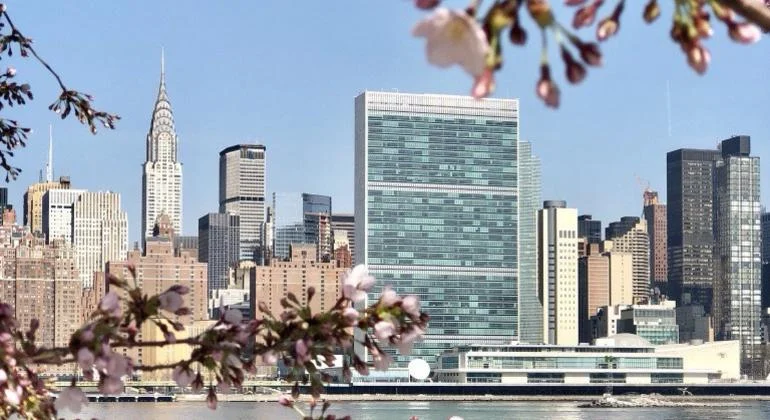
Every September, the bustling streets surrounding United Nations Headquarters in Manhattan undergo a profound transformation, turning into the epicenter of global diplomacy. Presidents, prime ministers, foreign ministers, and specialized delegates converge on New York City for the high-level week of the United Nations General Assembly (UNGA). As the 81st session convenes, the gathering takes place against a backdrop of severe geopolitical fractures, overlapping economic pressures, and profound strains on the post-WWII multilateral order.
The stakes for this year’s assembly could hardly be higher. With the world grappling with runaway climate change, widening wealth disparities, stubborn regional conflicts, and the looming threats of future pandemics and nuclear proliferation, the international community faces a critical stress test. Presiding over the 81st session is newly elected Assembly President Khalilur Rahman of Bangladesh, who has set a sobering and urgent theme for the deliberations: “Restoring trust, managing transformation: A United Nations that delivers for all.”
The Epicenter of Global Multilateralism: The General Debate
The undisputed centerpiece of the high-level week is the General Debate, slated to open on September 22. Over the course of several intensive days, heads of state and government from all 193 UN Member States will take turns stepping up to the iconic green marble podium in the General Assembly Hall. Each leader is afforded a global platform to articulate national priorities, air grievances, propose collaborative solutions, and address the pressing transnational issues of our era.
While the formal speeches broadcast to the world offer a high-level snapshot of official state positions, an immense volume of critical diplomacy occurs away from the public eye. Hundreds of bilateral, trilateral, and multilateral meetings take place behind closed doors in the delegates’ lounge and private conference rooms. For many world leaders, this week represents a rare, highly efficient window to engage directly with allies, smooth over diplomatic friction with rivals, and forge fragile coalitions without the cumbersome delays of traditional diplomatic channels.
A Race Against Time: Assessing the 2030 Sustainable Development Goals
Before the General Debate commands the spotlight, attention will shift sharply to the economic and social pillars of the United Nations on September 18 with the annual SDG Moment. Adopted unanimously by member states in 2015, the 17 Sustainable Development Goals (SDGs) established an ambitious blueprint to eradicate extreme poverty, banish hunger, achieve universal education, expand access to clean water, and transition to affordable, sustainable energy by 2030.
With less than five years remaining until the 2030 deadline, however, the international development community is sounding the alarm. Recent UN assessments indicate that progress on roughly half of all SDG targets is currently weak, stalled, or actively regressing, battered by the lingering economic fallout of the COVID-19 pandemic, geopolitical trade wars, and escalating debt crises across the Global South. The upcoming SDG Moment will go beyond mere diagnostic assessments, aiming to showcase scalable, high-impact domestic policies and international funding mechanisms that can be rapidly replicated to rescue the 2030 agenda from failure.
Climate Emergency: Transitioning to Renewable Energy and Confronting Rising Seas
Environmental crises will dominate consecutive days of high-level programming, reflecting the accelerating frequency and severity of climate-related disasters across the globe. On September 23, UN Secretary-General António Guterres will convene a dedicated High-Level Event on Climate Action and the Just Transition. As global carbon emissions stubbornly refuse to peak at the necessary scale, discussions will center on ratcheting up national climate commitments, fast-tracking the phase-out of fossil fuels, and unlocking the trillions of dollars in climate finance promised to developing nations.
The following day, September 24, the assembly will pivot to one of the most visible and irreversible consequences of a warming planet: sea-level rise. For low-lying coastal regions and Small Island Developing States (SIDS) spanning the Pacific and Caribbean, rising oceans are no longer a distant theoretical threat; they represent an existential crisis encroaching upon arable land, contaminating freshwater aquifers, and displacing entire communities. This specialized session seeks to mobilize targeted international legal frameworks, financial lifelines, and adaptation technologies to safeguard populations most vulnerable to geographic erasure.
Pandemic Preparedness and Global Health Security
The scars left by the COVID-19 pandemic remain deep, exposing a fractured global health architecture incapable of ensuring equitable access to life-saving countermeasures. On September 25, Heads of State and Government will convene to review and reinforce pandemic prevention, preparedness, and response frameworks.
The core objective of these high-level health discussions is to operationalize the hard-learned lessons of the coronavirus era. Leaders will evaluate proposed international pandemic treaties, debate mechanisms for transparent pathogen sharing, and design enforceable supply-chain guarantees to prevent wealthy nations from hoarding vaccines, therapeutics, and personal protective equipment during future biological emergencies. Strengthening primary healthcare systems in developing nations will be treated not merely as a humanitarian gesture, but as an indispensable cornerstone of global security.
Human Rights, Inclusion, and the Battle Against Discrimination
The high-level week will also mark significant historical milestones in the ongoing struggle for global equity, human dignity, and social justice. On September 23, the assembly will observe the 40th anniversary of the Declaration on the Right to Development, originally adopted by the General Assembly in 1986. This foundational instrument asserted that human development transcends mere GDP growth, encompassing active popular participation, civil liberties, and distributive justice.
Later in the month, on September 28, the United Nations will mark the 25th anniversary of the Durban Declaration and Programme of Action. As systemic racism, xenophobia, antisemitism, Islamophobia, and localized ethnic hostilities experience a resurgence in various parts of the world, this anniversary offers a vital check-in on why structural discrimination remains stubbornly persistent and how legal and educational frameworks can be sharpened to combat bigotry.
The Persistent Shadow of Nuclear Proliferation
On September 29, the sequence of major thematic sessions will conclude with a high-level plenary meeting observing the International Day for the Total Elimination of Nuclear Weapons.
Nuclear disarmament was among the foundational mandates entrusted to the United Nations at its inception following the devastation of Hiroshima and Nagasaki in 1945. Yet, nearly eight decades later, modernized nuclear arsenals remain a central, destabilizing pillar of great power security doctrines. With bilateral arms control treaties expiring or suspended, and regional nuclear tensions rising in multiple theaters, the UN continues to position total elimination as its ultimate disarmament priority, imploring nuclear-armed states to revive transparency and risk-reduction dialogues.
A Defining Moment for Secretary-General António Guterres
Adding a profound institutional milestone to the proceedings, this year’s high-level week marks the final General Assembly session to open under the leadership of Secretary-General António Guterres. Having steered the organization through a turbulent decade defined by a global pandemic, resurgent major-power conflict, and cascading climate catastrophes, Guterres’s second and final five-year term concludes on December 31, 2026.
The formal selection process for his successor is already well underway within the UN membership, with the next Secretary-General slated to assume office on January 1, 2027. The incoming leader will inherit an institution simultaneously indispensable and deeply constrained by the geopolitical divides of its most powerful member states.
Conclusion: Reaffirming the Promise of ‘We the Peoples’
As delegates navigate the security perimeters, press briefings, and marathon negotiation sessions in New York, the overarching atmosphere is one of profound urgency. International cooperation is currently weighed down by protectionist impulses, nationalist rhetoric, and a deepening trust deficit between the Global North and Global South.
In recent remarks previewing the assembly, Secretary-General Guterres invoked the opening words of the foundational UN Charter to refocus the minds of world leaders on their collective responsibilities. "Not we the powerful. Not we the victorious. We the peoples — all of us — bound by a single conviction: that we are safer, stronger and more human when we stand together," he declared. Over the course of these critical days in New York, the global community will discover whether its leaders possess the political courage to translate those founding principles into concrete, multilateral action before time runs out.
Related posts: