Historical Railway Detours and Solar Flares: Space Weather Experts Solve 19th-Century Scientific Mystery

In the annals of public transportation, explanations for delayed journeys have ranged from the mundane to the bizarre. Leaves on the track, excessive heat, torrential downpours, and stray livestock have long plagued rail networks worldwide. However, a historical puzzle dating back to the Victorian era reveals an extraordinary cause for a timetable disruption: a violent burst of solar activity. For generations, historians and scientists believed a specific incident in Devon, England, marked the absolute dawn of technological vulnerability to space weather. Now, meticulous detective work by a team of modern space-weather researchers has upended that timeline, proving that the famous event occurred seven years later than previously documented and shifting our understanding of how early electrical grids interacted with the cosmos.
Unraveling the 1841 Anomaly: When History Failed the Timeline Test
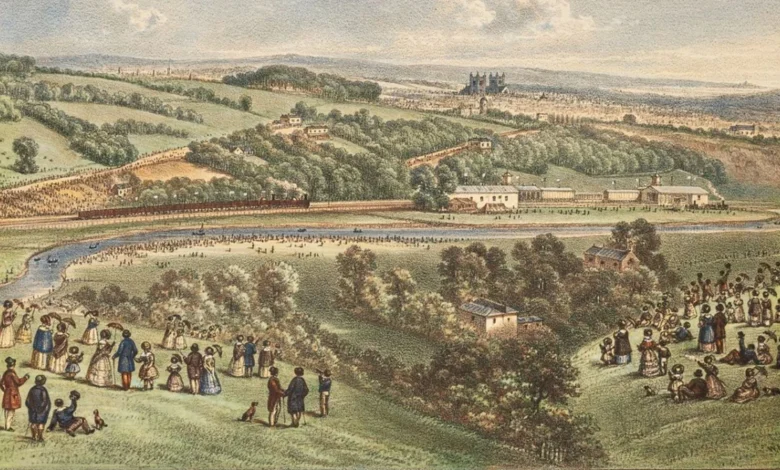
The narrative first entered scientific literature through a report published in an 1871 edition of the prestigious journal Nature. The contemporary account described an unusual occurrence involving a train departing from Exeter on the south-west coast of the United Kingdom. According to the text, a severe geomagnetic storm caused an unauthorized electrical current to flood the telegraph network governing the railway signals. The resulting confusion and operational breakdown delayed the departure by a frustrating 16 minutes.
For decades, this account was cited across scientific literature as the earliest documented instance of a solar storm interfering with terrestrial electrical technology. Yet, when a research team spearheaded by Jim Wild—a professor of space physics at Lancaster University and President of the Royal Astronomical Society—began scrutinizing the primary sources, foundational mathematical and historical discrepancies quickly emerged.
The Nature report explicitly dated the disturbance to 10:05 PM local time on October 18, 1841. However, when Wild and his colleagues examined regional engineering archives, they uncovered a glaring contradiction: the specific railway line in question had not even been constructed or opened to the public until 1846. An event disrupting a railway signal system could not logically take place half a decade before the tracks were laid.
A Victorian Detective Story: Reconstructing the True Date
Faced with a chronological impossibility, the research team—which included space weather specialist Mike Hapgood from RAL Space, the United Kingdom’s National Space Laboratory—embarked on a rigorous archival investigation. The team utilized a diverse array of historical artifacts, combining digitized geomagnetic data, nineteenth-century railway timetables, yellowed newspaper clippings, and historical logs of auroral sightings and solar observations.
"Our research has a hint of a detective story—piecing together a wide range of archived records to better understand a historically severe space-weather event," explained Hapgood.
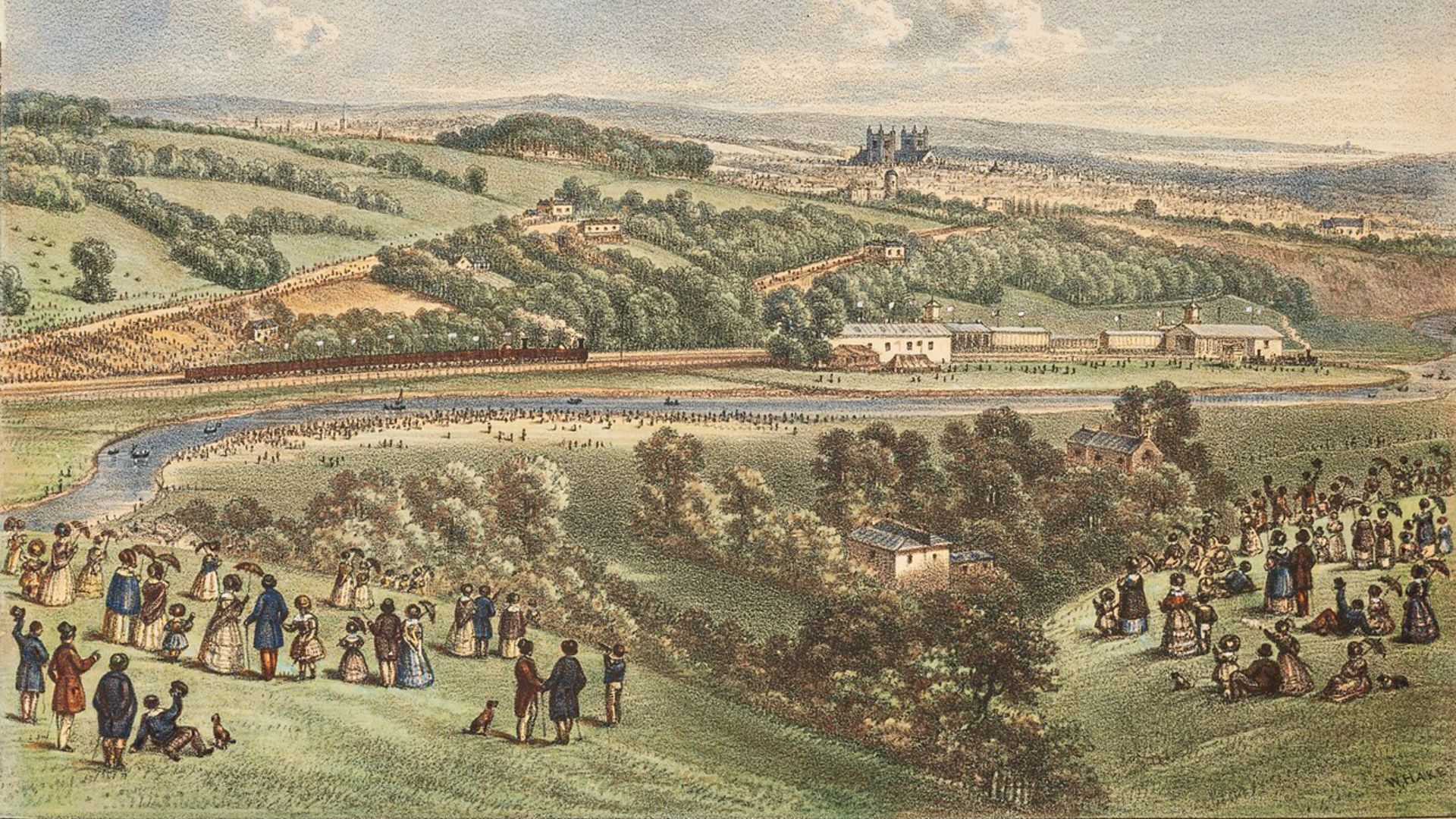
By cross-referencing historical newspaper accounts of unusually vibrant northern lights visible across lower latitudes with operational railway schedules and magnetic observatory measurements from the period, the researchers successfully pinned down the true date of the disruption. The evidence overwhelmingly pointed to October 18, 1848, exactly seven years later than the date printed in Nature. During this period, Earth was indeed being battered by a powerful geomagnetic storm, which induced excessive currents in the long-distance copper wires utilized by the newly minted electrical telegraph systems.
Reassessing the Chronology of Space Weather Disasters
The correction of this historical date carries significant weight for the chronology of space-weather research. By moving the Exeter train delay from 1841 to 1848, the incident loses its status as the earliest recorded instance of solar activity disrupting critical ground-based electrical infrastructure.
That distinction now belongs to a separate disturbance recorded on the expansive Midland railway network across the United Kingdom in March 1847. Despite losing its crown as the absolute first, the Exeter incident retains profound scientific value.
"Although this means it is not the earliest recorded space weather impact, it remains one of the first clear examples of solar activity disrupting critical infrastructure," Professor Wild noted. "It also demonstrates the value of combining scientific records with contemporary newspaper reports and archival documents when reconstructing historic space weather events."
The revised timeline highlights how quickly Victorian society encountered the invisible hazards of the space environment. As telegraph networks expanded across continents, they inadvertently acted as massive antennae, capturing fluctuations in Earth’s magnetic field and translating them into dangerous surges of electrical current.
The Shadow of the Carrington Event and Modern Vulnerabilities
The Exeter and Midland incidents served as a precursor to even more dramatic encounters between human infrastructure and the sun. Just over a decade after the Exeter delay, Earth experienced the most powerful solar storm on modern record: the Carrington Event of September 1859.
During the Carrington Event, intense coronal mass ejections slammed into Earth’s magnetosphere, producing auroras visible as far south as the Caribbean and completely overwhelming global telegraph systems. Operators reported that telegraph equipment continued to function even with the operating batteries entirely disconnected, driven solely by the geomagnetic current pulsing through the lines. In some instances, operators received electric shocks, and telegraph paper rolls spontaneously caught fire.
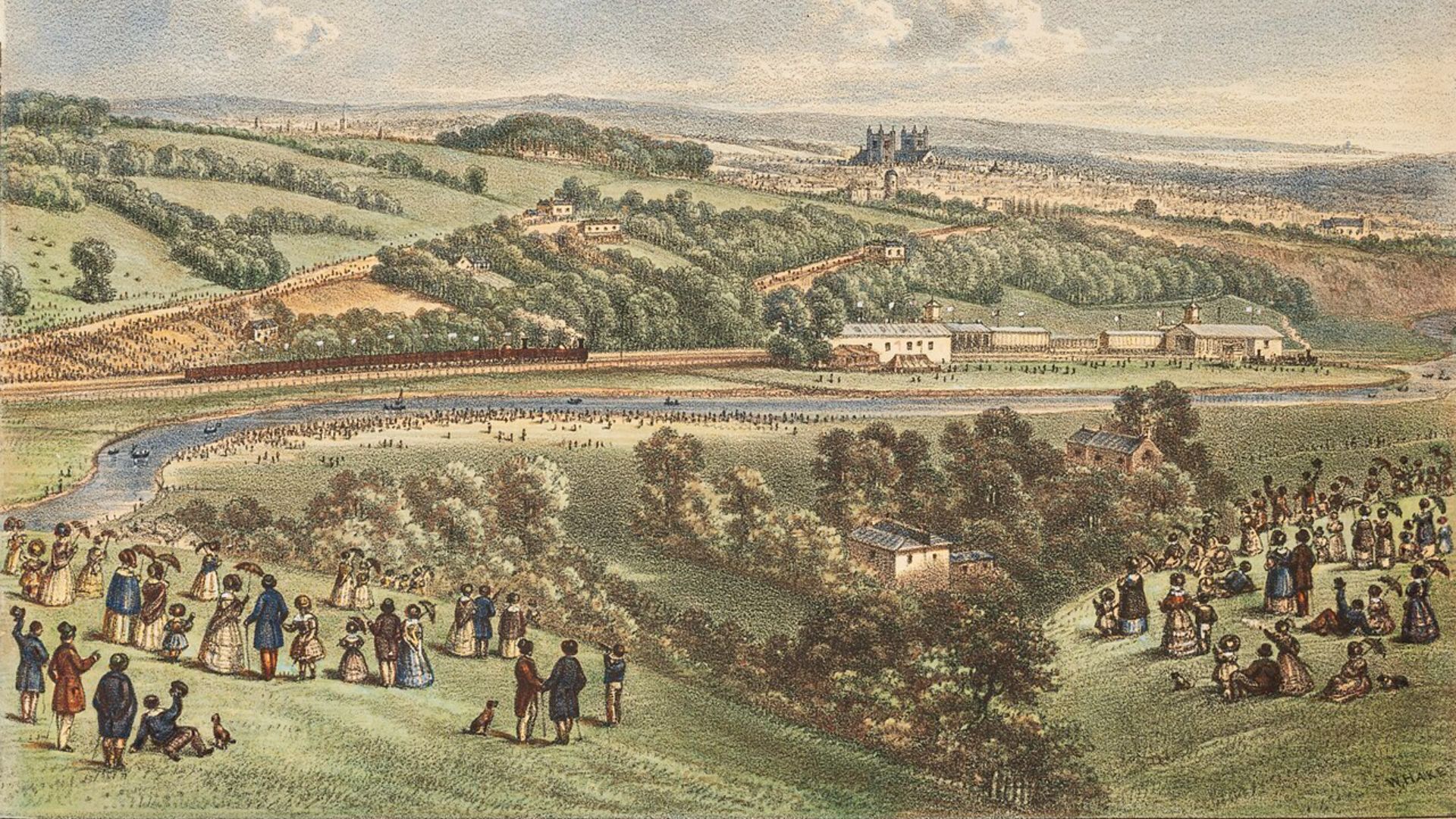
While nineteenth-century society experienced these disruptions primarily as localized telegraph failures and minor transport delays, modern civilization is exponentially more dependent on vulnerable electrical grids, satellite communications, global positioning systems, and internet infrastructure.
"While today’s space weather [monitoring] capabilities are far more advanced than anything available in the 1800s, the modern technologies we depend on are also much more vulnerable to solar storms," Hapgood emphasized.
A repetition of a storm on the scale of the Carrington Event today would threaten widespread, prolonged blackouts, disable orbital satellites, cripple financial transactions, and disrupt global supply chains on an unprecedented scale.
Ongoing Solar Activity and Future Preparedness
The Sun operates on an approximate eleven-year activity cycle, fluctuating between periods of relative quiet (solar minimum) and intense explosive behavior (solar maximum). Solar Cycle 25 officially reached its peak in October 2024, ushering in an extended phase of heightened space weather. Throughout 2024, Earth experienced several severe geomagnetic storms, most notably in May, which produced some of the most widespread and vibrant auroral displays seen in centuries, alongside minor disruptions to high-altitude aviation and satellite operations.
As scientists continue to analyze historical data alongside real-time observations from advanced spacecraft like NASA’s Solar Dynamics Observatory, the lessons of the 1840s remain vital. The historical detective work surrounding the Exeter train delay serves as a stark reminder that space weather is not a novel threat born of the digital age, but an enduring environmental hazard that has tested human engineering for nearly two centuries.
Related posts: