The Anatomy of an Ecological Collapse
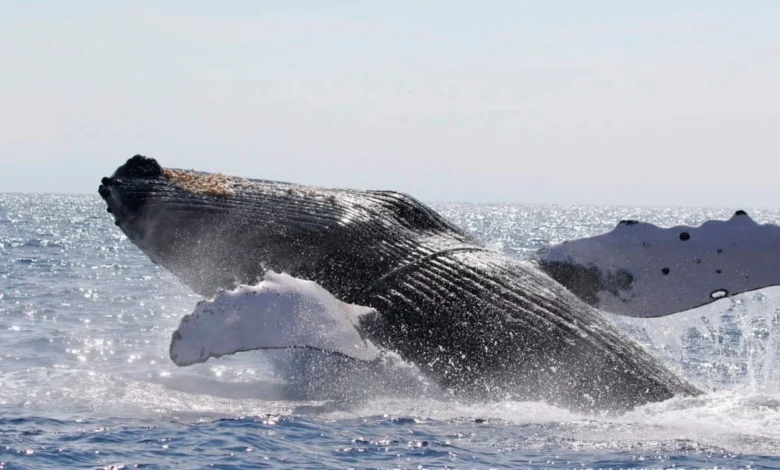
The North Pacific humpback whale (Megaptera novaeangliae) is a species defined by its extraordinary migratory cycle. These massive mammals spend their summers in the nutrient-rich, frigid waters of Alaska and British Columbia, where they gorge on krill and small forage fish to build the energy reserves necessary for their annual journey. Each winter, they embark on a 4,800-kilometer migration to the subtropical waters surrounding the Hawaiian Islands, a critical sanctuary for mating, calving, and nursing their young.
However, the equilibrium of this cycle was shattered during the 2013-2016 period, characterized by an unprecedented marine heatwave colloquially known as "The Blob." This phenomenon, driven by a persistent ridge of high pressure that reduced wind-driven mixing of the ocean, caused sea surface temperatures in the northeastern Pacific to soar. The resulting thermal stress proved catastrophic for the base of the marine food chain. Populations of forage fish and krill—the primary sustenance for humpbacks—plummeted, leaving the whales with significantly reduced caloric intake during their most critical foraging windows.
Methodology and Citizen Science
To quantify the long-term impacts of this event, researchers undertook an extensive longitudinal study spanning two decades. By analyzing over 27,000 photographic records of whale sightings gathered between 2002 and 2023, scientists were able to track individual whales across the main Hawaiian islands. This endeavor relied heavily on Happywhale, a robust citizen science platform that allows researchers to catalog whales based on their unique tail flukes.
"Their flukes are a bit like a fingerprint for each individual humpback whale," explained Shannon Barber-Meyer, a study co-author formerly affiliated with the Pacific Whale Foundation. By comparing these unique markings over time, the team could determine survival rates and population density with high statistical precision. The findings were stark: between the 2014-2015 breeding season and the 2021-2022 season, the Hawaiian humpback whale population suffered a decline of approximately 37%.
A Crisis of Survival: The Data
The most alarming aspect of the research is the collapse in adult survival rates. Under normal, pre-heatwave conditions, the annual survival rate for adult humpbacks was remarkably stable at roughly 99%. During the peak of the heatwave, this figure plummeted to an estimated 68%.
"It’s a very precipitous drop, and that’s not something you normally see in adult survival of long-lived mammals," Barber-Meyer noted. In the context of marine biology, such a dramatic shift in survival suggests that the animals were not merely failing to reproduce, but were literally starving to death. Indeed, during the years of the heatwave, observers in Alaska and British Columbia documented an "unusual mortality event," where emaciated whales were found dead or in advanced states of physical decline. The researchers estimate that the North Pacific population was depleted by approximately 5,000 individuals as a direct result of this thermal stress, with many failing to survive the migration or the subsequent winter breeding cycle.
Broader Implications for Marine Megafauna
The plight of the Hawaiian humpback is not an isolated incident; it is part of a growing pattern of climate-induced decline in the North Pacific. John Calambokidis, a research biologist with the Cascadia Research Collective, emphasized that the study provides a critical lens through which to view future environmental shifts.
"The findings offer valuable insights into the potential impacts of future changes," Calambokidis stated. He noted that he is currently tracking a similar, devastating trend among gray whales (Eschrichtius robustus) in the Pacific. In that case, the decline is largely attributed to environmental shifts in the Arctic, specifically the rapid loss of sea ice, which fundamentally alters the timing and availability of benthic prey.

The convergence of these events suggests that the North Pacific is becoming an increasingly hostile environment for large cetaceans. With the region currently experiencing another wave of abnormally high sea surface temperatures, exacerbated by a strong El Niño cycle in the tropical Pacific, the outlook for rapid recovery is grim. The ocean is currently significantly warmer than historical averages, placing additional stress on already fragile ecosystems.
Anthropogenic Vulnerabilities
The fact that the Hawaiian humpback population has failed to return to its pre-2013 levels is particularly concerning because it leaves the species more susceptible to secondary stressors. In their weakened state, these whales are less resilient to the ongoing anthropogenic threats that characterize the modern ocean environment.
Entanglement in commercial fishing gear, collisions with large shipping vessels, and the cumulative effects of plastic pollution and chemical runoff present constant dangers to the humpback population. When a population is robust and growing, it can absorb a certain level of accidental mortality. However, when the baseline population is already in a state of suppressed recovery, each additional loss becomes significantly more impactful to the overall viability of the species.
Global Climate Disruptions
The connectivity of the world’s oceans means that the issues observed in the North Pacific are likely to have global reverberations. Humpback whales are migratory sentinels; they inhabit every ocean basin, traveling thousands of miles between polar feeding grounds and equatorial breeding grounds. As Daniel Palacios of the Center for Coastal Studies noted, climate-driven disruptions to ocean temperatures and currents are not limited to one region.
"Disruptions to the climate system could also affect humpback whale populations globally," Palacios explained. As ocean currents shift and thermal stratification changes the distribution of prey, whales may be forced to alter their ancient migratory routes. These deviations often bring them into closer contact with industrial shipping lanes or fishing grounds, further increasing the risk of mortality.
A Call for Adaptive Management
The 2013-2016 marine heatwave serves as a diagnostic case study for the era of the Anthropocene. It demonstrates that the impact of climate change on marine life is not merely a gradual shift in conditions but a series of acute, high-impact events that can permanently alter population dynamics.
For conservationists and policy makers, the findings underscore the need for "adaptive management"—a strategy that allows for rapid adjustments in human activities based on real-time environmental data. If we know that a marine heatwave is developing, for instance, it may be necessary to impose temporary shipping speed restrictions or suspend certain types of fishing in critical feeding zones to minimize the additional burden on stressed whale populations.
The recovery of the North Pacific humpback whale is not a foregone conclusion. While these creatures have survived for millions of years through cycles of natural change, the current rate of anthropogenic warming is moving at a speed that threatens to outpace their natural ability to adapt. The 37% decline identified by researchers is a significant signal that the ocean’s "base of the food chain" is no longer the reliable anchor it once was.
As scientists continue to monitor the population, the focus will remain on the intersection of long-term biological studies and real-time climate monitoring. The story of the Hawaiian humpback is a sobering reminder that the health of the ocean is inextricably linked to the survival of the largest beings on the planet. Protecting them will require not only a deeper understanding of their biology but a fundamental shift in how we manage the marine resources they—and we—rely upon. The data is clear: the heatwave did not just pass; it changed the landscape of the North Pacific, and the whales are still paying the price.
Related posts: