Best Buy Black Friday in July 2026 Sparks Competitive Tech Market as Amazon and Dell Counter with Record Low Prices on Laptops and Monitors

The mid-summer retail landscape of 2026 has reached a critical flashpoint as Best Buy’s "Black Friday in July" event triggers a wave of aggressive discounting across the consumer electronics sector. While the event is anchored by the big-box retailer, major competitors including Amazon and Dell have responded with a series of price match guarantees and exclusive "flash deals" that have pushed several premium devices to their lowest historical price points. This annual tradition, which originally served as a secondary clearance period, has evolved into a primary sales quarter for the technology industry, particularly as manufacturers prepare for the late-Q3 release of next-generation hardware. Market analysts observe that the 2026 July sales are notably focused on the "AI PC" category, with retailers slashing prices on high-performance laptops and ultra-wide OLED monitors to capture the early back-to-school and professional upgrade demographic.

The Shift in the 2026 PC Hardware Cycle
The current surge in discounts is driven by a unique convergence of hardware cycles. By mid-2026, the transition to AI-integrated processing—led by Intel’s Core Ultra series and Qualcomm’s Snapdragon X platforms—has matured, leading to a surplus of early-2026 models as manufacturers look toward the 2027 roadmap. The standout offer of this period is the Dell 14 Plus, which has seen a massive price reduction from its original MSRP of $2,049.99 down to $999.99. This $1,050 discount represents a pivotal moment in the pricing of premium ultra-portables, as it brings a machine equipped with an Intel Core Ultra 9 processor, 32GB of RAM, and a 1TB SSD into the sub-$1,000 category—a price bracket previously reserved for mid-range "workhorse" devices.
The significance of the Dell 14 Plus deal cannot be overstated in the context of professional productivity. Historically, machines with 32GB of RAM and flagship-tier processors maintained a "prosumer" premium for at least 18 months post-launch. However, the 2026 July sales indicate that retailers are willing to sacrifice margins on high-end configurations to maintain market share against the rising dominance of ARM-based alternatives.

Copilot+ and ARM-Based Laptop Integration
A secondary but equally important trend in the July 2026 sales event is the aggressive pricing of Copilot+ PCs. The Microsoft Surface equipped with the Snapdragon X Plus processor is currently retailing for $1,099.99 at Amazon, a $400 reduction from its launch price of $1,499.99. This move is mirrored by Samsung, whose Galaxy Book4 Edge has hit an unprecedented price of $499.99 at Best Buy, down from $999.99.
The 50% price cut on the Galaxy Book4 Edge is particularly telling of the current market sentiment regarding ARM-based Windows machines. While these devices offer superior battery life and integrated AI capabilities, the 2026 market remains highly competitive. By pricing a Snapdragon-powered device at the $500 mark, Best Buy is effectively positioning ARM technology as a mass-market solution rather than a niche luxury. This pricing strategy is expected to accelerate the adoption of Copilot+ features among students and general consumers who were previously deterred by the high entry cost of AI-native hardware.

Evolution of the Display Market: OLED Becomes the Standard
In the peripherals segment, the 2026 July sales have focused heavily on high-end display technology. The Samsung Odyssey OLED G93SC, a 49-inch curved ultrawide monitor, has dropped to $899.99 from its $1,299.99 launch price. This deal highlights the rapid commoditization of OLED technology in the gaming and professional creative sectors.
In previous years, 49-inch OLED panels were considered flagship luxury items rarely seen below the $1,200 threshold. The current $899.99 price point indicates a stabilized supply chain for large-format OLED panels. With a 240Hz refresh rate and a 1ms response time, the Odyssey OLED G93SC’s discount is designed to clear inventory ahead of the rumored "DisplayHDR 2000" monitors expected in late 2026. Analysts suggest that these discounts are a strategic move to lock consumers into specific brand ecosystems before the holiday season begins.

Travel Tech and the Digital Nomad Economy
The 2026 sales also reflect broader societal shifts toward mobile work and international travel. Accessories that were once considered niche, such as travel routers, have become central to the July promotional cycle. The TP-Link Roam 6, a Wi-Fi 6 travel router designed to provide secure, private networks over public hotel or airport connections, has reached a record low of $49.99.
This $10 reduction from its standard $59.99 price may seem modest compared to laptop discounts, but it represents a high-volume category for retailers. As the "digital nomad" lifestyle continues to expand in 2026, tech accessories that address security and connectivity are seeing higher year-over-year growth than traditional desktop peripherals. Retailers like Amazon are leveraging these smaller tech "essentials" to drive traffic to their platforms during the Prime Day period, often bundling them with larger laptop purchases.

Chronology of the July Sales Phenomenon
The "Black Friday in July" concept has undergone a significant transformation over the last decade.
- 2015–2019: July sales were primarily defined by Amazon Prime Day, with other retailers offering modest "anti-Prime Day" discounts.
- 2020–2023: Supply chain disruptions led to erratic summer sales, with retailers focusing on whatever stock was available rather than strategic discounting.
- 2024–2025: The "AI PC" era began, and the July period became a testing ground for consumer interest in integrated NPU (Neural Processing Unit) hardware.
- 2026: The current year marks the first time that flagship AI-integrated hardware has seen a 50% or greater price reduction within six months of the release cycle.
The timeline of the 2026 event shows that while Best Buy officially kicked off its promotion in the third week of July, manufacturers like Dell and HP began preemptive strikes on their direct-to-consumer websites as early as July 1st. This "sale creep" has effectively turned the entire month of July into a high-stakes clearance window.

Market Analysis: Why Now?
The intensity of the 2026 discounts can be attributed to three primary economic factors. First is the stabilization of semiconductor costs. After years of volatility, the cost of manufacturing high-performance chips has leveled off, allowing retailers more "margin room" to offer deep discounts without incurring losses.
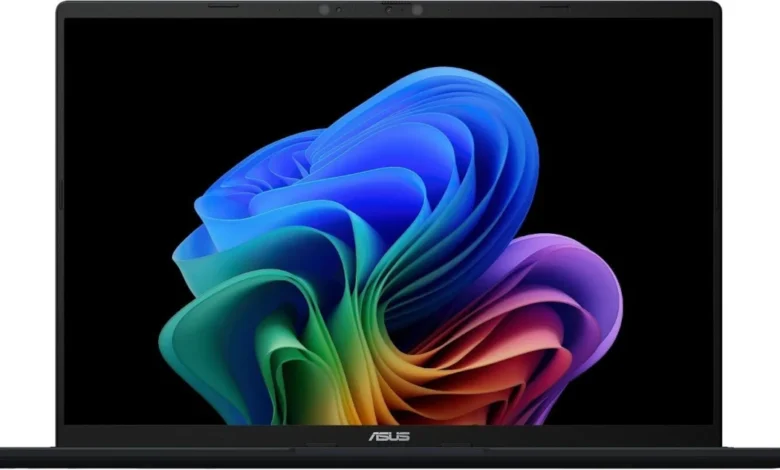
Second is the "Back-to-School" window, which has shifted earlier every year. By mid-July, university students are already making purchasing decisions for the fall semester. By offering the HP OmniBook 5 and the ASUS Vivobook at prices ranging from $649 to $869, retailers are targeting the "sweet spot" for student budgets—providing high-end specs (16GB RAM, 1TB SSD) at mid-range prices.

Third is the looming threat of next-generation GPU releases. With NVIDIA and AMD expected to announce new mobile architectures in late 2026, current stock of laptops featuring 2025-era graphics cards must be moved to make room for the "next big thing."
Official Responses and Industry Outlook
While retailers like Best Buy and Amazon rarely comment on specific pricing strategies, industry insiders suggest that the current price war is a deliberate attempt to stimulate a cooling consumer electronics market. A spokesperson for the Consumer Technology Association (CTA) recently noted that while the initial hype for AI PCs drove early adoption, the "mass market" requires aggressive pricing to justify the upgrade from perfectly functional 2023 or 2024 models.

Industry analysts from firms like Gartner and IDC have observed that the $999 Dell 14 Plus and the $499 Samsung Galaxy Book4 Edge are "threshold-breaking" deals. These prices are expected to set a new baseline for the remainder of the 2026 fiscal year. Consumers who miss the July window may not see similar pricing until the actual Black Friday in November, although many experts believe the July deals on specific models—particularly the Dell and Samsung laptops—may actually be superior to holiday offers due to current inventory levels.
Broader Impact and Consumer Implications
The broader impact of the July 2026 sales event is a democratization of high-end computing. When flagship processors like the Intel Core Ultra 9 become accessible for under $1,000, the "digital divide" in professional software capabilities begins to narrow. Creators, developers, and students now have access to the same hardware used by high-end enterprise professionals.

Furthermore, the competition between Best Buy’s "Black Friday in July" and Amazon’s Prime Day has forced a higher standard of transparency and value. Consumers are no longer satisfied with "inflated MSRP" discounts; they are looking for genuine, record-low pricing on vetted, high-quality hardware. As the 2026 sales draw to a close, the data suggests that the "AI PC" has officially entered its mainstream era, fueled by a retail environment that prizes volume and market share over high individual unit margins.
For the consumer, the takeaway from the July 2026 sales is clear: the mid-year point is no longer a "waiting period" for November. It is a primary window for securing top-tier technology at prices that were previously unimaginable for the current hardware generation. Whether it is a $1,050 saving on a Dell laptop or a sub-$900 OLED gaming monitor, the 2026 July sales have redefined the value proposition of modern consumer electronics.