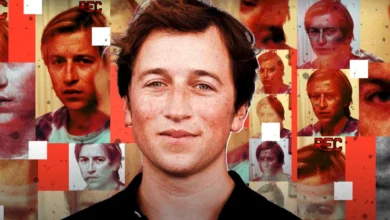
Christopher Rodriguez-Marquette brings gravitas to the latest season of Reacher as the enigmatic Jacob Merrick


The appeal of Amazon Prime Video’s hit series Reacher lies in its cyclical nature. Based on the sprawling literary universe created by Lee Child, the show maintains a singular constant: Jack Reacher, the nomadic former military policeman portrayed with stoic intensity by Alan Ritchson. Each season serves as a self-contained procedural, dropping the titular protagonist into a new environment where he must dismantle criminal conspiracies, often with the help of a rotating cast of allies. As the series enters its fourth season, it introduces Jacob Merrick, a small-town law enforcement officer whose personal tragedy serves as the catalyst for the season’s central conflict.
The Character Arc of Jacob Merrick
Jacob Merrick is introduced during the premiere of season 4 as a local officer grappling with the sudden, inexplicable death of his sister. The character’s introduction is tied directly to the series’ opening sequence, where Reacher encounters Merrick’s sister on a train. Her subsequent death, ruled a suicide, provides the emotional impetus for Merrick’s investigation, which quickly intersects with Reacher’s own inquiries.
The narrative trajectory for Merrick is defined by a transition from confusion to a focused, albeit grieving, determination. As a character, he represents the human cost of the high-stakes conspiracies Reacher frequently uncovers. While Reacher operates as a force of nature—often detached and clinical—Merrick provides the audience with a grounded perspective. His journey reflects the systemic corruption that permeates the season’s plot, which spans international borders, bureaucratic red tape, and domestic terror threats.
One of the most significant sequences in the current season features Merrick alongside Tamara Green, played by Sydelle Noel. Their collaboration culminates in an elaborate vehicle pursuit across a local bridge, showcasing a shift in Merrick’s role from a grieving brother to a tactical participant. This sequence serves as a pivot point for his character, solidifying his status as one of the few figures in this season that Reacher considers a reliable ally.

Casting Dynamics and Production History
The inclusion of Christopher Rodriguez-Marquette in the cast was the result of a significant late-stage production adjustment. Initial casting reports indicated that the role of Jacob Merrick was originally slated for Jay Baruchel. Due to unforeseen scheduling conflicts, Baruchel departed the project shortly before principal photography commenced. Industry insiders noted that this necessitated a swift casting pivot, leading to the selection of Rodriguez-Marquette.
The transition, while abrupt, did not result in a narrative delay. Reports confirm that Baruchel remains in the creative orbit of the series and is currently slated to join the ensemble for the upcoming fifth season. This arrangement suggests a strategic effort by Amazon’s production team to maintain continuity and foster long-term relationships with established talent despite the logistical shifts of a multi-season franchise.
For Rodriguez-Marquette, the role of Jacob Merrick marks a departure from his more frequent appearances in lighter, comedy-leaning fare. The actor, who has utilized both "Chris Marquette" and "Christopher Rodriguez-Marquette" as professional monikers, brings over three decades of industry experience to the role, having transitioned from a notable child actor in the 1990s to a versatile television and film performer.
A Career Retrospective: From Child Star to Dramatic Lead
Christopher Rodriguez-Marquette’s entry into the entertainment industry dates back to 1991, with an early appearance in Barney and the Backyard Gang. His progression through the industry mirrors the evolution of the television landscape over the last thirty years. During the early 2000s, he became a familiar face to television audiences through guest appearances on high-profile network staples, including The Nanny, Even Stevens, and ER.
His filmography is diverse, often favoring projects that balance dark humor with character-driven drama. Notable appearances include his role as Ryan Reynolds’ brother in the 2005 holiday cult classic Just Friends and his performance as a member of the ensemble cast in the horror-slasher hybrid Freddy vs. Jason. His film credits also extend to the critically polarized but commercially significant Alpha Dog and the fan-centric comedy Fanboys.

However, his television work has arguably provided the most critical acclaim in recent years. His performance as one of the Marine comrades to Bill Hader’s title character in the first season of HBO’s Barry showcased his ability to handle nuanced, dramatic material—a skill set that has clearly informed his current work on Reacher. This resume of supporting roles in prestige television and mid-budget film productions prepared him for the physical and emotional demands of the Reacher universe, which requires a blend of high-octane stunt work and grounded, realistic dialogue.
Implications for the Reacher Franchise
The decision to feature a character like Jacob Merrick in Reacher season 4 underscores a broader strategic shift in the show’s storytelling. As the series moves further into its run, the writers are clearly prioritizing the development of complex, multi-layered supporting characters who can share the screen with Ritchson. This serves two purposes: it mitigates the potential for the show to become overly repetitive, and it allows the series to explore different facets of the investigative process.
Furthermore, the involvement of a character like Merrick—who is directly tied to the victim of the season’s inciting incident—allows for a more personal exploration of the conspiracy. By anchoring the geopolitical and criminal threats in the personal tragedy of a local law enforcement officer, the show successfully balances the "big picture" stakes that define the Lee Child source material with the intimate, "small town" investigative tropes that characterize the early episodes of each season.
Industry Context and Audience Engagement
From a market perspective, Reacher remains a flagship property for Amazon Prime Video. Data regarding viewer retention and engagement suggests that the show’s "one-and-done" supporting cast format is a significant factor in its sustained success. By refreshing the cast each season, the production maintains a sense of novelty that keeps long-term subscribers engaged, while the inclusion of established character actors like Rodriguez-Marquette provides a sense of prestige and reliability.
The show’s production team has also embraced digital engagement, with actors increasingly encouraged to utilize social media platforms to provide behind-the-scenes content. Rodriguez-Marquette’s own interaction with fans on Instagram, including the sharing of onset footage, is part of a broader marketing strategy aimed at building community around the show’s production process.

Conclusion: The Road Ahead
As the fourth season of Reacher progresses, the role of Jacob Merrick stands as a testament to the importance of effective casting in long-running television franchises. Christopher Rodriguez-Marquette’s ability to step into a high-profile role under tight production timelines and deliver a performance that feels both authentic and urgent has been central to the season’s critical reception.
With his transition into this darker, more demanding role, Rodriguez-Marquette has successfully repositioned himself within the industry, moving away from his historical typecasting in comedy and into the realm of gritty, procedural drama. For the audience, the character of Jacob Merrick serves as an anchor, a reminder that behind the stylized action and the grand, far-reaching conspiracies of the Reacher universe, there are human lives—and human stories—at stake. As the series looks toward a fifth season and the inclusion of other actors like Jay Baruchel, the established success of the current ensemble provides a solid foundation for the future of the franchise.