Tom Cruise Earns Spontaneous BAFTA Applause With Passionate Defense of Human Craftsmanship Over Artificial Intelligence in Filmmaking

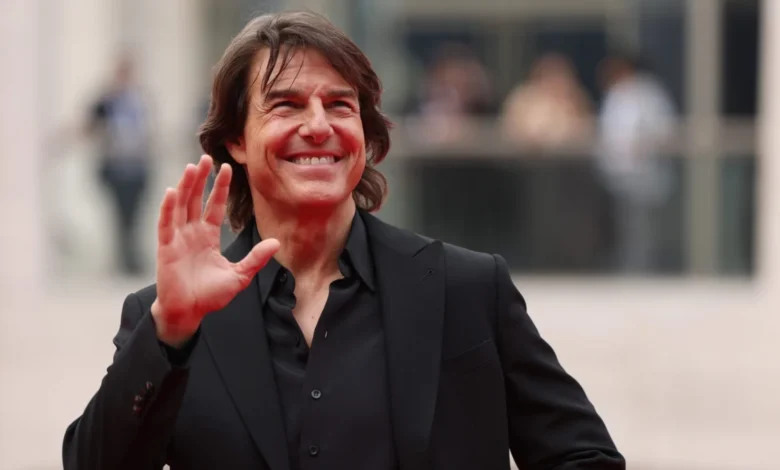
Hollywood icon Tom Cruise delivered a compelling and impassioned defense of human creativity during a recent appearance in London, captivating a normally reserved room of industry professionals and securing a rare, spontaneous wave of applause. The acclaimed actor, whose career spans more than four decades of blockbuster hits and daring cinematic spectacles, took the stage at the prestigious BAFTA: Life in Pictures event to reflect on his cinematic journey. However, the discussion quickly pivoted from retrospective nostalgia to pressing contemporary concerns when host Edith Bowman introduced the looming specter of artificial intelligence and its potential to upend the film industry.
Responding to what Bowman termed the "AI question," the star of Top Gun and Mission: Impossible embarked on a six-minute monologue celebrating the irreplaceable value of human artistry and the enduring potency of the theatrical experience. While Cruise’s remarks echoed familiar themes he has long championed—namely, the superiority of practical filmmaking and the magic of the shared cinematic experience—his delivery resonated deeply with the audience. BAFTA members, typically restrained during such retrospective panels, broke protocol to applaud the actor’s unwavering commitment to human-driven storytelling.
This high-profile defense of the cinematic arts comes at a crucial technological and cultural inflection point for the entertainment industry. As studios increasingly experiment with generative artificial intelligence, machine learning for script assistance, digital recreation of background actors, and visual effects enhancements, creative guilds and veteran filmmakers are locked in intense debates over the soul of cinema. Cruise’s remarks offer a high-profile anchor for those advocating for strict ethical boundaries and the preservation of human jobs in an era of rapid automation.
The Anatomy of the BAFTA Address: A Call for Human Connection
Taking the stage to a packed auditorium of British Academy of Film and Television Arts members, Cruise addressed the anxiety permeating modern studio boardrooms regarding algorithmic storytelling and synthetic media production. Rather than delivering a technical critique of software capabilities, the actor focused on the philosophical and emotional bedrock of motion pictures.
"There is nothing like human," Cruise stated succinctly, setting the tone for a wide-ranging exploration of artistic dedication. His response traversed various technical and structural elements of filmmaking, touching upon the evolution of camera lens technology, the meticulous labor of physical production, and the cultural battleground between theatrical releases and streaming algorithms. Although he refrained from directly cataloging the myriad economic or copyright pitfalls associated with AI, he pointed to recent empirical data from the box office to validate his thesis.
Pointing to a robust summer movie season characterized by high engagement from younger demographic cohorts, Cruise argued that consumer behavior directly contradicts the narrative that audiences care little about how art is made. On the contrary, he asserted, the modern box office proves that viewers actively crave authentic, human experiences.
"What you put attention on, you give life," Cruise told the rapt audience, emphasizing a philosophy of intentionality in art creation. He voiced deep concern for the vast network of behind-the-scenes craftspeople—from set designers and stunt coordinators to camera operators and practical effects specialists—whose livelihoods and decades of specialized training are threatened by the normalization of synthetic alternatives. "People wanna see real things," he reiterated, distilling a complex socioeconomic anxiety into a universal audience desire.
A Consistent Voice: Cruise, the Unions, and the Battle for AI Protections
Tom Cruise’s recent remarks at BAFTA are far from an isolated philosophical musing; they represent the continuation of an active advocacy campaign that the actor has waged behind closed doors and at the negotiating tables of Hollywood.
During the historic 2023 SAG-AFTRA and WGA strikes—which collectively paralyzed American film and television production for months—industry-wide concerns over artificial intelligence emerged as a central, existential flashpoint. Writers and actors alike walked picket lines demanding robust contractual guardrails against the unauthorized digital cloning of performers, the use of copyrighted material to train generative algorithms, and the displacement of human writers by automated text generators.
Behind the scenes of those arduous negotiations, Cruise played an active, albeit largely unheralded, role as an industry leader pushing for stringent protections. Leveraging his immense global clout as both an elite actor and a prolific producer, Cruise engaged directly with union leadership and studio executives. He consistently emphasized that the unique spark of a cinematic performance cannot be replicated by code without stripping the medium of its emotional resonance. His public statements at BAFTA seamlessly align with this private advocacy, cementing his status as a prominent standard-bearer for traditional filmmaking labor.
Background Context: The Evolution of Cinematic Production and the Rise of Generative AI
To understand the weight of Cruise’s remarks, one must examine the rapid technological shifts currently transforming the entertainment landscape. For over a century, cinema has evolved through technological revolutions—from silent film to sound, monochrome to Technicolor, and traditional optical effects to computer-generated imagery (CGI). Each transition sparked debates about authenticity, yet none have challenged the fundamental definition of authorship quite like generative artificial intelligence.
In recent years, artificial intelligence tools have advanced from simple logistical aids—such as scheduling software, script-coverage analytics, and basic digital rotoscoping—to sophisticated generative networks capable of creating hyper-realistic human faces, synthesizing photorealistic environments, and composing orchestral scores within seconds. Studios view these technologies as revolutionary methods to reduce ballooning production budgets, shorten post-production timelines, and bypass logistical hurdles associated with on-location shooting.
However, critics, guilds, and veteran creators counter that the cost-efficiency of AI comes at an unsustainable human price. The technology relies on scraping vast databases of existing copyrighted works, raising complex legal questions regarding intellectual property and fair compensation for artists. Furthermore, the mass adoption of generative models threatens to eliminate entry-level positions—such as production assistants, junior concept artists, and background actors—which have historically served as the foundational training ground for the next generation of industry leaders. By speaking out at BAFTA, Cruise positioned himself directly against the uncritical adoption of these tools, framing the preservation of human labor not merely as a union issue, but as a prerequisite for artistic integrity.
Chronology of the Event and Upcoming Project: The Road to Digger
The BAFTA: Life in Pictures event was organized primarily to celebrate Cruise’s storied career, offering attendees a chronological retrospective of a filmography that includes iconic works such as Top Gun, Jerry Maguire, Magnolia, Minority Report, and the Mission: Impossible franchise. However, the timing of the masterclass also served as a strategic launchpad for his upcoming professional endeavors, most notably his highly anticipated collaboration with visionary Mexican auteur Alejandro González Iñárritu.
Throughout the session, Cruise offered rare insight into the genesis of the project, titled Digger, which is currently gearing up for a high-profile theatrical release scheduled for October 2. The actor detailed the rigorous process by which he secured the role, recounting how Iñárritu personally read the script to him over the course of two intensive nights before Cruise formally committed to the production.
Describing the script as "one of the most original and moving" screenplays he has ever encountered, Cruise expressed profound admiration for Iñárritu’s distinct directorial vision. In Digger, Cruise stars as an oil baron named Digger Rockwell. The narrative follows Rockwell as he is forced into a high-stakes race against time to avert a catastrophic environmental disaster—a crisis of epic proportions that he himself inadvertently caused. The film blends sweeping environmental themes with intimate character study, aligning with Iñárritu’s critically acclaimed track record of exploring complex human psychology against harsh landscapes, as seen in cinematic triumphs like The Revenant and Birdman.
Analysis of Implications: What Cruise’s Stance Means for the Future of Blockbuster Cinema
The enthusiastic reception of Cruise’s anti-AI monologue at BAFTA carries significant implications for the broader entertainment industry. As studios evaluate their production pipelines for the remainder of the decade, the friction between technological optimization and artistic authenticity will only intensify.
From a cultural perspective, Tom Cruise occupies a singular position in contemporary cinema. As one of the few remaining global movie stars capable of driving massive international box office returns purely on the strength of his name and brand of practical spectacle—exemplified by the post-pandemic triumph of Top Gun: Maverick—his words carry immense commercial and symbolic weight. When Cruise champions the theatrical experience and human-led craftsmanship, studios listen, because his commercial track record validates his artistic philosophy.
Conversely, the economic realities of modern media conglomerates mean that financial pressures will continue to push executives toward technological experimentation. As streaming platforms seek profitability and traditional studios grapple with rising production costs, the temptation to utilize AI for cost-cutting remains potent.
However, Cruise’s message touches on a crucial consumer-facing truth: authenticity matters to the modern moviegoer. The massive financial success of practical stunts, tangible set designs, and genuine human performances in recent years suggests that audiences can distinguish between algorithmically generated convenience and hard-fought artistic endeavor. By publicly tying the future of cinema to the preservation of human craft, Cruise has drawn a clear line in the sand, challenging both the creative community and the corporate gatekeepers of Hollywood to ensure that the soul of filmmaking remains firmly in human hands.