LimeWire Reimagined: How the Legacy File-Sharing Brand Became a Generative AI Content Powerhouse

The digital landscape has witnessed a profound transformation in the last decade, transitioning from decentralized file sharing to the sophisticated, proprietary ecosystems of generative artificial intelligence. At the center of this evolution is LimeWire, a brand historically synonymous with the peer-to-peer file-sharing culture of the early 2000s. Today, the entity has undergone a complete strategic pivot, re-emerging as a robust AI-driven content publishing and monetization studio. By merging generative image synthesis with blockchain-based asset management, LimeWire seeks to redefine the relationship between digital creators and their audiences, offering a tiered ecosystem for artistic production, distribution, and revenue generation.
The Evolution from P2P to AI Innovation
To understand the current iteration of LimeWire, one must acknowledge its origins. Founded in 2000, the original LimeWire software was a cornerstone of the internet’s early file-sharing era, eventually ceasing operations in 2010 following high-profile legal challenges regarding copyright infringement. The brand remained dormant until 2022, when it was acquired and relaunched with a focus on the burgeoning creator economy and Web3 technology.
Unlike its predecessor, the new LimeWire is built on a foundation of legal compliance and technological integration. The platform provides a suite of generative AI tools that allow users to create digital assets from textual prompts. This shift represents a broader industry trend where legacy tech brands are pivoting toward AI-as-a-Service (AIaaS) models to remain relevant in a market dominated by machine learning applications.
Core Architecture of the LimeWire AI Studio
The primary offering of the platform is the LimeWire AI Studio. This web-based interface acts as a central hub for users to generate, edit, and publish high-quality images. The Studio currently leverages industry-standard models, including Stable Diffusion 2.1, Stable Diffusion XL, and DALL-E 2. By providing a unified interface for these disparate models, LimeWire lowers the technical barrier for entry, allowing users to experiment with various artistic styles—such as cinematic, anime, pixel art, and analog film—without needing to manage complex software installations or local hardware requirements.
The technical infrastructure is designed to facilitate high-throughput image generation. Users input natural language descriptions, and the platform’s underlying neural networks translate these instructions into visual outputs. Furthermore, the development team has announced plans to integrate proprietary AI models, which aim to provide higher levels of customization and artistic fidelity than the current open-source implementations. The roadmap also includes the integration of AI-assisted music and video generation, signaling an ambition to become a comprehensive multi-modal content creation studio.
Blockchain Integration and Asset Monetization
A defining feature of the LimeWire ecosystem is its reliance on blockchain technology to facilitate digital ownership. When a user generates an image through the platform, they have the option to mint the file as a Non-Fungible Token (NFT) on either the Polygon or Algorand blockchains. This process effectively stamps the digital asset with a unique, immutable signature, verifying the creator’s origin and establishing clear provenance.
The financial model of the platform is built on a symbiotic relationship between the creator and the community. When a user publishes a creation, they gain access to a dual-monetization stream:
- Ad Revenue Sharing: LimeWire implements an ad-revenue sharing model where creators receive a portion of the advertising income generated by their content. This is a significant departure from traditional social media platforms, where ad revenue is typically retained entirely by the host company. Under the current structure, creators can receive up to 70% of ad revenue depending on their subscription tier.
- Royalty Distributions: By utilizing the smart contract capabilities of NFTs, LimeWire ensures that creators receive a 2.5% royalty fee every time their work is traded or sold on the secondary market. This provides a perpetual incentive for creators to produce high-value, desirable assets.
Comparative Analysis of Subscription Tiers
LimeWire employs a "freemium" model designed to cater to both casual users and professional content creators. The tiered pricing structure is structured to balance access to advanced computational power with revenue potential:
- Free Tier: Users receive 10 initial credits, allowing for up to 20 image generations per day and a 50% ad revenue share. This tier serves as an entry point for hobbyists to experiment with generative AI without financial commitment.
- Pro Tiers ($9.99 to $99.00/month): These paid subscriptions offer significant scaling in both generation capacity and monetization. The top-tier plan ($99/month) provides 11,250 credits per month, access to over 22,500 image generations, and a 70% ad revenue share. Additionally, Pro users receive a verified "Pro" badge, priority generation speeds, and an ad-free experience on their own profiles.
The use of LMWR tokens as the platform’s native cryptocurrency is central to this ecosystem. Earned revenue is paid out in LMWR, which can be traded on major exchanges such as Kraken, ByBit, and Uniswap. This allows for a decentralized financial experience, enabling creators to extract value from their work globally without the constraints of traditional banking systems.
Industry Implications and Market Position
The emergence of LimeWire as a creative tool reflects a broader industry shift toward "democratized creation." By integrating AI tools with established monetization paths, the platform addresses a common pain point in the generative AI market: the lack of clear pathways for artists to profit from their AI-assisted work.
However, the platform faces challenges inherent to the AI sector, specifically regarding copyright and ethical usage. While LimeWire provides a space for creation, the intellectual property rights regarding AI-generated imagery remain a subject of active legal debate globally. By utilizing decentralized ledger technology to document the creation process, LimeWire is attempting to provide a degree of transparency that could serve as a model for future compliance in the AI space.
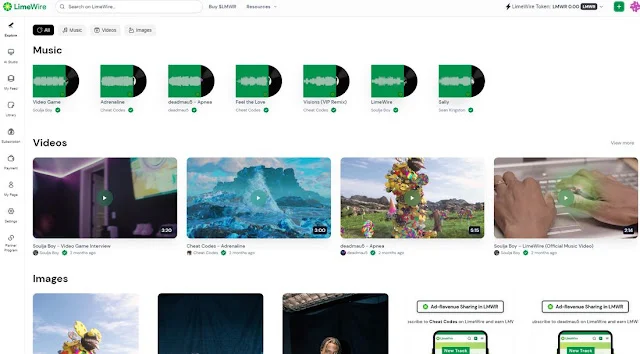
Furthermore, the platform has successfully attracted a range of high-profile users, including musicians such as Deadmau5, Soulja Boy, and Sean Kingston. The participation of these figures indicates a potential shift in how artists engage with fans, moving away from centralized streaming services toward direct, asset-based fan communities. By allowing fans to subscribe to exclusive content feeds and own tradeable digital collectibles, LimeWire creates a tighter feedback loop between the creator and the consumer.
Future Outlook and Strategic Expansion
The roadmap for LimeWire suggests a transition from an image-focused utility to a full-service creative suite. The proposed expansion into AI-driven music and video generation is the most anticipated development. Should the platform successfully implement these features, it could significantly challenge existing media creation workflows.
From an economic perspective, the platform’s success will depend on its ability to sustain the value of the LMWR token and the continued interest in the NFT marketplace. As the generative AI landscape becomes increasingly crowded with competitors—such as Adobe Firefly, Midjourney, and Canva’s AI suite—LimeWire’s primary differentiator will remain its unique fusion of social networking, blockchain-based ownership, and revenue-sharing.
In summary, the modern LimeWire represents a strategic alignment of legacy branding with modern technological disruption. By providing an inclusive, accessible environment for creators to generate, publish, and monetize their work, the platform occupies a unique niche in the current digital economy. As it continues to refine its AI models and expand its media capabilities, the platform stands as a compelling case study in how established technology brands can reinvent themselves to navigate the rapidly shifting requirements of the digital creator era. Whether it can maintain its momentum against larger, more established incumbents will be the defining challenge for its leadership in the coming years.