Apple Unveils the iPhone Duo: The Tech Giant’s Long-Awaited $1,999 Entry Into the Foldable Smartphone Market

Apple Inc. officially shattered years of intense industry speculation and rumor by closing its autumn hardware showcase with a definitive "One more thing" reveal: the introduction of the iPhone Duo, the company’s inaugural foldable smartphone. Entering a marketplace that has seen active consumer adoption from competitors like Samsung and Google for nearly a decade, Apple is positioning its premium foldable device not merely as a novelty, but as a major productivity and design milestone. With a starting price tag of $1,999 for the base 256GB model, the iPhone Duo directly challenges the high-end tier established by rival tablet-style foldables, aligning closely with contemporary pricing structures while attempting to redefine hardware expectations through advanced material science and customized software integration.
A Decade of Rumors Culminates in a Passport-Shaped Form Factor
The journey toward Apple’s first foldable device has been tracked by analysts and technology enthusiasts for years, characterized by cautious development cycles, rigorous prototype testing, and persistent industry leaks. While competitors rushed first-generation foldables to market as early as 2019, Apple deliberately delayed its entry to solve structural hurdles such as display creases, mechanical hinge degradation, and suboptimal aspect ratios.
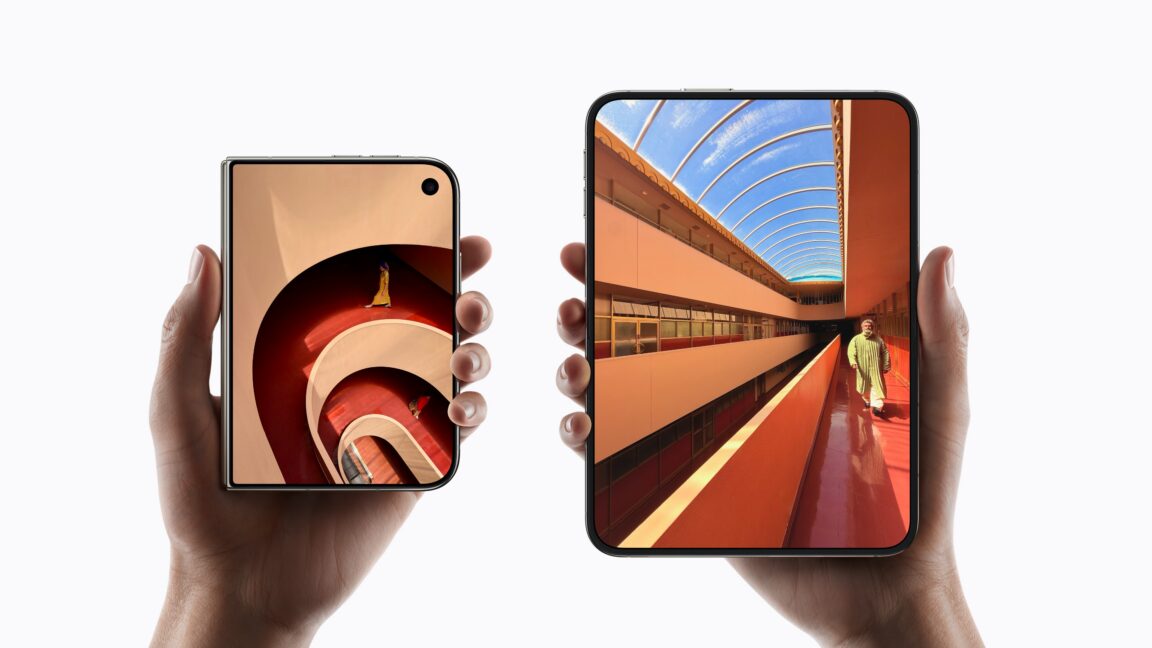
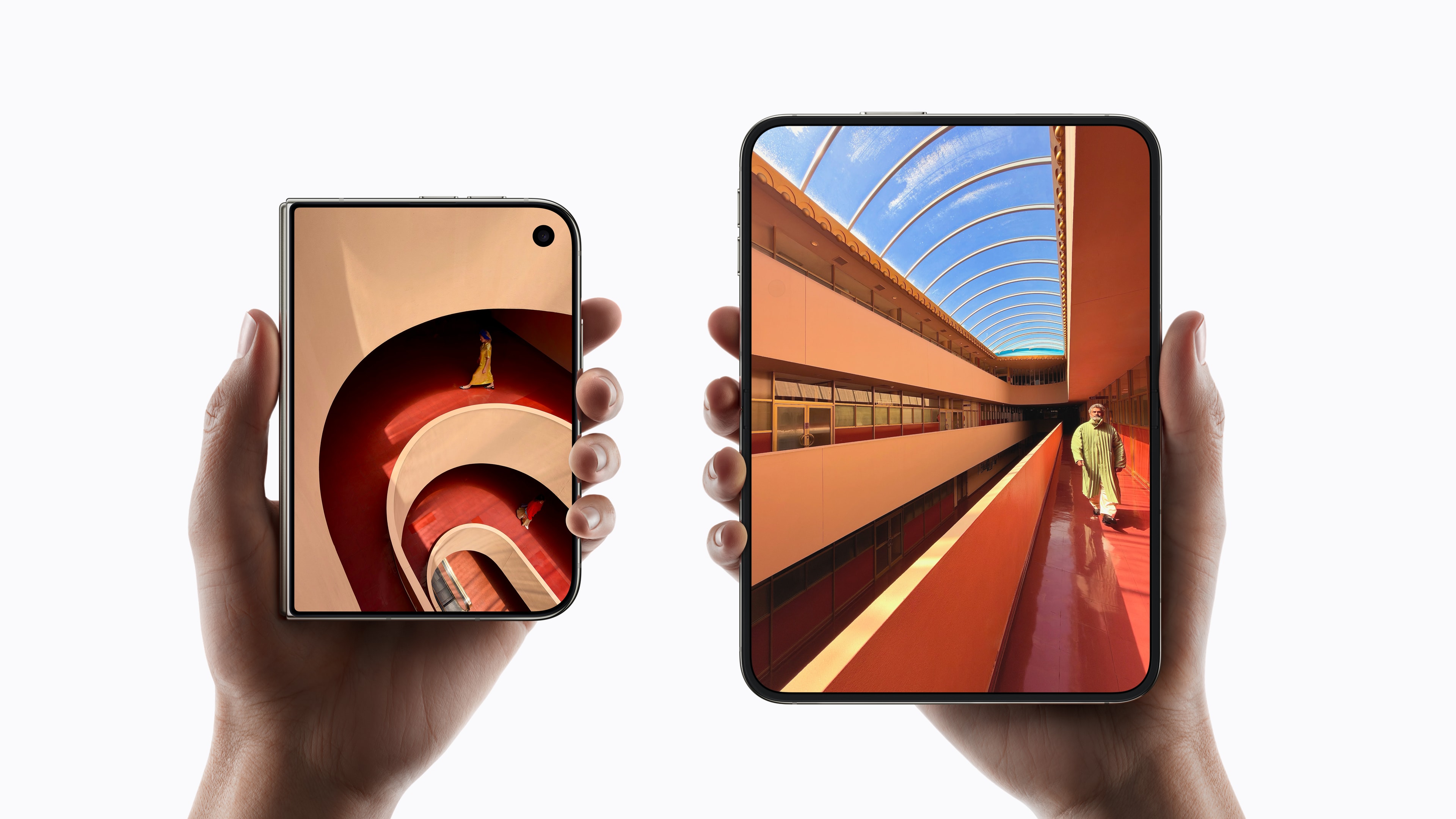
Unlike early foldable models that unfold into awkward, near-square shapes—which frequently stretch legacy mobile applications and force severe letterboxing on video content—the iPhone Duo adopts a distinct 1:1.4 aspect ratio when both opened and closed. Apple executives explicitly criticized square-aspect foldables during the product unveiling, emphasizing that the Duo’s passport-like physical dimensions provide a much more natural dual-portrait application experience.
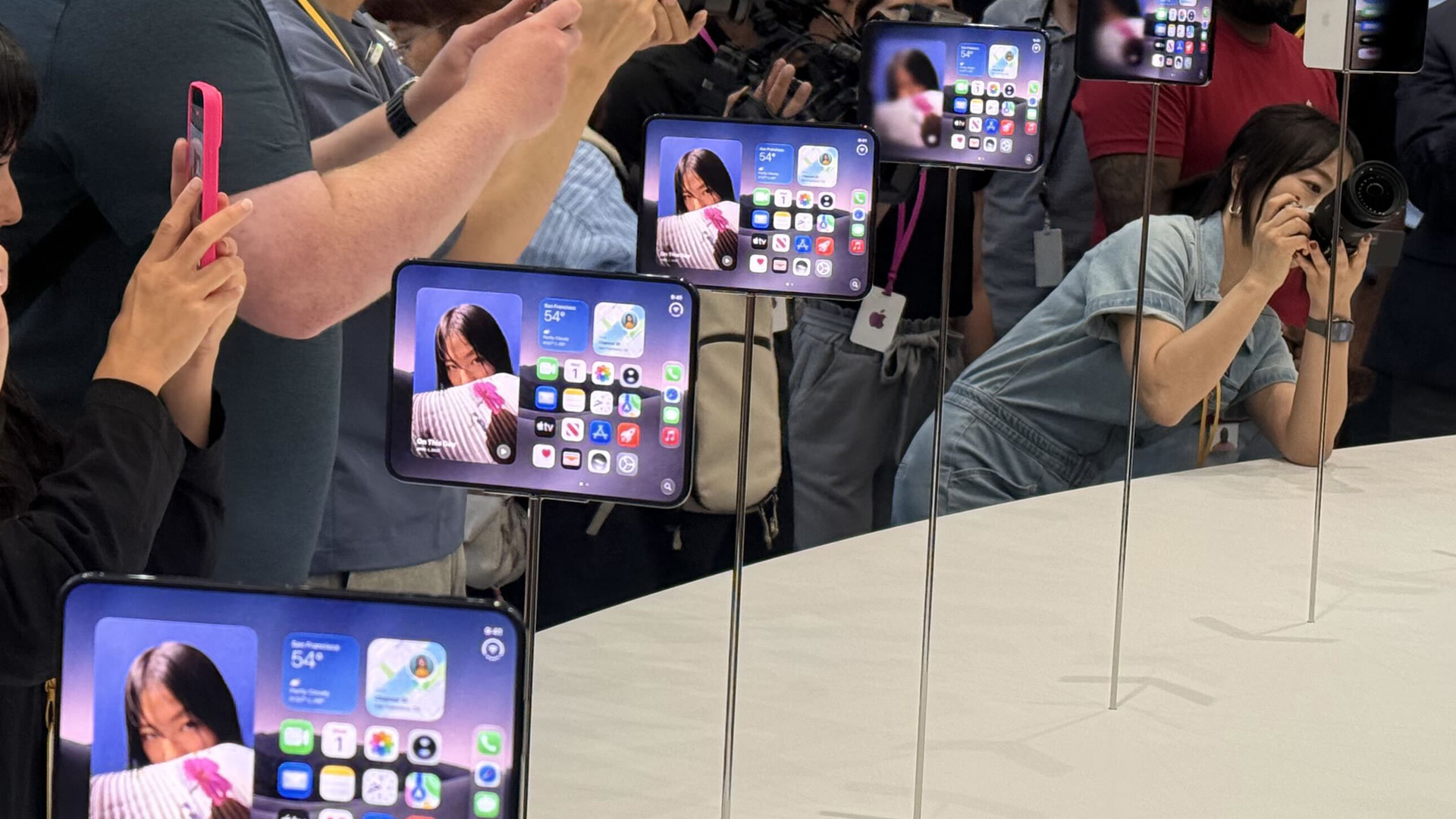
When closed, the device features a 5.4-inch outer display engineered with a unique asymmetrical aesthetic, incorporating sharp corners along the spine and rounded edges on the outer perimeter to visually signal a welcoming user prompt. Upon opening, users are greeted by a sprawling 7.6-inch Super Retina XDR foldable internal panel, offering a viewing area slightly wider than a traditional 4:3 computer monitor.
Advanced Materials and Engineering: Eliminating the Crease
One of the primary engineering triumphs highlighted during the device debut is Apple’s multi-layered approach to structural durability. Addressing the historical Achilles’ heel of foldable screens—the visible and tactile crease that forms down the center of the display over repeated folding cycles—Apple deployed a sophisticated composite architecture.
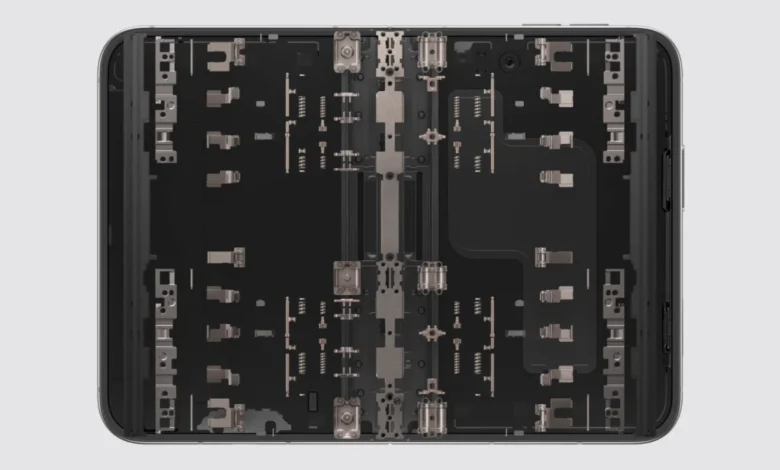
The iPhone Duo’s inner display integrates multiple layers of flexible glass anchored to a precision-milled titanium baseplate. The uppermost protective membrane is constructed from a custom, high-stiffness polymer finished with a specialized nano-texture treatment, which significantly reduces glare and enhances optical legibility under bright ambient lighting conditions. According to engineering disclosures from the Cupertino-based company, this multi-tiered lamination process virtually eliminates the central crease while maintaining long-term structural integrity against degradation over thousands of open-close cycles.
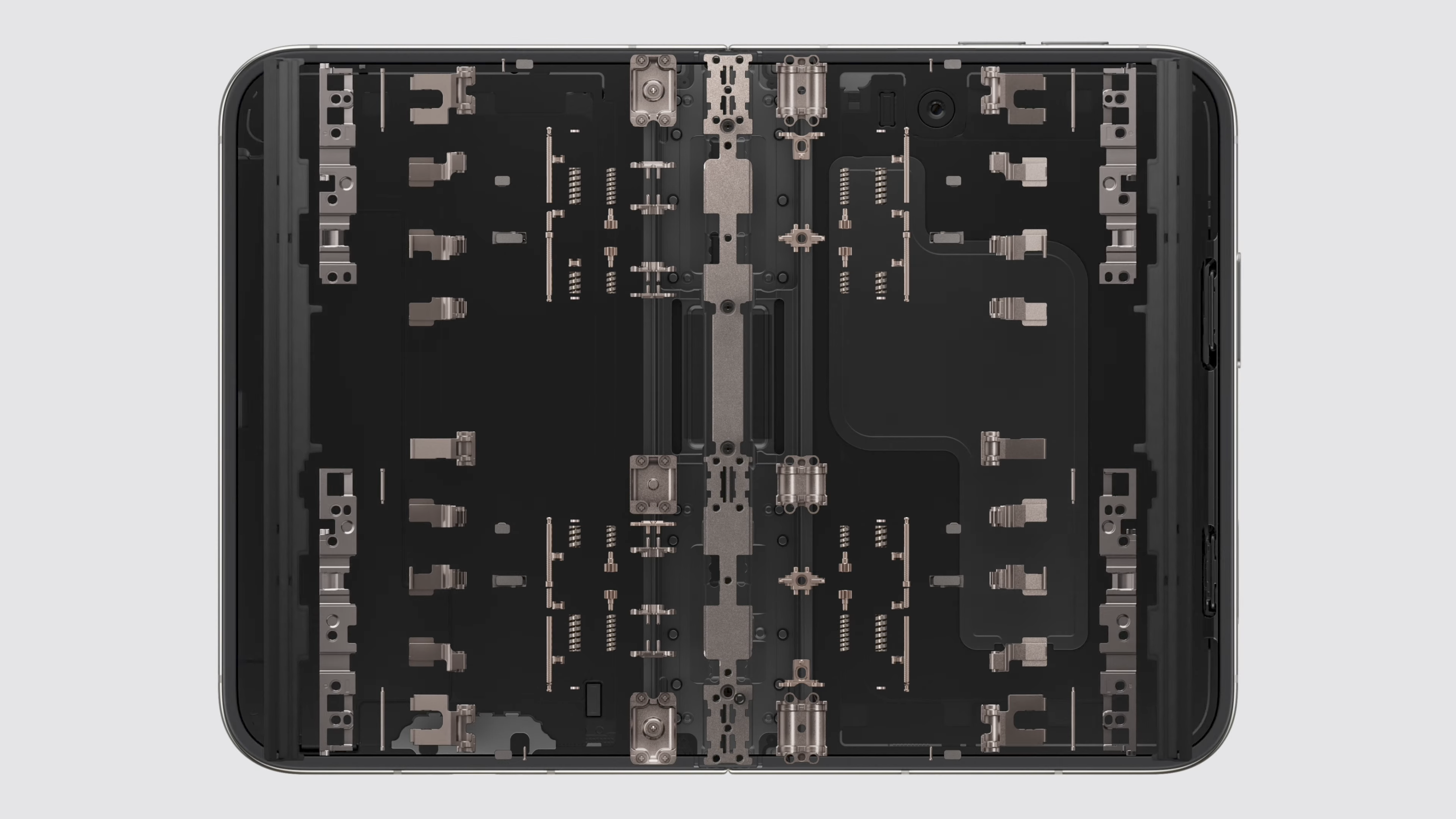
Housed within a robust titanium chassis reinforced with integrated internal ceramic fibers, the phone is designed to withstand the physical stresses of daily folding without succumbing to structural fatigue. Furthermore, engineers completely redesigned the internal antenna arrays, embedding them directly into the frame to mitigate signal disruption risks commonly associated with metallic foldable housings. The titanium hinge assembly itself comprises over 100 individual micro-components, utilizing custom variable torque engineering to ensure a smooth, balanced resistance profile throughout its movement range, complemented by precise alignment magnets that snap the device securely shut.
Performance, Battery Optimization, and Camera Constraints
Under the hood, the iPhone Duo is powered by the same cutting-edge A20 Pro system-on-a-chip featured in Apple’s latest traditional flagship smartphones. This processing power drives advanced artificial intelligence routines and demanding multitasking workloads across both displays. Despite powering two substantial screens, Apple promises competitive energy efficiency, rating the internal display for up to 31 hours of continuous video playback, while the outer cover screen extends that capability to 44 hours. Under mixed day-to-day usage scenarios combining both displays, users can anticipate approximately 24 hours of total battery life on a single charge.
To achieve the exceptionally thin profile that Apple proudly marketed—noting it is the thinnest iPhone ever created when opened—certain compromises were required, particularly within the camera hardware suite. In a departure from the advanced variable-aperture optics found on traditional pro-tier iPhones, the Duo relies on a dual-sensor rear camera array. This includes a primary 48-megapixel sensor and a 12-megapixel secondary sensor equipped with a 2x telephoto zoom lens. For self-portraits and video calls, the device features a standard 12-megapixel camera housed in the outer display, supplemented by an advanced under-display camera embedded directly beneath the internal folding panel that remains entirely invisible during media consumption.
Software Reimagined for the Foldable Canvas
Recognizing that hardware dimensions alone do not guarantee a successful user experience, Apple developed a specialized variant of iOS tailored explicitly for dual-screen multitasking. The operating system introduces streamlined workflows for split-screen application management, allowing users to interact with multiple programs simultaneously as a unified productivity environment.
The user interface dynamically adapts to the physical angle of the hinge. For instance, partially bending the device triggers a split-keyboard layout across the lower half of the screen, transforming the lower portion into a tactile input deck while content remains visible above. Additionally, Apple repositioned foundational system elements—such as the home screen application dock and status bar—to the right edge of the screen when unfolded, ensuring optimal thumb reachability while maximizing vertical display space for media consumption and document editing.
Furthermore, the iPhone Duo bridges historical gaps in foldable accessories by officially reintroducing support for both the under-display camera and full Apple Pencil compatibility across both the inner and outer screens, features that competing manufacturers largely abandoned in their subsequent product iterations. The device also carries a formal IP68 rating for water and dust resistance, offering peace of mind against environmental hazards.
Market Positioning, Pricing Strategy, and Broader Industry Implications
Priced at $1,999 for the introductory 256GB configuration, the iPhone Duo enters the market alongside established high-end offerings from major competitors. The baseline pricing matches or undercuts select ultra-tier foldables, though costs escalate significantly for higher storage capacities, with the 512GB model retailing at $2,199 and the maximum 2TB variant capping out at $3,199.
Industry analysts note that while the steep price point will likely deter mainstream upgrades from standard smartphone users, the parity with existing foldable pricing models positions Apple favorably to capture market share from dedicated enthusiasts currently utilizing competing platforms. By establishing a familiar pricing baseline within the ultra-premium foldable segment, Apple signals its intent to compete aggressively in a category it previously watched from the sidelines.

Timeline and Availability
Consumers eager to purchase Apple’s debut foldable will have a short wait before units arrive in retail channels. Pre-orders for the iPhone Duo are scheduled to officially commence on October 16, with retail availability and initial customer shipments slated to begin globally on October 23. As production volumes ramp up ahead of the launch, market watchers will closely monitor supply chain yields and consumer demand to determine whether the iPhone Duo can successfully catalyze a broader mainstream shift toward foldable mobile computing.