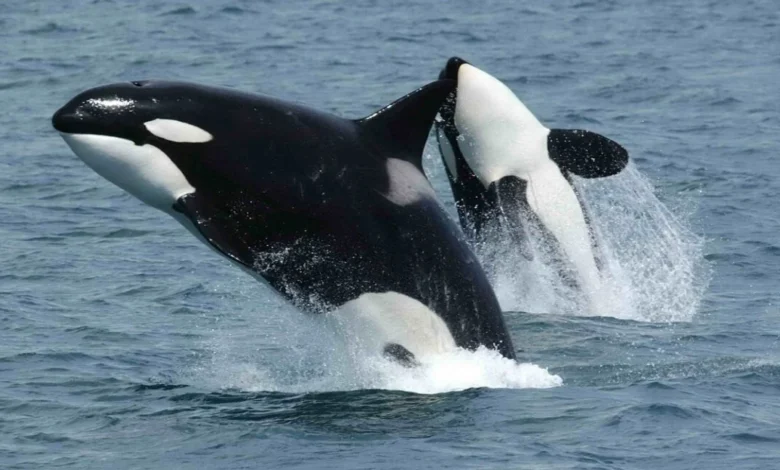
Recent observations in the Gulf of California have unveiled a sophisticated and previously undocumented hunting technique employed by orcas, where these apex predators cooperatively ram sunfish with such immense force that the prey disintegrates into fragments. This groundbreaking behavior, documented by a tourism operator in July 2024 and subsequently analyzed in a paper published in the journal Frontiers in Ethology in July 2026, adds another complex layer to the understanding of orca intelligence, social learning, and predatory strategies. The discovery emerges amidst a backdrop of increasing scientific interest in the culturally transmitted behaviors of orcas, including the widely reported instances of them ramming and occasionally sinking boats in other parts of the world. While orcas are renowned for their diverse and powerful hunting methods, this "ram-to-fragment" approach represents a significant departure from their typical predatory tactics, suggesting either an advanced feeding mechanism for a specific demographic within the pod or a form of social play.
The "Ram-to-Fragment" Phenomenon: A New Predatory Blueprint
The core of this new observation lies in the coordinated application of brute force. Unlike typical orca hunting, which often involves strategic slashing or biting to incapacitate and dismember prey, the "ram-to-fragment" strategy involves multiple orcas collaborating to deliver a high-impact strike capable of pulverizing a large sunfish. Sunfish, also known as Mola mola, are the heaviest known bony fish in the world, often reaching over 2,000 pounds and measuring up to 10 feet. Their immense size and unique, somewhat clumsy swimming style make them a distinct prey item. Historically, when hunting such large, slow-moving prey, orcas have been observed using a three-pronged approach: first, targeting the pectoral fins to immobilize; second, slashing across the body to remove viscera; and third, using their powerful beaks to access remaining tissue. The "ram-to-fragment" method appears to bypass these sequential steps, opting for a single, devastating blow.
Dr. Kathryn Ayres, a co-author of the study from Beneath The Waves, a non-profit organization dedicated to promoting ocean health, articulated the scientific community’s initial hypotheses regarding this novel behavior. "We think this may help younger orcas feed more easily, or it could also just be for fun," Ayres stated in a press release coinciding with the paper’s publication. She further elaborated, acknowledging a well-established aspect of orca behavior: "Orcas are known for playing with their food." This dual interpretation—functional efficiency for feeding juveniles versus social play—highlights the multifaceted nature of orca interactions with their environment and prey. The sheer force required to fragment a sunfish suggests a level of power and coordination that underscores the orca’s position at the apex of marine ecosystems.
Chronology of a Groundbreaking Observation
The seminal instance of this "ram-to-fragment" behavior occurred in July 2024 off the picturesque coast of San Jose del Cabo, situated in Mexico’s Baja California Sur. A local tourism operator, whose keen observation skills proved invaluable, was initially filming a pod of orcas—comprising three adult females, one adult male, and one juvenile—engaged in hunting and consuming a spine-tail devil ray, a common prey item in the region. Immediately following this event, the operator documented the continuation of the pod’s activities, leading to the remarkable sighting.
The sequence of events unfolded as follows: One of the adult female orcas was observed holding the carcass of a sunfish in her mouth. The sunfish already bore a significant lateral wound, suggesting that the initial stages of predation, likely involving the removal of viscera, had already taken place. What followed next was unprecedented: the adult male orca positioned himself and then charged directly at the held sunfish carcass. Crucially, the female released the carcass just moments before the male’s impact. The collision was described as producing an "audible sound," a testament to the force involved. Upon impact, the sunfish carcass fragmented dramatically, dispersing small bits of flesh into the surrounding water. The juvenile orca, present throughout the entire interaction, then proceeded to consume these smaller, more manageable fragments, while the adult orcas fed on the larger remains of the split-open body. This intricate coordination, particularly the precise release of the prey by the female and the subsequent opportunistic feeding by the juvenile, strongly supports the hypothesis of either a highly refined cooperative hunting strategy designed to facilitate feeding for younger, less experienced pod members, or a complex form of social play that simultaneously serves as a practical training exercise.
Broader Context: Orca Cultural Learning and Complex Behaviors
The discovery of the "ram-to-fragment" technique must be viewed within the broader framework of orca cultural learning and their documented capacity for transmitting complex behaviors across generations. Orcas (Orcinus orca), often referred to as killer whales, are not whales but the largest members of the dolphin family. They are globally distributed, highly social, and possess one of the largest and most complex brains in the animal kingdom, second only to humans in encephalization quotient (brain-to-body mass ratio). This cognitive capacity underpins their sophisticated communication, social structures, and, critically, their ability to develop and transmit distinct cultural practices.
The Phenomenon of Boat Interactions: In recent years, particular attention has been drawn to a series of highly publicized incidents involving orcas, primarily in the waters off the Iberian Peninsula (Gibraltar Strait and Portuguese coast), ramming and sometimes damaging or sinking sailing vessels. These interactions, which began around 2020, have escalated in frequency and intensity, causing significant concern among mariners and scientists alike. The leading scientific hypothesis for these boat-ramming events points towards a form of culturally learned behavior, potentially initiated by a specific female orca nicknamed "Gladis" and subsequently adopted by other members of her pod and even neighboring populations. The motivations behind these boat interactions remain debated, ranging from playful curiosity, a response to a traumatic encounter with a boat (e.g., collision or entanglement), or even a form of territorial display. While distinct from predatory behavior, the boat interactions share a common thread with the sunfish ramming: the deliberate application of force and the propagation of a novel behavior through social learning within an orca community. Both illustrate the remarkable adaptability and cultural plasticity of these marine mammals.
Diverse Cooperative Hunting Strategies: Orcas are renowned for their astonishing array of cooperative hunting strategies, each tailored to specific prey and environmental conditions. These strategies showcase their intelligence, coordination, and ability to innovate:
- Wave-Washing Penguins/Seals: In the Antarctic, specific orca ecotypes (a population or race within a species that is adapted to a particular habitat) have perfected the art of creating powerful waves to wash seals or penguins off ice floes. This requires precise timing, coordination among multiple individuals, and an understanding of physics.
- Herding Mobile Rays: Orcas have been observed cooperatively herding schools of mobile rays, strategically encircling them and driving them into a confined space before striking.
- Blocking Escape Paths: When hunting agile prey like white sharks, orcas have demonstrated the ability to anticipate and block escape paths, effectively cornering their quarry.
- Ramming Whale Sharks: Similar to the sunfish ramming, but often with different outcomes, orcas have been documented ramming whale sharks. These incidents are sometimes predatory, sometimes appear to be more akin to harassment or play, with one orca holding the large fish steady while another delivers a blow. The "ram-to-fragment" sunfish behavior might be seen as an evolutionary refinement of such forceful interactions, specifically optimized for prey consumption.
- "Carousel Feeding" for Herring: In Norway, orcas employ a technique called "carousel feeding," where they work together to herd vast schools of herring into a tight "bait ball" near the surface, stunning them with tail slaps before feeding.
These examples underscore that orca behavior is not static but dynamic, evolving through social learning and adaptation. The "ram-to-fragment" method against sunfish is a testament to this ongoing behavioral innovation.
The Mola Mola (Sunfish): A Peculiar Prey
To fully appreciate the "ram-to-fragment" strategy, it is helpful to understand the target: the Mola mola, or ocean sunfish. These bizarre-looking creatures are unmistakable, characterized by their flattened, disc-like bodies, lack of a caudal fin (tail), and perpetually open, pouting mouths. They can grow to enormous sizes, with the largest specimen ever recorded weighing over 5,000 pounds. Despite their bulk, sunfish are generally slow-moving, often basking near the surface, which makes them relatively accessible prey. Their diet primarily consists of jellyfish, salps, and small crustaceans.
While their size offers some protection, sunfish are not particularly agile or aggressive. Their thick, leathery skin, while tough, is evidently not impervious to the concentrated force of multiple orcas. The "ram-to-fragment" technique, therefore, could be an adaptive response to efficiently process such a large, yet relatively defenseless, target, particularly for a pod seeking to maximize caloric intake for all its members, including juveniles. The fragmentation allows for easier consumption of smaller, more manageable pieces, especially for younger orcas whose jaws and teeth may not be as developed or strong as those of adults.
Implications for Orca Research and Conservation
The discovery of the "ram-to-fragment" behavior carries significant implications for marine biology, ethology, and conservation efforts:
Advancing Understanding of Orca Cognition: This observation further solidifies the view of orcas as highly intelligent, culturally driven animals. It challenges previous assumptions about their predatory limits and demonstrates their capacity for strategic innovation in hunting. Researchers will now be keen to investigate how widespread this behavior is, whether it’s specific to certain populations or ecotypes, and what environmental factors might have led to its development. The intricate coordination observed in the San Jose del Cabo incident suggests advanced communication and planning within the pod, pushing the boundaries of what is understood about non-human animal cognition.
Ecological Role and Ecosystem Dynamics: As apex predators, orcas play a crucial role in regulating marine ecosystems. A new hunting strategy, especially one so effective against a large prey item like the sunfish, could subtly alter local food webs and population dynamics. While sunfish are not currently endangered, understanding their predation rates and methods is vital for comprehensive ecosystem management.
The Role of Citizen Science and Tourism: The initial filming by a tourism operator underscores the invaluable role that citizen science and responsible wildlife tourism can play in scientific discovery. With more eyes on the ocean, especially in biodiverse hotspots like the Gulf of California, there is a greater chance of documenting novel behaviors. This highlights the need for continued collaboration between the scientific community and those who spend significant time observing wildlife.
Conservation Challenges: While not directly a conservation crisis, the increasing complexity of human-orca interactions—from boat ramming to observing highly sophisticated hunting—necessitates careful consideration in marine conservation strategies. Understanding these behaviors helps inform guidelines for responsible wildlife viewing, mitigate potential conflicts, and ensure the long-term health of orca populations. The Gulf of California, a region rich in marine biodiversity, is particularly vulnerable to human impacts, and understanding its apex predators is key to its protection.
Scientific Community Reactions and Future Outlook
The publication of the "ram-to-fragment" paper has been met with considerable excitement within the marine scientific community. Experts are hailing it as a significant contribution to ethology, underscoring the ongoing surprises that the natural world holds. While Dr. Ayres and her colleagues at Beneath The Waves have provided compelling initial hypotheses, much remains to be explored.
Future research will likely focus on:
- Observational Studies: Dedicated, long-term observational studies in the Gulf of California and other sunfish-rich areas to determine the prevalence, variations, and specific conditions under which this behavior occurs.
- Acoustic Analysis: Analyzing the vocalizations and communication patterns of orcas during these events to decipher the level of coordination and signaling involved.
- Energetic Cost-Benefit Analysis: Quantifying the energetic expenditure versus the caloric reward of the "ram-to-fragment" strategy compared to other hunting methods.
- Genetic and Population Studies: Investigating if this behavior is restricted to specific genetic lines or populations, which would further support the cultural transmission hypothesis.
- Juvenile Development: More detailed observation of how juveniles learn and participate in such complex hunting strategies, providing insights into their developmental stages.
The "ram-to-fragment" phenomenon is a vivid reminder that the ocean’s depths still hold countless secrets. It reinforces the image of the orca not merely as a powerful predator, but as a highly intelligent, culturally rich species continuously adapting, innovating, and evolving its relationship with its environment and its prey, presenting an ongoing challenge and inspiration to scientists worldwide.