Microsoft Extends Historic Backward Compatibility Initiative to PCs, Bringing Original Xbox Titles to Windows for the First Time

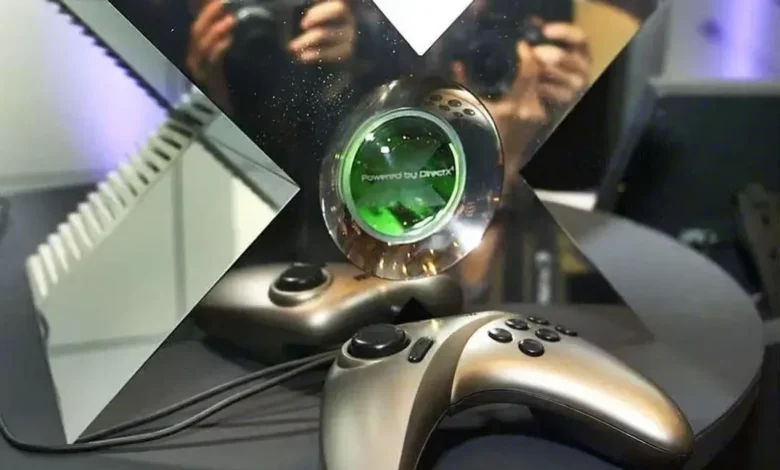
In a significant expansion of its long-standing commitment to game preservation and player access, Microsoft has officially launched "Xbox Backward Compatibility on PC," a groundbreaking program that makes select original Xbox titles playable and purchasable on Windows personal computers. This move marks a pivotal moment in the company’s strategy, extending its celebrated backward compatibility efforts beyond console ecosystems and onto the expansive PC gaming platform, further unifying the Xbox and Windows gaming experiences. The initiative, which has been a cornerstone of Microsoft’s console strategy for nearly two decades, now empowers PC users to delve into a curated selection of classics from the original Xbox era, enhancing the value proposition for Xbox Game Pass subscribers and digital license holders alike.
A Legacy of Compatibility: Microsoft’s Enduring Commitment
Microsoft’s dedication to backward compatibility is a distinguishing feature in the console wars, differentiating its approach from competitors and fostering a unique bond with its player base. This philosophy traces its roots back to the Xbox 360, which, post-launch, introduced limited backward compatibility with a selection of original Xbox titles via software emulation. While initially a challenging endeavor with varying degrees of success and a relatively small library, it laid the groundwork for a more ambitious future.
The true revitalization of Microsoft’s backward compatibility program commenced with the Xbox One. At E3 2015, the announcement that the Xbox One would natively support a growing library of Xbox 360 games was met with widespread acclaim, positioning the console as a gateway to an expansive past library rather than a mere successor. This program steadily grew, eventually encompassing hundreds of Xbox 360 titles, accessible to players who owned physical discs or digital licenses. The engineering challenge involved creating an emulator that could run Xbox 360 code on the Xbox One’s x86 architecture, a task many deemed impossible without significant performance compromises. Microsoft’s team, however, delivered a solution that not only ran games but often enhanced their performance.
Building on this success, Microsoft further expanded the initiative in 2017 by introducing original Xbox games to the Xbox One’s backward compatibility library. This was a more complex undertaking, given the architectural differences between the original Xbox (based on a heavily customized Intel Pentium III processor and an Nvidia GPU) and the Xbox One. The introduction of these titles, including fan favorites like Crimson Skies: High Road to Revenge and Star Wars: Knights of the Old Republic, solidified Microsoft’s reputation as a champion of game preservation.
With the launch of the Xbox Series X and Series S consoles in 2020, backward compatibility reached its zenith. These next-generation machines were designed from the ground up to support four generations of Xbox games – original Xbox, Xbox 360, Xbox One, and Series X|S native titles. Not only did they ensure compatibility, but they also introduced significant enhancements such as FPS Boost, which doubled or even quadrupled the frame rates of select older titles, Auto HDR, which added high dynamic range lighting to games that never originally supported it, and vastly improved loading times due to the consoles’ SSDs. This comprehensive approach positioned the Xbox Series X|S not just as new consoles, but as ultimate historical archives for the Xbox gaming experience. The current expansion to PC represents the logical next step in this long-term vision, pushing the boundaries of accessibility even further.
"Xbox Backward Compatibility on PC" Unveiled
The new "Xbox Backward Compatibility on PC" program officially commenced on July 22, 2026, marking a pivotal moment for PC gamers and digital preservationists. This initiative directly ports the sophisticated emulation technology developed for the Xbox Series X|S consoles to Windows PCs, allowing for an authentic yet enhanced experience of these classic titles. The initial launch phase targets a select group of original Xbox games, carefully chosen for their historical significance, technical feasibility, and enduring appeal among the Xbox community.
Players can acquire these inaugural titles directly through the Microsoft Store on Windows, with each game priced at $10. However, in a move that significantly enhances the value proposition of Microsoft’s subscription service, Xbox Game Pass Ultimate subscribers gain instant access to these titles without any additional cost. Furthermore, PC users who already possess digital licenses for these specific games on their Xbox consoles will also find them automatically unlocked and available for download on their Windows devices, reinforcing Microsoft’s commitment to digital ownership and cross-platform access.
It is important to note that the program, in its current iteration, does not support physical original Xbox game discs when inserted into a PC drive. This decision aligns with the modern digital distribution model and the technical complexities involved in integrating legacy disc drives and DRM systems with contemporary PC hardware and operating systems. Instead, the focus is squarely on digital entitlements, streamlining access and ensuring a consistent user experience across the Xbox and PC ecosystems. This strategic emphasis on digital ownership underscores Microsoft’s broader vision of a unified gaming library that transcends specific hardware platforms.
The Inaugural Collection: A Look at the Launch Titles
The initial wave of games released under the "Xbox Backward Compatibility on PC" program comprises four distinct titles from the original Xbox era, each offering a glimpse into the diverse gaming landscape of the early 2000s:
-
BLiNX: The Time Sweeper: Developed by Artoon and released in 2002, BLiNX was an ambitious 3D platformer that introduced unique time-manipulation mechanics. Players control Blinx, a cat janitor tasked with sweeping up time anomalies. The game allowed players to record, fast-forward, rewind, slow down, or pause time to solve puzzles and defeat enemies. While critically polarizing at launch, it garnered a dedicated cult following for its innovative concepts and charming character design. Its inclusion speaks to Microsoft’s willingness to support titles that, while not universally acclaimed, pushed creative boundaries.
-
Conker: Live & Reloaded: A 2005 remake of the Nintendo 64 cult classic Conker’s Bad Fur Day, Live & Reloaded brought the notoriously adult-oriented platformer to the Xbox with significantly updated graphics and a new multiplayer mode. Developed by Rare, the game is renowned for its irreverent humor, crude language, and parody of various film genres. Its inclusion is significant, as it represents a title from a beloved developer that showcases the original Xbox’s graphical capabilities and offers a unique, mature gaming experience not commonly found in platformers. The PC version allows a new generation of players to experience this controversial masterpiece.
-
Crimson Skies: High Road to Revenge: Released in 2003 by FASA Studio, Crimson Skies is an acclaimed aerial combat game set in an alternate 1930s where giant airships rule the skies and pirates dominate the trade routes. Praised for its engaging story, robust single-player campaign, and innovative multiplayer, it became a standout title on the original Xbox. Its fast-paced dogfighting, customizable aircraft, and distinctive art style made it a critical darling. Its presence in the launch lineup highlights a genre that has seen less prominence in recent years, offering a nostalgic thrill for fans of arcade-style flight combat.
-
Fuzion Frenzy: A launch title for the original Xbox in 2001, Fuzion Frenzy is a vibrant party game designed to showcase the console’s multiplayer capabilities. Developed by Blitz Games, it features a collection of mini-games that combine elements of action, strategy, and pure luck. While perhaps not as deep as some other titles, it was a staple for local multiplayer gatherings and served as a demonstration of the Xbox’s power for social gaming. Its inclusion in the PC program aims to tap into the enduring appeal of party games and offer a slice of early Xbox nostalgia for communal play.
The selection of these four titles indicates a strategy to balance critical acclaim, cult status, and genre diversity, providing a foundational library that appeals to different segments of the PC gaming community, from those seeking challenging platformers to those desiring social party experiences or high-flying action.
Enhanced Visuals, Familiar Framework: Technical Specifications and Performance
The "Xbox Backward Compatibility on PC" program leverages modern PC hardware to introduce significant graphical enhancements while largely preserving the original gameplay experience. Players can expect several key improvements over the original console versions:
- Vsync Support: Vertical Synchronization (Vsync) helps eliminate screen tearing, a visual artifact where multiple frames are displayed on the screen simultaneously. This ensures a smoother, more consistent visual output, particularly on high-refresh-rate monitors.
- Anisotropic Filtering (AF): This texture filtering technique significantly improves the visual quality of textures that are viewed at oblique angles, making distant textures appear much clearer and sharper. The implementation promises to enhance environmental detail and realism.
- Enhanced Anti-Aliasing (AA): Anti-aliasing techniques reduce the appearance of "jaggies" – jagged lines or stair-stepping effects on the edges of polygons. The PC version offers enhanced anti-aliasing, leading to a much smoother and cleaner visual presentation, especially noticeable on higher resolution displays.
- Resolution Scaling: The most impactful visual upgrade is the ability to scale the original Standard Definition (SD) signal up to 4x its native resolution. This means games originally rendered at resolutions like 640×480 can now be output at up to 2560×1920 pixels. This dramatic increase in pixel density results in a far sharper image, bringing these classic titles closer to modern graphical fidelity standards without altering the original art assets.
Despite these enhancements, Microsoft has consciously decided to maintain certain aspects of the original games to preserve their artistic intent and gameplay integrity. This includes locking the games to their original frame rates, which in most cases for original Xbox titles, means 30 frames per second (fps). Similarly, the original 4:3 aspect ratio is preserved, preventing stretching or cropping of the image that could distort the intended visual composition. While some modern players might prefer higher frame rates or widescreen support, this approach ensures that the core experience remains authentic to its original release.
Microsoft has also provided clear guidance on system requirements, aiming for broad accessibility while recommending hardware for optimal performance. The minimum specification targets an 11-year-old NVIDIA GeForce GTX 950 graphics card, indicating that a significant portion of the PC gaming demographic, including those with older systems, should be able to run these titles. For the "best performance," however, Microsoft recommends a 2017-era NVIDIA GeForce GTX 1070 Ti with 8GB of VRAM. This suggests that while the games are old, the emulation layer and graphical enhancements do require a reasonable amount of processing power to deliver the intended experience smoothly.
Early testing conducted by Digital Foundry, a reputable technology analysis group known for its in-depth game performance reviews, largely validated Microsoft’s claims regarding the PC experience. Testers reported that playing these original Xbox titles on PC felt "akin to playing the same games on an Xbox Series X," praising the general stability and fidelity. However, the initial batch of titles was not without its minor imperfections. Digital Foundry noted "weak anisotropic filtering" in some instances, suggesting that while the feature is present, its implementation might not be as robust as in native PC titles. Furthermore, "some frame timing issues" were observed, leading to "jerky camera motion" in specific scenarios. A "handful of visual bugs" were also reported across the initial wave of titles, indicating that while the program is highly functional, it is likely to undergo further refinement and patching in future updates. These minor caveats are not uncommon for emulation-based systems and are often addressed through subsequent software revisions.
The Strategic Play: Microsoft’s Broader Vision
The introduction of Xbox Backward Compatibility on PC is more than just a nostalgic gesture; it is a calculated strategic move with multi-faceted implications for Microsoft, the broader PC gaming market, and the future of game preservation.
For Microsoft, this initiative further solidifies the Xbox ecosystem’s position as a platform-agnostic gaming destination. By extending its proprietary game library to Windows PCs, Microsoft reinforces its "play anywhere" philosophy, breaking down traditional console barriers. This move also significantly enhances the value proposition of Xbox Game Pass Ultimate. Already celebrated for its extensive library of current-generation titles and day-one releases, the addition of a growing archive of classic console games makes Game Pass an even more compelling subscription service, potentially attracting new subscribers from the PC-only gaming community. It positions Game Pass not just as a service for new games, but as a comprehensive historical archive of Xbox’s past.
For PC gamers, this program unlocks a previously inaccessible library of console exclusives, many of which have never officially been available outside of Xbox hardware. While the PC community has long relied on unofficial emulation for many older console titles, Microsoft’s official solution offers several advantages: legality, guaranteed performance (within stated specs), and potential for further, officially supported enhancements. This could lead to a surge of interest in titles that were once niche console favorites, exposing them to a wider audience and potentially inspiring new game development in similar genres. It also provides a legitimate alternative for players who might have struggled with the complexities or legal ambiguities of unofficial emulation.
From a game preservation standpoint, this initiative is invaluable. Many original Xbox titles are becoming increasingly difficult to play on their native hardware due to aging consoles and declining disc drives. By providing an official, digitally distributed, and hardware-agnostic method of playing these games, Microsoft ensures that a significant part of gaming history remains accessible for future generations. This commitment aligns with broader industry efforts to catalog and preserve digital media, recognizing video games as a vital cultural artifact.
Expert Perspectives and Industry Reactions
Industry analysts have largely lauded Microsoft’s latest move as a shrewd strategic play. "This is a natural evolution of Microsoft’s long-term strategy to converge Xbox and PC gaming," stated Dr. Amelia Chen, a leading analyst in the digital entertainment sector. "By making these beloved classics available on Windows, Microsoft isn’t just selling old games; they’re selling the continued relevance of the Xbox brand and, more importantly, the enduring value of Game Pass. It’s a smart way to attract PC-centric gamers into their ecosystem without requiring them to purchase a console." Dr. Chen also highlighted the potential for future library expansion, noting, "The initial selection is conservative, but it tests the waters. If successful, we could see a flood of original Xbox and even Xbox 360 titles making their way to PC, creating a digital museum accessible to millions."
A Microsoft spokesperson, speaking on background, emphasized the company’s philosophy. "Our commitment has always been about putting players first and preserving the rich history of Xbox gaming. The ‘Xbox Backward Compatibility on PC’ program is a testament to that vision, ensuring that cherished memories and groundbreaking titles from the original Xbox era can be experienced by a new generation of players on their preferred platform. This is another step in our journey to make gaming more accessible and more enjoyable for everyone, everywhere." The spokesperson also hinted at ongoing efforts to address the minor technical issues noted in early reviews, reiterating Microsoft’s dedication to quality and player satisfaction.
Looking Ahead: The Future of Xbox Classics on PC
While the initial launch is modest with four titles, the "Xbox Backward Compatibility on PC" program opens the door to a vast library of potential future releases. The original Xbox boasted over 700 games in its lifetime, and the Xbox 360 over 2,000. The criteria for selecting future titles will likely involve a complex interplay of technical feasibility, licensing agreements with original publishers and developers, and fan demand.
Titles like Halo: Combat Evolved, Star Wars: Knights of the Old Republic, The Elder Scrolls III: Morrowind, and Grand Theft Auto III (many of which had PC versions, but the Xbox versions often had unique features or enhancements) are prominent examples of games that could generate significant interest. However, licensing issues, particularly for games with complex music rights or those from now-defunct studios, will pose substantial hurdles. Technically, some games might be more challenging to emulate perfectly due to unique hardware exploits or highly optimized code for the original Xbox’s specific architecture.
Nevertheless, the long-term implications are clear. Microsoft is building a unified gaming ecosystem where the lines between console and PC blur further. This strategy not only enhances consumer choice but also fortifies Microsoft’s position in the highly competitive gaming market, especially as subscription services continue to grow in prominence. The "Xbox Backward Compatibility on PC" program is more than just a feature; it’s a strategic pillar reinforcing Microsoft’s vision of an accessible, expansive, and enduring gaming legacy. As the program evolves, it promises to unlock countless hours of nostalgic joy and historical exploration for a global audience of PC gamers.