Nothing Drops First Over-Ear Headphones to Record Low Price in Major Black Friday and Cyber Week Event

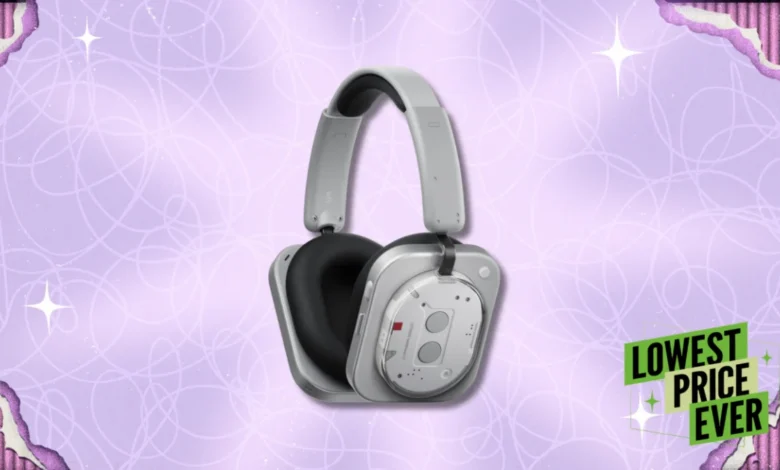
The consumer electronics market has experienced a significant shake-up during the annual Black Friday and Cyber Week shopping period, highlighted by aggressive markdowns on newly introduced audio hardware. Most notably, Nothing, the London-based consumer technology company known for its distinctive transparent aesthetic and minimalist industrial design, has slashed the price of its premier over-ear audio device. The Nothing Headphone (1), which represents the brand’s first foray into the over-ear headphone category, has received a substantial $130 discount, reducing its retail price from $299 to $169. This reduction marks an all-time low for the device since its commercial rollout.
Concurrently, the manufacturer has applied price cuts to its newer, more accessible sibling, the Headphone (a). Released earlier in the year to generally favorable critical reception—including an "excellent" rating from industry publication PCMag—the Headphone (a) has been discounted from $199 down to $109. These promotions are part of a broader retail landscape where both e-commerce giants and specialized electronics retailers are aggressively discounting high-end audio gear to capture consumer spending during the peak holiday shopping window.
Background Context and Evolution of the Audio Market
The consumer audio sector has long been dominated by legacy conglomerates such as Sony, Bose, Sennheiser, and Apple. However, over the past half-decade, challenger brands have sought to disrupt the status quo by emphasizing unique industrial design, software integration, and aggressive pricing strategies. Nothing, founded by OnePlus co-founder Carl Pei in 2020, entered this crowded market with a clear mandate: to make tech fun again through transparent materials, monochromatic color palettes, and deliberate user-interface choices.
While the company initially gained traction with its smartphone lineup and True Wireless Stereo (TWS) earbuds—such as the Ear (1) and subsequent iterations—the launch of an over-ear headphone represented a strategic maturation. The transition from in-ear monitors to circumaural (over-ear) headphones placed Nothing in direct competition with established flagship models like the Sony WH-1000XM5 and the Bose QuietComfort Ultra.
By pricing the Headphone (1) competitively at $299 upon release, Nothing positioned the product as a stylish alternative for audiophiles and design-conscious consumers alike. However, the high-end headphone market is fiercely competitive, and seasonal promotional events like Black Friday and Cyber Monday have become critical battlegrounds for brands seeking to clear inventory and expand market share among price-sensitive buyers. The drop to $169 positions the Headphone (1) firmly in the mid-range pricing tier, substantially undercutting flagship competitors while offering comparable hardware specifications.
Hardware Specifications and Design Philosophy
In terms of build and engineering, the Nothing Headphone (1) adheres strictly to the company’s signature design language. The device incorporates translucent polycarbonate elements, exposed mechanical screws, and stark geometric detailing that deliberately contrast with the ubiquitous matte-black and neutral gray finishes common in the industry.
Beneath the distinctive exterior, the headphones are equipped with custom-tuned 40mm dynamic drivers designed to deliver a balanced, punchy sonic profile. To ensure modern usability, the hardware features hybrid Active Noise Cancellation (ANC) capable of mitigating ambient low-frequency environmental sounds, such as airplane cabins and HVAC systems. Connectivity options are robust, offering both contemporary USB-C audio transmission and a traditional 3.5mm wired jack, catering to users who prefer analog connections or lossless playback. Furthermore, the device supports high-resolution audio codecs via Sony’s LDAC technology, allowing for higher bitrate streaming over compatible Android devices.
Battery performance is another notable pillar of the hardware specification. The Headphone (1) boasts an endurance rating of up to 35 hours of continuous playback with ANC enabled. When noise cancellation is deactivated, that figure stretches to an impressive 80 hours, placing the device among the longer-lasting options in its class.
Innovative Control Schemes and User Experience

While many contemporary headphones rely entirely on capacitive touch panels or minimalist single-button layouts, Nothing opted for a tactile, hybrid control philosophy for its inaugural over-ear model. The interface centers around three primary physical inputs:
- The Roller: A rotating mechanical volume scroll wheel that provides physical, precise feedback for audio level adjustments.
- The Paddle: A multi-function rocker switch dedicated to track navigation, media playback, and call management.
- A Customizable Action Button: Dedicated to cycling through ANC modes, transparency settings, or toggling specific equalization (EQ) presets.
In addition to these physical controls, the accompanying Nothing X companion app grants users access to granular, multi-band graphic EQ adjustments, spatial audio toggles, and multipoint Bluetooth connectivity. This multi-device pairing capability allows the headphones to maintain simultaneous active connections to multiple source devices, such as a laptop and a smartphone, transitioning seamlessly across both Android and iOS ecosystems.
Critical Reception and Trade-Offs
Despite the praise garnered for its innovative control scheme, striking aesthetics, and aggressive promotional pricing, industry reviews have highlighted certain compromises inherent to the device. Independent evaluations, including comprehensive testing by PCMag, note that while the hardware punches above its weight class in terms of features, the ergonomic design may not appeal to all users. Specifically, the earcups have been described as moderately firm during extended listening sessions, and the headband geometry may present comfort issues for varying head shapes.
Furthermore, while the hybrid ANC performs adequately against steady, low-frequency hums, critics have observed that it struggles to isolate sharper, transient sounds, such as clatter, sharp conversation, or sudden urban noises. Sonically, the default sound profile leans toward an energetic, bass-forward presentation. While casual listeners generally appreciate this tuning, audiophiles seeking a strictly neutral response must invest time in configuring the companion app’s parametric and graphic EQ tools to achieve optimal fidelity.
Chronology of the 2026 Holiday Shopping Season
The introduction of these steep discounts forms part of a compressed, highly competitive retail calendar for the final quarter of 2026:
- Early November 2026: Major retailers begin rolling out "Early Black Friday" incentives, shifting promotional windows forward to capture consumer attention ahead of the traditional holiday rush.
- November 27, 2026: Black Friday officially commences, accompanied by record digital traffic across platforms like Amazon, Walmart, Best Buy, and direct-to-consumer manufacturer storefronts.
- November 29, 2026: Mid-weekend sales peak, during which Nothing’s authorized retail partners officially apply the $130 markdown to the Headphone (1) and the $90 markdown to the Headphone (a), establishing historical lows for both hardware lines.
- November 30, 2026: Cyber Monday concludes the traditional five-day "Cyber Week" shopping window, though industry analysts project that inventory-clearing discounts will persist well into the first week of December.
- December 2, 2026: Anticipated wind-down date for official holiday promotional pricing across major consumer technology categories.
Broader Market Implications and Retail Strategy
The aggressive discounting of newly released audio hardware by non-traditional manufacturers reflects a broader shift in holiday retail strategy. With inflation and economic headwinds influencing consumer discretionary spending throughout 2026, manufacturers are increasingly willing to compress profit margins on hardware to drive volume and brand adoption.
For Nothing, establishing a foothold in the competitive audio accessory market requires lowering barriers to entry. By bringing the Headphone (1) down to the $169 threshold, the company directly challenges mid-tier offerings from established giants like JBL, Sennheiser, and Audio-Technica, while presenting a compelling stylistic alternative to mainstream buyers who might otherwise default to standard corporate brands.
As the retail calendar moves past Cyber Monday and toward the end-of-year holiday period, industry observers will monitor whether these steep discounts become a permanent baseline for the product line or remain strictly limited to promotional inventory. In either case, consumers currently benefit from an unusually high level of price competition within the high-performance personal audio segment.