Disney Original Animation Faces Continuing Box Office Struggles as Hexed Flops Over Thanksgiving

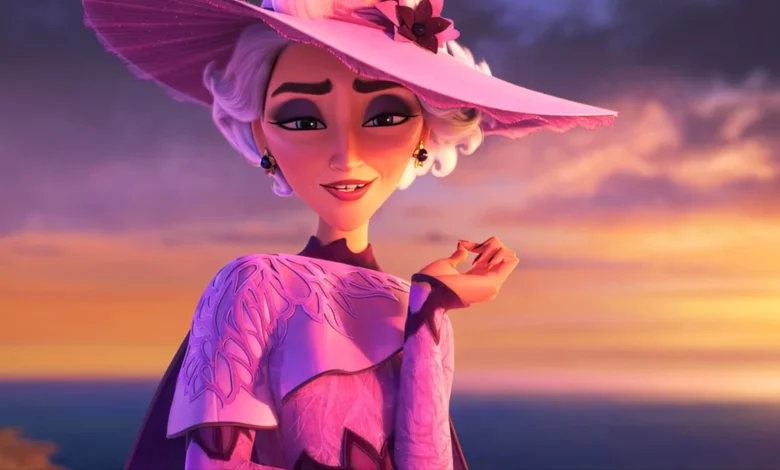
The Walt Disney Studios has once again encountered severe headwinds at the global box office with the holiday release of its newest original animated feature, Hexed. Despite the studio’s historical dominance in the family entertainment sector, the film failed to break the enduring curse that has plagued Disney’s non-franchise animated output in the post-pandemic era. Pulling in a meager $32 million during the critical five-day Thanksgiving holiday frame and only $20 million over the traditional three-day weekend, Hexed proved to be a major commercial disappointment.
The picture fared no better overseas, capturing just $25 million across 50 international territories. This brings the film’s cumulative global opening to a dismal $57 million. Given that Hexed carries a staggering production budget of approximately $200 million—not including tens of millions more in global marketing and distribution expenditures—the returns represent a catastrophic financial shortfall. The performance underscores a persistent challenge for the "Mouse House": while audiences reliably flock to established cinematic universes and sequels, original animated concepts are increasingly struggling to capture the public imagination on the big screen.
The Tale of Two Box Offices: Sequels Versus Originals
The stark contrast in Disney’s animation division highlights a bifurcated theatrical marketplace. On one side of the ledger, Disney remains the undisputed titan of family-oriented intellectual property. The studio’s recent slate is anchored by massive, billion-dollar juggernauts that reliably dominate global box offices. This past summer, Pixar’s Toy Story 5 continued a three-decade-old legacy by grossing nearly $1.15 billion worldwide.
Similarly, major theatrical sequels have routinely crossed the coveted billion-dollar threshold. Pixar’s Inside Out 2, Walt Disney Animation Studios’ Zootopia 2, and Moana 2 all achieved monumental commercial success, proving that familiar characters and established narrative worlds remain an exceptionally safe bet for moviegoers. These blockbusters do more than just sell theater tickets; they fuel a massive merchandising ecosystem encompassing theme park attractions, consumer products, television spin-offs, and digital streaming subscriptions.
Conversely, original storytelling has experienced a prolonged and painful dry spell. While a few titles have found modest footing—such as 2023’s Elemental, which legged out to nearly $500 million globally, and 2024’s Hoppers, which pulled in a respectable $389.7 million—the vast majority of Disney’s original post-pandemic animated projects have failed to turn a profit.

A Chronology of Post-Pandemic Original Animation Struggles
The underperformance of Hexed is not an isolated incident; rather, it is the latest chapter in a multi-year trend of theatrical misfires for original Disney animation. A retrospective look at the studio’s post-2020 calendar reveals a troubled trajectory:
- November 2021 (Encanto): Released as the global box office was still navigating the complexities of the COVID-19 pandemic, the magical realism tale finished its theatrical run with $261.3 million worldwide. While it later became a massive cultural phenomenon and streaming sensation on Disney+, its theatrical run was muted.
- November 2022 (Strange World): Disney’s sci-fi adventure became a definitive holiday casualty, grossing a disastrous $73.6 million globally against a hefty budget. The film also became inadvertently caught up in external cultural debates that overshadowed its artistic merits.
- November 2023 (Wish): Positioned as a major, century-celebrating musical event for the Thanksgiving corridor, Wish stumbled with audiences and critics alike, finishing its global run at a soft $255 million.
- June 2025 (Elio): Pixar’s cosmic original adventure failed to ignite audience interest, managing just $154.3 million worldwide.
- November 2025/2026 (Hexed): Continuing the grim Thanksgiving tradition, the latest original venture opened to a meager $57 million worldwide, cementing a pattern of holiday box office indifference for fresh IP.
Industry analysts point to a confluence of factors for these theatrical misfires. Beyond the lingering behavioral shifts of audiences trained by the pandemic to wait for streaming releases on Disney+, several titles became entangled in polarizing cultural debates. Furthermore, the compressed theatrical windows and hybrid release strategies of the early 2020s conditioned family audiences to view animated films as home-viewing commodities rather than must-see theatrical events.
The Economic Realities of Modern Animation Budgets
To understand why films like Hexed represent such severe financial blows, one must examine the high-stakes economics of contemporary feature animation. Producing a major studio animated film is an exceptionally costly, labor-intensive endeavor that typically requires four to five years of development and production.
Most major Hollywood animated features carry baseline production budgets hovering around $200 million. When factoring in global marketing campaigns—which routinely add $100 million or more in expenses—the total capital investment frequently exceeds $300 million.
Because theatrical exhibitors traditionally retain roughly 50 percent of domestic ticket sales (with varying splits internationally), a film generally needs to gross at least 2.5 times its production and marketing budget simply to break even. For a $200 million film like Hexed, the worldwide box office threshold to achieve profitability sits well north of $500 million. Pulling in a mere $57 million in its opening frame leaves the film millions of dollars in the red, with very little runway left to recoup its costs in a crowded holiday marketplace.
Industry Implications and Strategic Dilemmas for Disney
The ongoing struggles of original animation present studio executives with a complex strategic dilemma. On one hand, the contemporary theatrical market severely penalizes risk-taking on non-branded intellectual property. Investors and studio accountants are understandably reluctant to greenlight $200 million gambles on characters and worlds that lack pre-existing brand awareness.

On the other hand, the long-term health of any major entertainment conglomerate depends on its ability to cultivate new franchises. The foundational pillars of Disney’s empire—ranging from Mickey Mouse and Snow White to The Lion King and Toy Story—began as daring original works. Without a continuous pipeline of fresh storytelling, a studio risks creative stagnation, relying exclusively on endless reboots, prequels, and sequels until franchise fatigue inevitably sets in.
Furthermore, the ancillary economic benefits of a successful original film cannot be overstated. When a new animated property manages to strike a chord with the public, the financial upside extends far beyond box office receipts. Theme park divisions rely on fresh attractions to drive attendance, retail partners depend on new toy lines, and streaming platforms require expanding catalogues of diverse content.
As Disney evaluates its animation strategy moving forward, industry insiders suggest the studio may need to rethink its financial models for original features. This could involve experimenting with more stylized, cost-effective animation pipelines that lower production budgets—thereby reducing financial exposure—or recalibrating marketing strategies to better communicate the unique value of original storytelling to post-pandemic audiences.
Ultimately, the failure of Hexed demonstrates that the "Magic Kingdom" must endure the financial sting of occasional box office flops if it hopes to discover the next generation of iconic characters. Until that breakthrough occurs, however, Disney’s original animation division will continue to grapple with the heavy arithmetic of a high-risk, low-tolerance theatrical landscape.
Related posts: