Julianne Moore and Jesse Eisenberg Reunite for A24 Musical Comedy The Debut, Sparking Early Academy Award Frontrunner Status


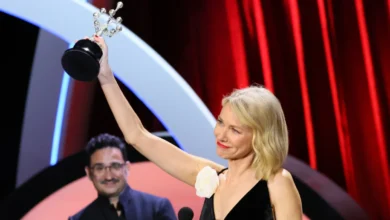
The crisp autumn air of Middleburg, Virginia, provided a fitting backdrop for one of the most anticipated cinematic showcases of the season. Stepping out of the elevator at the Salamander Resort during the Middleburg Film Festival, a radiant Julianne Moore immediately commanded the room. Dressed in a striking gold dress that mirrored the high-stakes awards season buzz surrounding her, the acclaimed actress reflected on her latest collaboration with filmmaker Jesse Eisenberg. Following a rapturous festival screening, the A24 crowdpleaser The Debut has cemented itself as a major awards contender since its initial rollout at the Telluride Film Festival, drawing widespread acclaim from both critics and enthusiastic audiences ahead of its wide theatrical release slated for December 11.
Building on the Momentum of A Real Pain

Jesse Eisenberg’s transition into a formidable writer-director continues to yield critical and commercial dividends. Following his directorial success with A Real Pain, which notably earned Kieran Culkin an Academy Award for Best Supporting Actor, Eisenberg has crafted a vehicle tailored specifically to Moore’s expansive dramatic and comedic range. The Debut casts Moore as Mona, a melancholy suburban homemaker who undergoes a radical transformation as she navigates the anxiety and liberation of pursuing a late-in-life acting career within a New Jersey community theater.
Industry analysts suggest that Moore’s performance is virtually guaranteed to secure her sixth Academy Award nomination. Should she convert the nomination into a win, it would mark her second career Oscar, following her poignant leading turn in Still Alice (2015). This prospective milestone underscores a remarkable longevity that stretches back to her 1988 daytime television roots on the CBS soap opera As the World Turns.
Navigating the Complexities of an Unconventional Character

Eisenberg penned the screenplay with Moore firmly in mind, drawing upon creative shorthand established during their previous collaboration on the 2022 feature When You Finish Saving the World. Speaking on the conceptual origins of the project, Eisenberg noted that the narrative serves as an autobiographical reflection of his childhood perspectives filtered through the lens of a trusted artistic muse.
For Moore, the role offered a refreshing departure from the conventional tropes often assigned to mature actresses in Hollywood. Having previously expressed a desire to avoid playing suffering matriarchs in favor of dynamic comedic and musical material—honing those skills following her work in Dear Evan Hansen—Moore found in Mona a character whose developmental arc mimics the rudimentary learning patterns of an infant.
"She’s so contained, and the way she learns is so literal," Moore explained during their post-screening discussion. "The way a baby learns—you make a face at a baby, the baby makes a face back, but they don’t have intention behind it. But they’re learning things in an exterior way, and then they match it with feeling later on."

The narrative pivots on Mona’s desperation to infiltrate a local theater troupe led by an overbearing director, Jerry, portrayed by Paul Giamatti in their first onscreen pairing. Reluctantly taking on an untrained actress simply due to a lack of viable alternatives, Jerry sets off a chain reaction that forces Mona out of domestic invisibility and into a consuming, unyielding artistic awakening.
A Masterclass in Collaboration and Execution
Despite the modest budget typical of independent cinema, The Debut benefited from an exceptionally efficient production schedule. Eisenberg’s background as a veteran actor directly influenced his empathetic approach on set, notably when scheduling the film’s emotionally grueling eight-page confrontation scene. To alleviate the pressure of memorization, Eisenberg intentionally placed the sequence midway through production and assured Moore that accommodations would be made to prevent cognitive overload. Ultimately, Moore’s mastery of the material rendered outside technical assistance unnecessary, resulting in a kinetic, highly charged cinematic exchange with Giamatti.

Giamatti’s presence as a scene partner elevated the production, bringing a grounded, generous energy that matched Moore’s rhythmic delivery. Their shared sequences rely heavily on rapid-fire dialogue exchanges designed to keep the dramatic momentum flowing seamlessly without relying on conventional narrative pacing. Furthermore, Eisenberg’s inclination toward capturing authentic performances often resulted in usable footage on the very first take, allowing the small crew to execute complex musical numbers and ensemble scenes ahead of schedule.
Visual Transformation and Musical Tributes
The visual evolution of Mona’s character required careful coordination between Moore, Eisenberg, and the hair and makeup departments. Transitioning from conservative, childlike cardigans and skirts to a more erratic, self-reinforcing aesthetic, Mona’s physical transformation serves as a visible barometer of her internal chaos.

A notable creative addition came during a sequence where Mona inadvertently damages her hair, prompting an impromptu makeover. Drawing inspiration from legendary icons of the musical theater stage—including Liza Minnelli, Chita Rivera, and Patti LuPone—Moore and the creative team utilized dark dyes and a sharp crop as an intentional visual homage to Broadway royalty.
Performing the film’s centerpiece musical number, titled "This City May Have Chewed Me Up (But It Hasn’t Spit Me Out)," presented a unique psychological hurdle for Moore. Surrounded by seasoned Broadway professionals such as Tony Award winners Danny Burstein and Bonnie Tillman, Moore had to channel the vulnerability of an amateur performer discovering her voice for the very first time.
Broader Implications for the Awards Race

As the film moves closer to its December theatrical rollout, industry prognosticators are actively evaluating its prospects within the broader awards landscape. Historically, holding a prior Academy Award can occasionally present a statistical disadvantage for actors during subsequent campaigns, as voting bodies frequently prioritize fresh narratives. However, historical precedent also demonstrates that undeniable, transcendent performances—typified by multiple-time winners such as Katharine Hepburn, Meryl Streep, Frances McDormand, Jack Nicholson, and Sean Penn—frequently transcend these unwritten electoral biases.
With The Debut, Eisenberg and Moore have delivered a project that balances whimsical humor with a profound, affectionate examination of artistic community. For Moore, the journey represents a harmonious synthesis of technical precision, collaborative trust, and a lifelong dedication to character exploration—elements that position her strongly at the forefront of the current awards season conversation.